
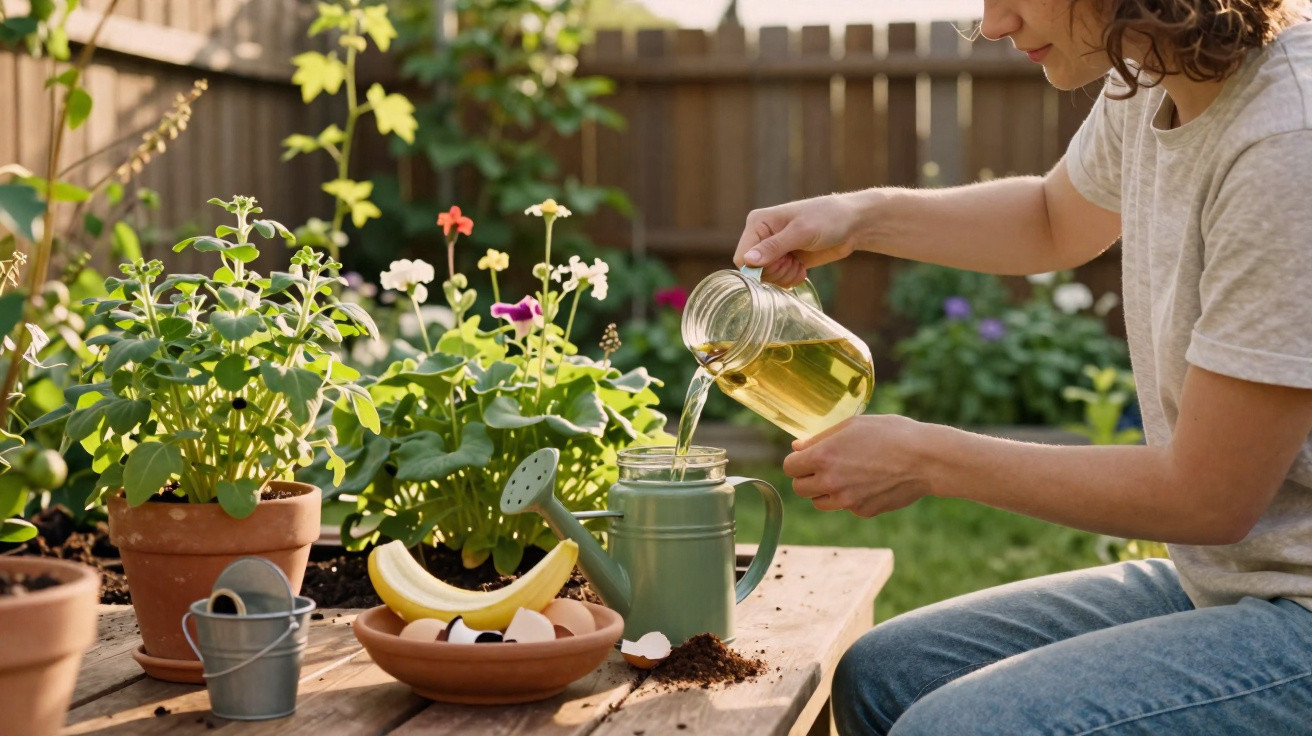
Anyone who grows plants knows that nutrient-rich soil can make all the difference to the development of leaves, flowers and fruit. The encouraging news is that certain kitchen and garden leftovers can be reused to make homemade fertiliser in a more sustainable way. Eggshells, organic compost, used coffee grounds, aquarium water and even vegetable scraps are among the materials that can top up plant nutrition when handled properly.
Which ingredients can be turned into homemade fertiliser?
Many organic materials that are usually thrown away still contain nutrients that plants can use. When repurposed correctly, they help to improve the soil while cutting down on household waste.
Common choices include well-rotted organic compost, used coffee grounds, eggshells that have been thoroughly dried and crushed, wood ash from clean wood with no chemical residues, salt-free aquarium water, and fruit and vegetable leftovers added to a compost system. Because each option contributes different nutrients, balance matters far more than using too much of any one ingredient.
How can you prepare homemade fertiliser in a simple way?
One of the most straightforward approaches is to make a liquid feed. Put well-rotted compost or suitable plant scraps into a bucket of water, leave it to steep for a few days, and then strain the mixture before use. The resulting liquid should be diluted before being applied to plants.
Another popular method is to crush completely dry eggshells and blend them into the potting mix or soil. Used coffee grounds can also help, but only in small amounts-scatter them lightly on the soil surface and avoid overdoing it to prevent imbalances.
- Well-rotted organic compost
- Dried, crushed eggshells
- Used coffee grounds
- Salt-free aquarium water
- Ashes from clean wood
- Plant scraps intended for composting
How do you apply fertiliser without harming plants?
Even though they are natural, homemade fertilisers still need to be used sparingly. Over-application can shift the soil pH, encourage fungal growth, or lead to nutrient build-up that ends up damaging roots.
It also helps to apply feed when the soil is slightly moist, and to watch how each plant responds. Ornamental plants, vegetables and fruiting plants have different nutritional needs, so they may require different feeding intervals.
- Use small amounts each time
- Apply to slightly moist soil
- Avoid ingredients containing salt or seasoning
- Do not put decomposing food scraps directly into a pot
- Monitor how the plant responds after each application
- Keep to a sensible gap between feeds
Is it worth replacing commercial fertiliser with homemade fertiliser?
Homemade fertilisers are a sustainable option for supporting plant care, but they do not always provide every nutrient in the proportions needed by more demanding species. For that reason, many gardeners use these methods as a supplement within a routine that also includes good-quality soil, adequate light, appropriate watering and balanced fertilisation.
By reusing organic waste thoughtfully, you reduce what you throw away and contribute to a healthier garden. The key is selecting suitable ingredients, applying them correctly and tracking plant growth over time.
Comments
No comments yet. Be the first to comment!
Leave a Comment