
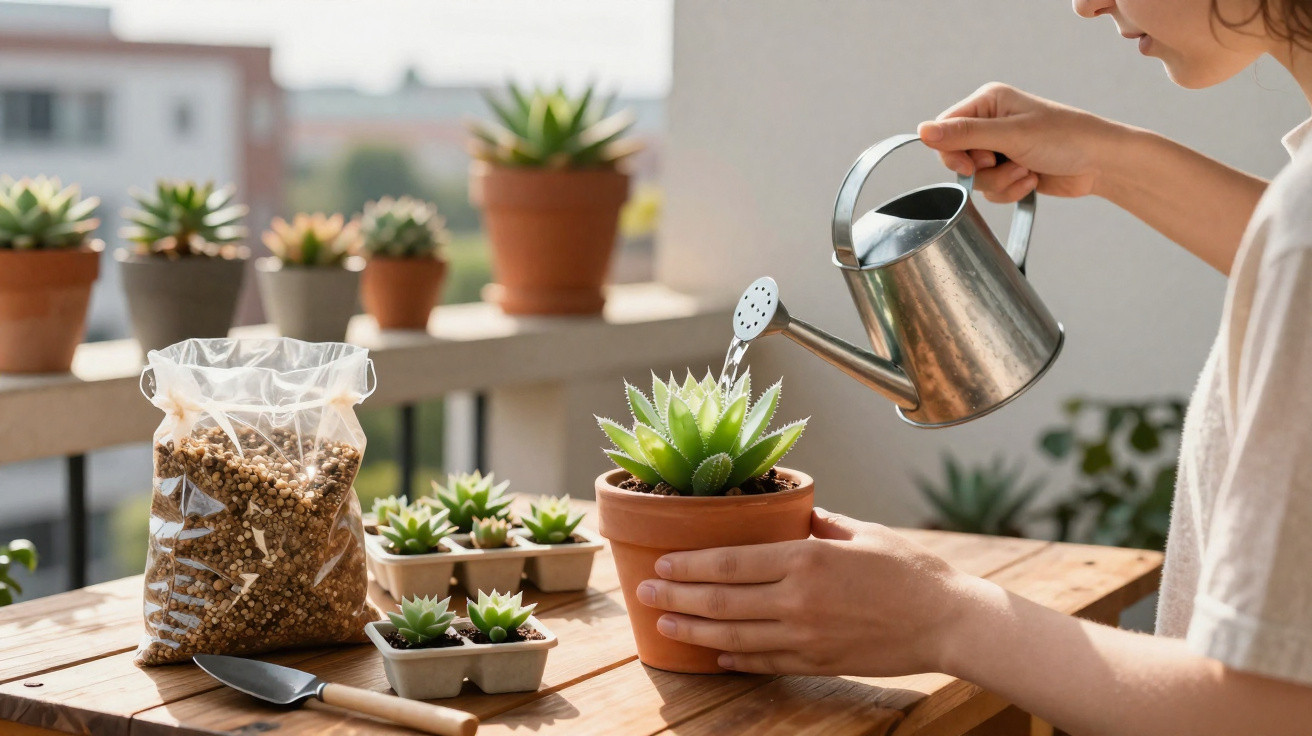
The rarest succulent to grow in a pot on a balcony is Haworthia cooperi, best known for its translucent leaves that look like tiny drops of glass. It has been winning over collectors thanks to its unusual appearance, its compact rosette growth, and the fact it doesn’t need a large container. The key is to provide bright indirect light, a mineral-heavy potting mix, and widely spaced watering to prevent rot.
Why does Haworthia cooperi attract so much attention?
Haworthia cooperi develops fleshy, rounded leaves with transparent tips-an adaptation that lets light reach deeper into the plant. This creates an almost crystalline effect, unlike more familiar succulents with opaque, colourful foliage.
Although it looks delicate, it can be tough when kept in the right conditions. It grows slowly in low clumps, which makes it a great choice for small pots, balcony shelving, and collections focused on rare succulents.
What light does this succulent need on a balcony?
Haworthia cooperi does best in bright but filtered light. Balconies with morning sun, plenty of ambient brightness, or a well-lit partial shade are preferable to strong afternoon sun, which can scorch the leaves or make them redden excessively.
Watch the plant’s signals to fine-tune its position:
- Firm, translucent, compact leaves suggest the light level is right.
- Stretched, spaced-out leaves point to insufficient light.
- Overly whitened or very red tips indicate too much sun.
- A rosette that opens up a lot can mean it’s reaching for more brightness.
- Keep direct sun limited to the first hours of the morning.
How do you water without rotting the roots?
Only water when the potting mix has dried out completely. This species stores water in its leaves, so excess moisture is far more risky than a few extra dry days.
The most reliable approach is to water thoroughly until it drains from the pot’s holes, then wait until the mix is fully dry before watering again. Don’t leave water sitting in a saucer, and avoid misting into the centre of the rosette, because moisture trapped between leaves encourages fungal problems.
What potting mix keeps the plant growing well?
The mix needs to drain very freely, with minimal organic matter and a good proportion of mineral material. Ordinary garden soil tends to compact, hold too much water, and smother the fine roots of Haworthia cooperi.
A straightforward container mix can include:
- 1 part ready-made cactus and succulent compost.
- 1 part coarse washed sand, perlite, or fine grit.
- A small amount of crushed horticultural charcoal to keep the mix more open.
- A pot with unobstructed drainage holes, ideally terracotta or ceramic.
- A top dressing of pale gravel to stop soil splashing onto the leaves.
How to place and propagate Haworthia cooperi
On a balcony, Haworthia cooperi looks its best in low pots, shallow planters, or stone-based arrangements, always positioned where it’s protected from heavy rain. The leaf transparency shows up more clearly when the plant receives gentle side light-near a window or a light-coloured wall.
The safest way to propagate it is by separating side shoots (often called offsets or pups). Wait until the offset has formed a few roots, detach it carefully, allow the cut to callous over for a few days, then set it into dry mix; the first watering should be light, only after the young plant has settled into its pot.
Comments
No comments yet. Be the first to comment!
Leave a Comment