
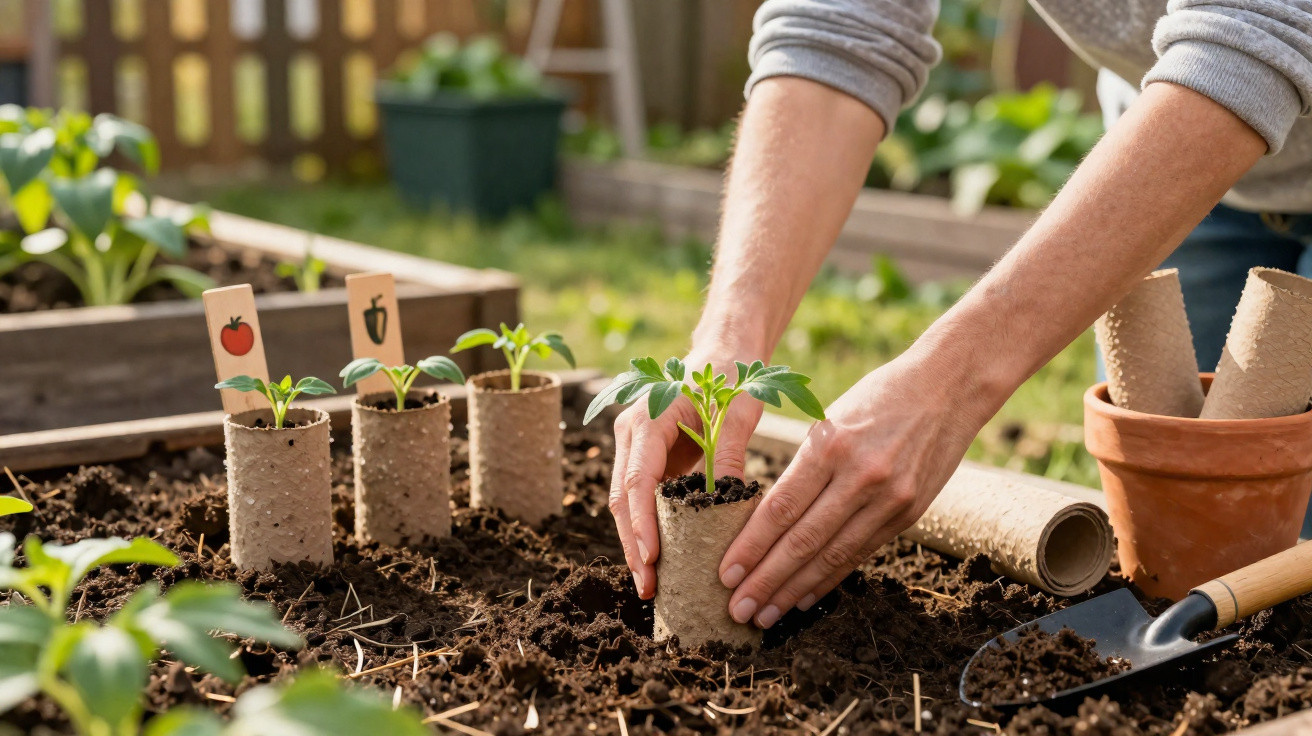
At first glance it almost looks like a prank: grey cardboard tubes standing upright in the bed, right amongst the lettuce, tomatoes and sugar snap peas. It is not a new decorative touch, but a gardening habit that has been spreading for a while. Each spring, more and more gardening professionals and influencers swear by empty toilet paper rolls to protect delicate young plants from cold snaps and pest damage - without spending money on specialist kit.
Why empty toilet paper rolls are so useful for early-season beds
Spring can be a tricky period for vegetable beds. The sunshine tempts you outside and the seed packets are hard to ignore - yet the nights can still catch you out. Late frosts down to around freezing can scorch tender new leaves before plants properly get going. At the same time, mild, damp nights bring out slugs and other ground-dwellers, which can strip entire rows in a single evening.
That is exactly where an unremarkable cardboard roll earns its place. Placed around an individual seedling, it acts like a tiny protective wall. You get several benefits at once:
- the cardboard slows cold wind right at soil level
- it softens minor overnight temperature swings
- it makes it harder for slugs to reach the stem directly
- it helps support young plants in loose soil
“The cardboard roll works like a personal protective collar for every seedling - simple, cheap and surprisingly effective.”
Garden experts particularly highlight the material itself: thin cardboard breaks down gradually in the soil and leaves no residue behind. While it is still intact, it steadies the soil around the roots, allows water to pass through, and shields the sensitive area at the base of the stem - the point where many plants are especially vulnerable.
How to use toilet paper rolls directly in the vegetable bed
Using them is straightforward and takes only a few seconds per plant. For tomatoes, lettuce, kohlrabi, courgettes or flower seedlings, do the following:
- Plant your seedling in the bed as you normally would.
- Carefully slide an empty toilet paper roll over the stem.
- Press the roll 2–3 centimetres into the soil so it stands firmly.
- Make sure no leaves are pinched against the top edge.
The roll now surrounds the lower part of the plant. This “collar” reduces cold draughts around the stem and creates a slightly warmer microclimate right at ground level. It also functions as a physical barrier: slugs have to climb the rim first, rather than gliding straight across the soil to the stem. It is not a flawless defence, but it noticeably cuts damage - particularly in years with wet springs.
If a light frost is forecast overnight, you can strengthen the effect:
- Sprinkle a ring of straw or dry leaves around the outside of the roll.
- If the cold is more severe, loosely lay horticultural fleece over the bed in the evening as well.
With a simple cardboard ring, a bit of plant material and a piece of fleece, you end up with an improvised protection system that can rival many shop-bought options - and costs next to nothing.
From waste to seedling pot: toilet paper rolls as mini containers
Even before your young plants go outside, the rolls can do a useful job indoors or in the greenhouse. Many professionals use them as biodegradable seed-starting pots. The advantage is obvious: when you plant out, the roots are not disturbed because the plant goes into the ground together with the cardboard.
How to make seed-starting pots from toilet paper rolls
With just a few quick cuts and folds, the rolls become sturdy little containers for tomatoes, peppers, flowers and herbs:
- If you want smaller pots, cut the roll in half.
- At one end, make four small slits (about 1.5 cm deep).
- Fold the resulting tabs inwards one after another to form a base.
- Place the pot in a shallow tray or box so it will not topple over.
- Fill with loose seed compost and water lightly.
After three to four weeks - depending on the plant - you will usually have a solid root system. Then you can plant out straight into the bed without potting on: loosen the soil a little, set the entire cardboard pot into the ground, and firm the surrounding soil well. Over time, the cardboard softens, and soil organisms break it down.
“The biggest benefit: no transplant shock, no damaged roots - and every empty cardboard tube gets a second life.”
Weed suppression and extra tricks with cardboard rolls
These rolls can do more than simply “hug” seedlings. Experienced gardeners use them in several ways around the bed:
- Barrier against newly germinating weeds: For direct sowings such as carrots or parsnips, push short pieces of roll slightly into the soil. This both marks the rows and helps keep a bit of distance from spontaneous weed growth.
- A head start for deeper-rooting plants: With peas or beans, a cardboard ring can keep the soil above looser and moister until the seedlings are strong enough.
- A small heat store: On sunny days, the roll warms up slightly and releases that stored warmth slowly during the evening.
Some gardeners who like to experiment also cut the rolls lengthways and use them as openable cuffs around plants that are already in place. This way, sensitive stems can be protected without having to thread shoots through from above.
Toilet paper rolls in the compost: food for worms and structure for the heap
Once the rolls have softened and started to crumble after a few weeks in the bed, their usefulness still is not over. The leftovers can simply go into the compost bin. Thin, unbleached cardboard counts as a “brown material”, adding both structure and carbon to the heap.
Ideally, cut the rolls into smaller pieces first. That increases the surface area, allowing earthworms to move in more quickly. Mixed among kitchen scraps, grass clippings and leaves, the cardboard pieces help stop the compost from compacting and ensure enough air can circulate through the pile. The result is a loose, crumbly humus that makes your beds noticeably more fertile the following year.
“If you keep your cardboard rolls consistently in the garden cycle, you gain twice over: protection for seedlings and valuable humus for the seasons to come.”
What to watch out for when using them
To make sure the method works well, it is worth keeping a few potential pitfalls in mind:
- Avoid coated rolls: Use unbleached cardboard where possible, without films or coloured coatings.
- Air and light: Do not set the rolls too tall, or plants may become leggy because the stem gets too little light.
- Keep an eye on moisture: Cardboard absorbs water. On very dry days, check whether the soil inside is drying out faster.
- Remove or dig in at the right time: Once plants are robust and slug damage is unlikely, either bury the remnants in the bed or add them to the compost.
Why this simple trick suits modern gardening so well
Empty toilet paper rolls accumulate in every household. That is precisely why this approach fits a sustainable, cost-saving gardening routine. Instead of buying plastic specialist products, you reuse something you already have several times over: first as a seed-starting pot, then as a protective ring in the bed, and finally as food for earthworms in the compost.
At the same time, you reduce the risk of losses in sensitive crops. Anyone who has watched a newly planted row of tomatoes disappear after a cold night or a slug attack knows how frustrating it can be. Cardboard rings significantly lower that risk - a small detail with a big impact.
Many home gardeners say that after one season using cardboard rolls they become much more confident about sowing and planting earlier, because they have internalised their protection strategy. That blend of recycling, pragmatism and real-world results is exactly what is making the humble toilet paper roll the quiet star of the spring vegetable bed.
Comments
No comments yet. Be the first to comment!
Leave a Comment