
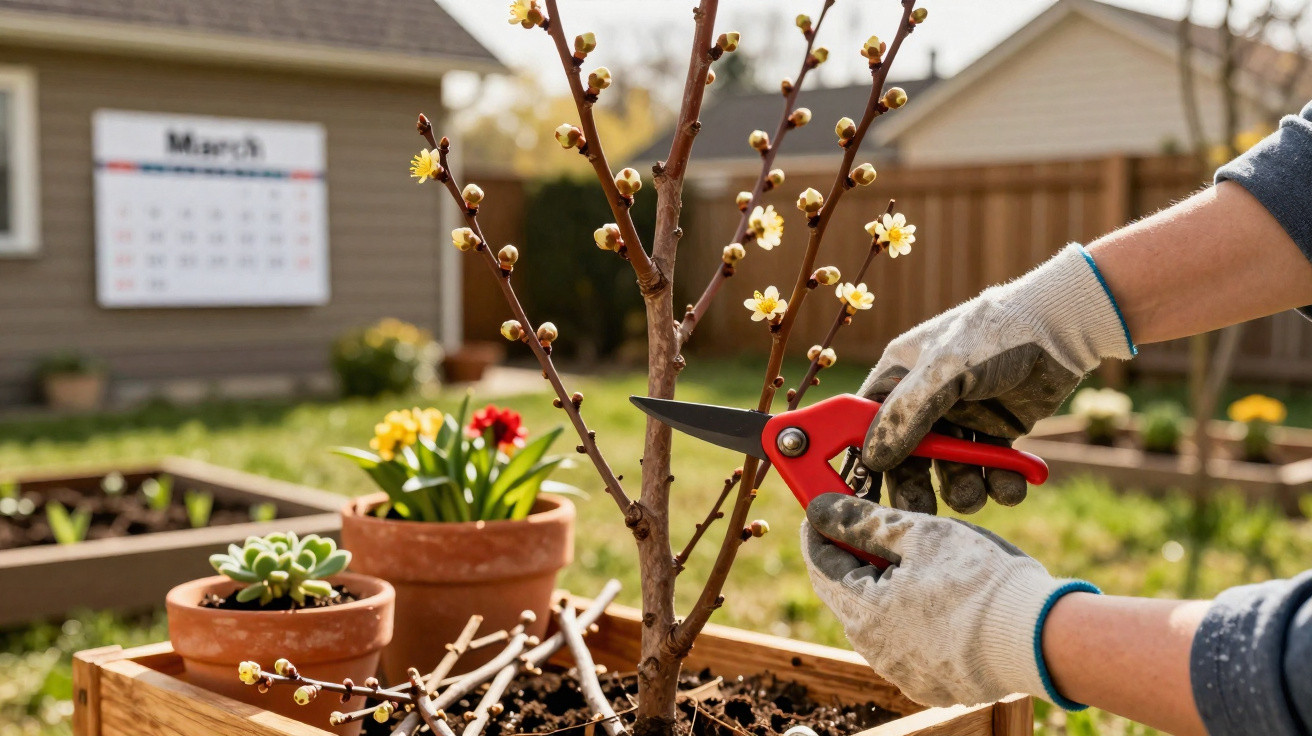
If you reach for the secateurs now, you can shape roses, hydrangeas, lavender and more with real precision - and noticeably boost the amount of bloom. Many popular shrubs and trees cope well with a firm cut in March, and some genuinely need it. What matters is timing, the right method and a touch of confidence.
Why March is the ideal month for pruning
In March, the garden slowly starts to stir after winter. In many areas the hardest frosts have passed, and plants are just about to burst into growth. Hitting that window brings several clear benefits:
- Less strain on plants because they are about to produce new shoots
- Diseased or frost-damaged sections are easy to spot
- Shaping and maintenance pruning can be planned and carried out cleanly
- Many ornamental shrubs set their best flowers on young wood
"If you prune sensibly in March, you influence flowering, growth habit and plant health for the whole year."
Shaping trained plants and espalier trees
Whether it’s an espalier lime by the patio or planes trained as a privacy screen: March is when trained plants and espalier trees get their formative trim.
Basic rules for espalier lime, espalier plane and similar
Any shoots sticking out beyond the intended outline can be shortened now. With younger trees, gardeners typically use one of two approaches:
- Cut back to old wood: Remove young shoots back to older lateral branches so distinct tiers are created.
- Clip like a hedge: Particularly with evergreen espalier trees such as cherry laurel, you can build a solid, block-like, enclosed shape.
Shoots that are meant to become part of the permanent framework should be tied in with a soft tie to the support rather than cut off. That’s how you develop dense, even crowns.
Roses: prune boldly to pick up more flowers
March is the traditional pruning period for hybrid tea, floribunda and shrub roses. Many gardeners hold back too much - and lose out on blooms.
Cutting back floribunda and shrub roses properly
Brown, over-aged stems should be removed entirely. Strong, healthy shoots are reduced to just a few buds:
- Shorten to an outward-facing bud
- Leave only a handful of robust basal stems
- Remove thin shoots and any that grow inwards without hesitation
The result can look severe at first, but healthy roses respond by pushing vigorous new growth from low down and producing plenty of fresh flowering laterals.
Climbing roses: keep the framework, shorten side shoots
With climbing roses, the main framework stays in place. Tie in three to four primary canes horizontally or in a fan. Flowering shoots develop from these axes. Trim all side shoots back to a few buds, and cut out any dead or dried sections completely.
Lavender and heather - don’t leave it too late
Keeping lavender compact
Without pruning, lavender becomes woody and loses its neat shape. In March, it can be cut back quite assertively:
- Reduce to around 15 centimetres high
- Never cut into fully old, bare wood
- Remove old flower stems and long, thin growth
This keeps the subshrub dense and encourages fresh, fragrant foliage.
Heather: tell winter heather and summer heather apart
Heather is tough, but it relies on being cut back. The key is knowing which type you have:
| Heather type | Pruning time | How to prune |
|---|---|---|
| Winter heather (Erica) | After flowering in summer | Cut off the flowering section just above the foliage |
| Summer heather (Calluna) | March | Shorten to 8–12 centimetres above the ground |
Always cut just above the still-green parts so the plants can break into new shoots.
Hydrangeas: abundant flowers need a careful approach
With hydrangeas, the variety determines how hard you can prune.
Mophead hydrangeas and lacecap types
On these, the flower buds sit on last year’s growth. Cutting back too far can mean very few flowers.
- Remove only some of the older, thick stems close to the ground
- Snip off spent heads just above the next bud
- Leave young, vigorous shoots in place
"Cutting mophead hydrangeas back too hard often costs you the entire year’s flowering."
Panicle and smooth hydrangeas: cut back more strongly
Panicle hydrangeas (Hydrangea paniculata) flower on new wood. In March, they tolerate a substantial cut back to about 40 centimetres. The white smooth hydrangea ‘Annabelle’ can be reduced even lower, to roughly 10 centimetres. It reliably reshoots from the base.
Other hydrangea types
Oakleaf hydrangeas can be shortened to 10 to 20 centimetres above the ground, as long as you are not deliberately growing them as tall, specimen plants. For specimen-planted types such as some velvet hydrangeas, it’s usually enough to remove spent heads and cut troublesome shoots at the base.
Climbing hydrangeas, by contrast, should only be pruned after flowering - otherwise you remove that season’s blooms.
Butterfly bush: more pruning, more butterflies
Butterfly bush looks its best only when cut back hard. In March, shoots are taken down significantly:
- Reduce tall varieties to 30 to 50 centimetres
- Cut dwarf forms back to around 15 centimetres
- Make cuts directly above small, young shoots
This encourages lots of fresh stems with long flower panicles that draw insects in.
Taming vigorous climbers: ivy and similar
Bringing ivy back under control
Ivy grows for much of the year and can quickly smother fences, walls and timber. A thorough March cut pays off:
- Remove overhanging shoots from façades and fences
- Cut off ground runners - they can travel deep into borders
- Keep areas clear where growth is unwanted or could cause damage
Regular trimming keeps the plant dense and manageable.
Compact shrubs through pruning: St John’s wort
St John’s wort (Hypericum) is used as a low shrub or ground cover. To stop plants flopping open and leaving gaps where weeds can establish, cut them back firmly in March. Reducing to about 20 centimetres promotes fresh, dense shoots and plenty of bright yellow flowers in summer.
Mediterranean style: olive tree and oleander
Shape an olive tree rather than sparing it
An olive tree tolerates a strong shaping cut, provided temperatures are no longer dropping sharply. Start by removing anything that clearly doesn’t belong:
- Dry, dead shoots
- Branches growing inwards that thicken the crown
- Crossing limbs or branches that rub
After that, you can thin the crown to taste or create a rounded outline. Olives respond well to pruning; even heavier cuts generally heal and grow back without trouble.
Oleander: cut back firmly, but protect yourself
After winter, oleander often shows frost damage. Prune these shoots back until only healthy wood remains. In general, the shrubs can cope with shortening by up to half of the shoot length.
"When pruning oleander, always wear gloves - the plant and its sap are considered poisonous."
Because of the toxicity, keep the shrub out of reach of children and pets, especially straight after pruning. Raising the pot or blocking access temporarily is the safest option.
Avoiding common mistakes with spring pruning
A few errors crop up in gardens every year - and they’re easy to avoid:
- Cutting mophead hydrangeas back too hard
- Cutting lavender right into old wood
- Working without sharp, clean tools
- Pruning in hard frost or immediately ahead of a forecast cold snap
If you’re unsure, wait for a few mild days and check the buds more closely. Often a gentle scratch on the bark is enough to see whether a shoot is still alive.
Practical extras for a strong start to the gardening season
After pruning, many plants respond well to a portion of organic fertiliser or well-rotted compost. It gives them the reserves they need for strong new growth. It’s also worth checking for winter damage to soil levels, edging, or trellises before everything becomes overgrown again.
If you’re spreading the work over several days, begin with tougher shrubs such as butterfly bush or St John’s wort, then move on to more sensitive plants like mophead hydrangeas or roses. That way you build confidence with the secateurs - and your garden repays you in summer with far richer colour and flowering.


Comments
No comments yet. Be the first to comment!
Leave a Comment