
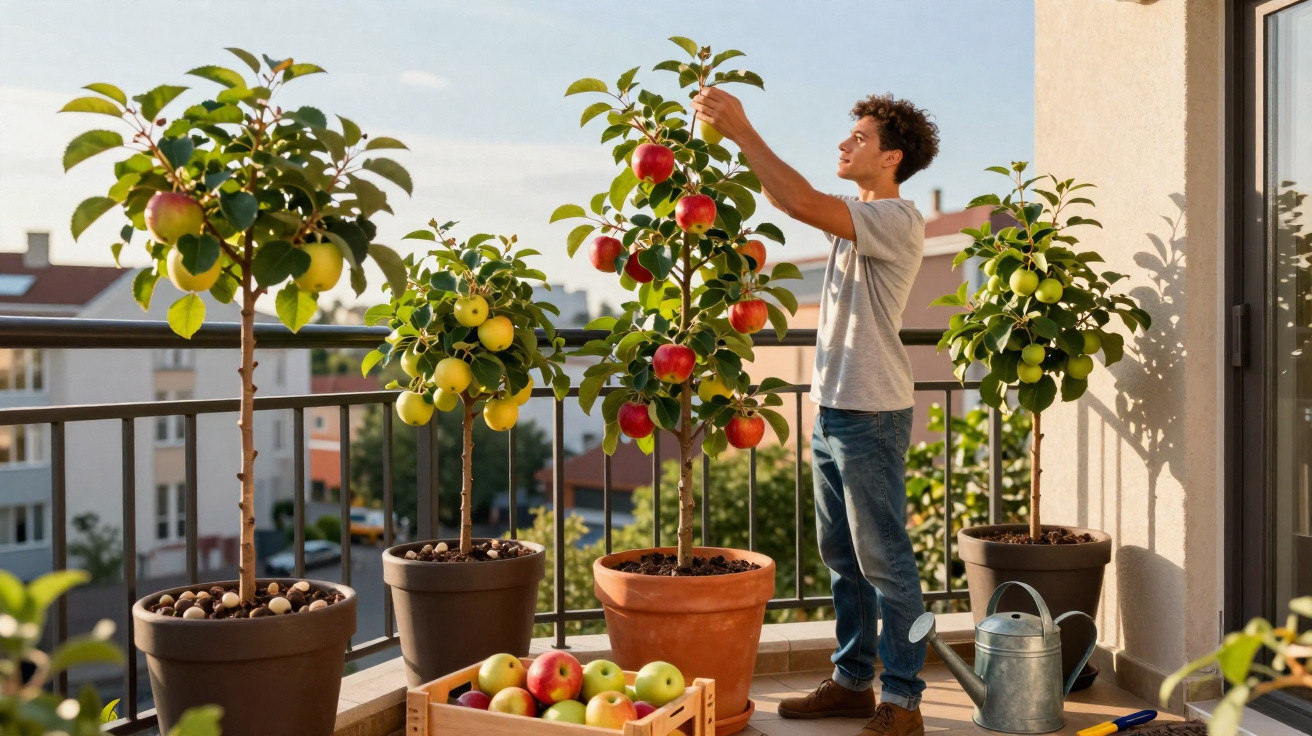
Living right in the city often means you have no more than a narrow balcony or a few square metres of terrace. Even so, the desire to grow your own spray-free fruit keeps growing. That is exactly where a fruit tree comes into its own that feels almost purpose-built for urban micro-gardens: a slim, upright grower that stays perfectly manageable in a pot yet can still give you harvests that feel like a small orchard.
The fruit tree that grows upwards instead of outwards
What makes a columnar fruit tree so special
Most fruit trees spread their canopy wide. A traditional apple or cherry tree can quickly demand several square metres of space. Columnar fruit trees work differently: they grow almost entirely upwards, forming a narrow, dense column.
"This growth habit saves space because the fruit hangs directly along the trunk on very short side shoots – almost like a miniature espalier."
That means you can get by with a footprint of under 1 square metre. For people in towns and cities, this translates to a single container doing the job of a garden fruit tree-just on a balcony.
Which types of fruit suit the columnar form
Many garden centres and nurseries now have dedicated sections just for columnar fruit. The most common options include:
- Columnar apple: crisp fruit, with plenty of cultivars from sweet to tangy
- Columnar pear: juicy, melting texture, often highly aromatic
- Dwarf cherry in columnar form: compact, perfect for a snack-friendly balcony
- in some cases columnar plum or peach as well, depending on the supplier
These cultivars naturally stay small while still cropping generously. With the right position and care, many varieties manage well without chemical plant protection products.
The right pot: where success is decided
Why volume matters more than the material
Your tree may not need a bed, but it does need room for its roots. As a rule of thumb, a pot or tub with 30 to 50 litres capacity is ideal. That gives the root system enough space to develop properly without encouraging the tree to become too large.
Whether the container is plastic, wood, metal, or terracotta is secondary. What really matters is:
- large drainage holes in the base
- a stable shape so the tall tree will not topple
- ideally a light colour so the pot does not overheat in summer
"Containers that are too small quickly cause drought stress, nutrient deficiency and tiny harvests – it is worth choosing a size bigger here."
Drainage and compost-rich soil: the power duo in a container
Because the tree depends entirely on what is in the pot, the contents need to be spot on. A tried-and-tested set-up looks like this:
- Bottom: about 5 centimetres of expanded clay or coarse gravel as a drainage layer
- Above that: high-quality compost-rich potting compost
- Extra: a handful of organic slow-release feed such as horn shavings or dried blood
- Top: a mulch layer of straw, hemp, or bark chips to reduce evaporation
This keeps the growing medium loose and well-aerated, while staying evenly moist without becoming waterlogged-ideal conditions for fine fruit-tree roots.
Several fruit trees on a small balcony? Yes, it works
Spacing that makes every centimetre count
Because columnar fruit hardly spreads sideways, the trees need far less space between them. If you are lining them up along the balcony, you can usually work with 60 to 80 centimetres between containers.
A practical example: along a 2-metre balcony edge, three columnar fruit trees will comfortably fit-perhaps an apple, a pear, and a cherry. In the tightest space, you get a mini mixed-fruit garden.
| Balcony length | Recommended number of columnar fruit trees |
|---|---|
| 1.5 m | 2 trees |
| 2 m | 3 trees |
| 3 m | 4–5 trees |
The key is ensuring every tree gets enough light. Full sun gives the best yields; light partial shade can still be acceptable with robust varieties.
Planting the young tree properly
Strong early conditions are what later bumper crops are built on. A few points make the difference:
- choose a vigorous, already grafted young tree from a nursery
- water the pot thoroughly before planting so the compost is fully moistened
- place the root ball so the graft union (the thickened section at the base of the trunk) stays clearly above the soil surface
- fill around with growing medium and firm down gently
- finish with a thorough watering to remove air pockets
"A solid watering straight after planting ensures the tree immediately makes contact with the new growing medium and roots in faster."
Low-stress care: minimal pruning, regular watering
Minimal pruning, maximum effect
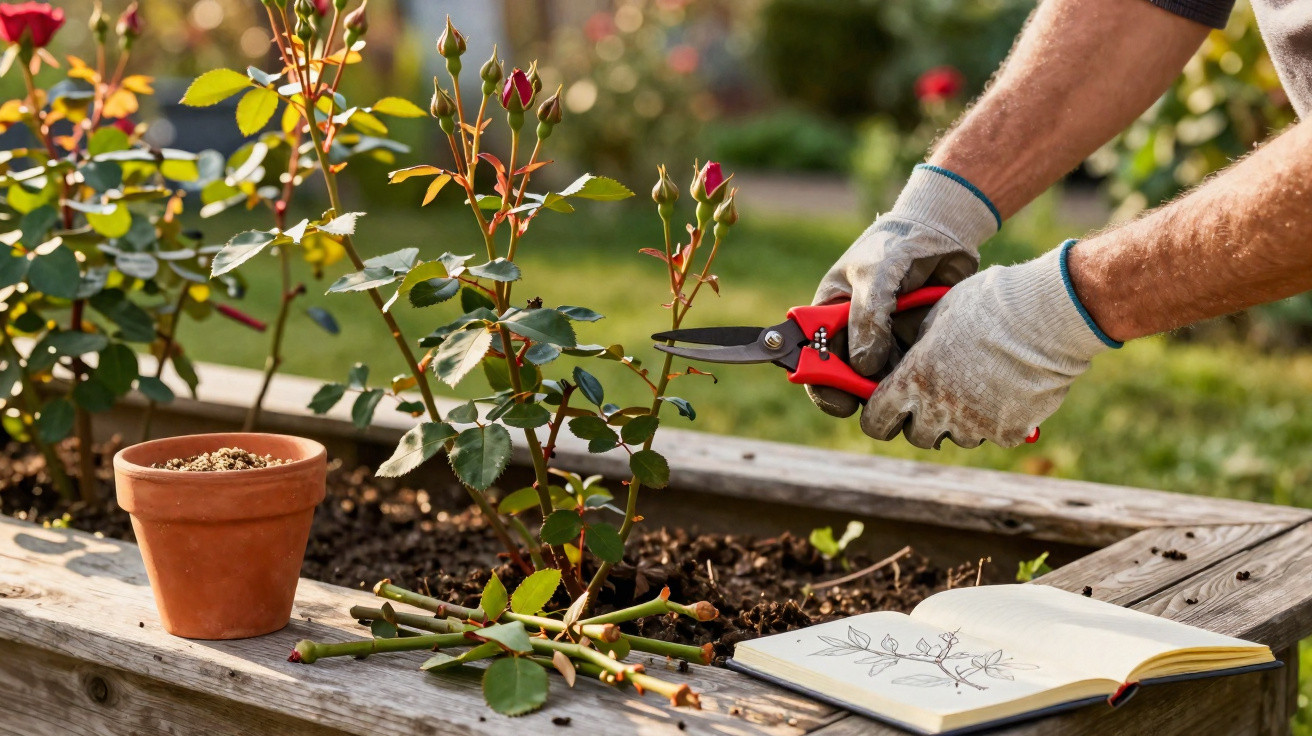
Many hobby gardeners avoid fruit trees because pruning can seem complicated. Columnar fruit removes much of that pressure. The trees naturally keep their slim shape, and usually it is enough to cut back the odd shoot once or twice a year:
- remove branches that grow well beyond the column shape
- cut out dead or damaged twigs
- thin very old fruiting spurs slightly when they stop cropping well
There is no need for major structural cuts or complex crown training, which makes columnar fruit particularly beginner-friendly.
Watering, feeding, mulching: the short to-do list
A container dries out far faster than a garden border. In summer especially, that means checking the compost more often. As soon as the top layer looks dry, it is time to water. Rainwater is best, though tap water is perfectly fine too.
To keep the tree strong over many years, it is usually enough to:
- work a dose of organic feed into the top layer of compost in spring
- top up the mulch whenever it has broken down
- if growth is very strong, apply a second, light feed in summer
"If you can use a water butt on the balcony or in the courtyard, you save real money and supply the tree with soft water at the same time."
When the first fruit arrives – and how much is really possible
From an empty pot to the first harvest
Columnar fruit trees get going surprisingly quickly. While classic garden fruit trees often make you wait five to ten years for the first meaningful crop, grafted columnar trees in pots typically produce their first worthwhile fruit after two to three years.
A typical timeline:
- Year 1: the tree establishes roots and builds shoots and foliage
- Year 2: first blossom, a few fruits
- Year 3: clear fruit set, several handfuls of produce
- from Year 4: regular, reliable harvests with good care
How long the tree can stay in a pot
With a sufficiently large container and occasional re-potting, a columnar fruit tree can thrive for many years. Every three to five years it pays to refresh the compost or rejuvenate the root ball: trim older roots slightly, replace tired growing medium, then water in well again.
This keeps the tree vigorous without letting it become oversized. Yields then settle into a steady rhythm-enough to pick several times each season.
Practical tips for city dwellers who crave home-grown fruit
Choosing the right spot, varieties, and possible risks
Windy roof terraces and heavily shaded courtyards bring their own challenges. On very exposed balconies, it helps to secure pots with straps or position them close to a wall. On north-facing balconies, yields may be lower; particularly tough varieties are the best choice there.
Typical container issues include:
- Waterlogging: can lead to root rot-drainage and drainage holes are essential
- Constant hunger: shows up as pale, small leaves-support with organic feed
- Late frost: can damage blossom-if frost threatens, move the pot briefly into a hallway or closer to the house wall
Why columnar fruit fits so well into everyday life
Columnar fruit trees combine several benefits at once: minimal space required, a manageable level of care, measurable savings on bought fruit, and a real boost in day-to-day quality of life. Anyone who has seen children dash onto the balcony in their pyjamas to pick their own cherry in the morning understands why these trees have become so popular.
For many urban residents, a potted fruit tree is their first genuine step into growing their own food. From there, other projects often follow: herb boxes, tomatoes in containers, perhaps a raised bed later on. The fruit tree in a pot then becomes the starting signal for a small, edible refuge-right in the middle of concrete, glass, and traffic noise.

Comments
No comments yet. Be the first to comment!
Leave a Comment