
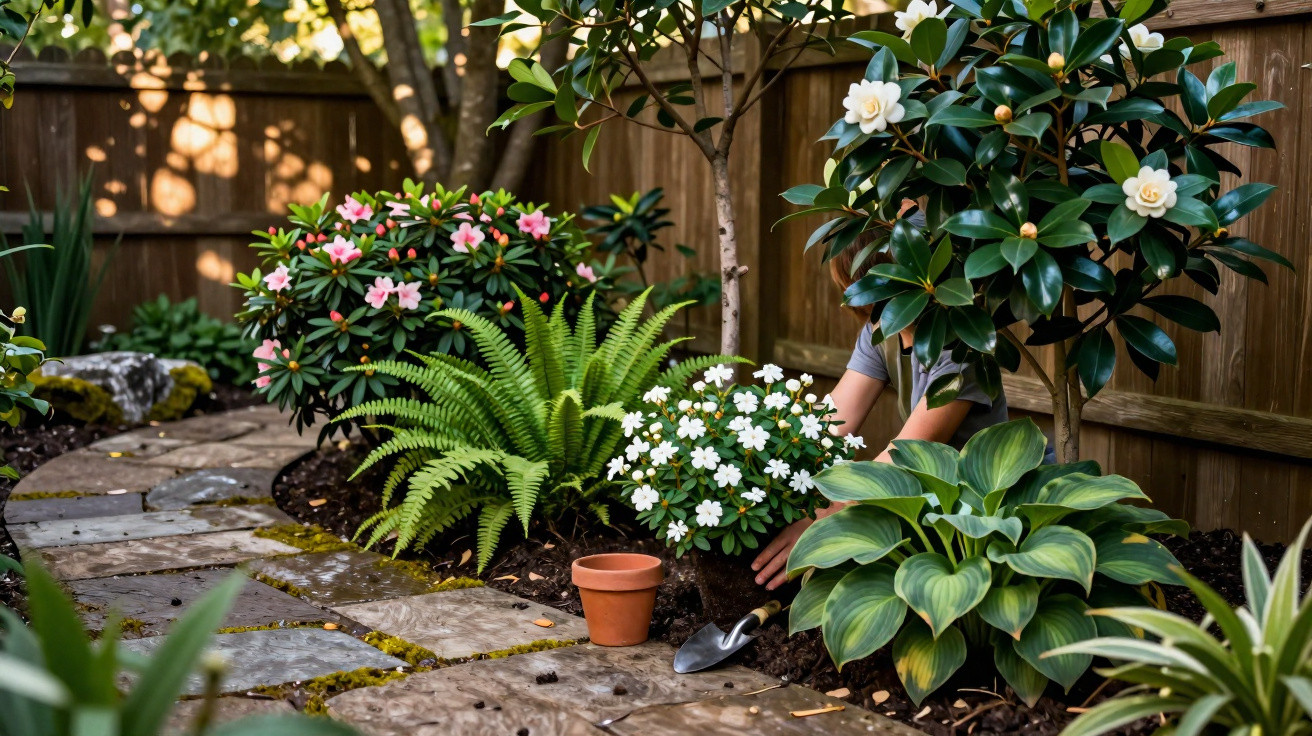
These spots are exactly where the opportunity lies: choose the right shrubs and a bare, shady patch can become a dense, colourful refuge. Five resilient species show how so-called problem areas can turn into quiet favourite corners - with flowers, structure and even more activity from insects and birds.
Why shade in the garden doesn’t have to be a problem
For years, shady areas were treated as dead space. Grass struggles, perennials look stunted, and the ground seems to swing between too dry and waterlogged - enough to put many people off gardening altogether. Yet if you pick plants that actually enjoy partial shade or full shade, you can work with what these parts of the garden do best.
"With the right shrubs, shaded areas can be turned into intimate, cool retreats - a real benefit on hot summer days."
Shrubs add structure, screening, blossom and evergreen bulk. They can improve the microclimate, help keep moisture in the soil, and provide habitat for birds and insects. The five options below cope well with limited sunlight and each brings a different kind of impact to the garden.
Cherry laurel: a living wall for more privacy
If privacy is the main aim, cherry laurel (Prunus laurocerasus) is often the obvious choice. It puts on growth quickly, stays evergreen through winter, and forms thick hedges that are hard to see through.
- Position: from bright shade to low-light spots beneath trees
- Advantage: extremely fast growth, year-round screening
- Disadvantage: needs regular pruning, otherwise it becomes overly bulky
In shaded gardens, cherry laurel often functions like a framework: it gives the plot an instant outline, encloses seating areas, and shields the garden from the street or neighbouring properties. The key is disciplined pruning once or twice a year - without it, the hedge can thin out on the inside and quickly look out of proportion.
Gardeners who prefer a more natural style can soften the look by mixing cherry laurel with looser flowering shrubs or shade-tolerant perennials, so the overall effect feels less formal.
Hydrangeas: colour explosions in dim light
Where many flowering shrubs refuse to perform in shade, hydrangeas really come into their own. Their large flower heads - whether rounded or in panicles - stand out even in darker corners and keep colour going for months.
The right hydrangea for every type of shade
Not every hydrangea has the same tolerance for low light. Choosing the right group makes the difference between success and disappointment:
| Group | Light requirement | Special feature |
|---|---|---|
| Mophead hydrangea (Macrophylla) | Partial shade to shade | classic ball-shaped blooms, often pink or blue |
| Velvet hydrangea (Aspera) | more shaded, humid air | fine, velvety leaves, exotic appearance |
| Oakleaf hydrangea (Quercifolia) | Partial shade, some sun possible | striking foliage, strong autumn colour |
| Panicle hydrangea (Paniculata) | Partial shade, also sunny with enough water | sturdy panicles, often white to pale pink |
Above all, hydrangeas need one thing: water. In hot summers, a quick splash with the watering can won’t do much. A humus-rich soil, a thick layer of mulch and deep, thorough watering help keep plants in good shape.
"Hydrangeas aren’t just beautiful - they’re useful too: their flowers attract bees, bumblebees and butterflies, turning even shady borders into hotspots for pollinators."
A helpful approach is to plant several hydrangeas together; the group creates a more enclosed, cooler microclimate that can reduce water demand per plant. Underplanting with ferns or hostas finishes the scene nicely.
Japanese maple: delicate elegance in partial shade
Japanese maples (Acer palmatum) are seen as ornamental highlights rather than purely practical shrubs. In shade, their strengths really show: the fine foliage is less likely to scorch, and the often intense leaf colours look particularly refined in softer light.
Many cultivars stay compact, making them well suited to front gardens, courtyards or north-facing balconies. In containers, they grow slowly and develop a distinctive silhouette over time. Choose a sheltered spot and provide evenly moist, slightly acidic soil.
To create a calm, almost meditative corner, pair a Japanese maple with cushions of moss, low grasses and a simple gravel surface. The result feels clean and tidy, and it works even in very small spaces.
Fatsia and rhododendron: shade with wow factor
Fatsia: a touch of the tropics in the back garden
Fatsia japonica - often sold as an indoor plant - can also thrive outdoors, provided winters are not too harsh. Its large, glossy leaves instantly bring a holiday feel to shady courtyards and sheltered corners.
- Look: large, bold foliage with an almost palm-like feel
- Space: shaded wall corners, patios, north-facing sides
- Note: black berries are poisonous to people and pets
Households with small children or dogs that roam freely should position fatsia so the berries later on can’t end up in children’s hands or a dog’s mouth. For birds, however, the berries are a welcome autumn food source.
Rhododendron: clouds of flowers in spring
Rhododendrons originate from cool, woodland-like regions - so it’s no surprise they often do better under tall trees than in full sun. They remain evergreen and, in spring, produce large flower trusses that can colour entire shrubs in pink, white, red or purple.
"Rhododendrons turn shady parts of the garden into colourful clouds of flowers for a few weeks each year - and provide plenty of nectar for insects."
Their weak point is the soil: it needs to be loose, rich in humus and distinctly acidic. In heavy, lime-rich ground they soon struggle. Gardeners tackle this with specialist rhododendron composts, raised beds, or targeted planting pockets enriched with conifer humus and bark mulch.
How to combine shade shrubs cleverly
The biggest mistake with shade planting is placing a few individual showpieces here and there and hoping they’ll have an effect. A planned layout delivers far more impact:
- cherry laurel as a calm, evergreen hedge line at the back
- hydrangeas planted in groups in front for colour from June to autumn
- a Japanese maple as a focal point at a corner or beside a path
- fatsia against walls or in a pot near the patio for an exotic feel
- rhododendron as a seasonal highlight, clearly visible from the seating area
Between the shrubs, shade-tolerant perennials such as hostas, barrenwort, Waldsteinia or various ferns can fill gaps. This creates a layered structure, from ground cover to perennials and then up to shrubs.
Care, water and climate: what shade-loving shrubs need
Shade doesn’t automatically mean less watering. Under trees, roots draw a great deal of moisture from the soil, and many shrubs - hydrangeas above all - can quickly become stressed. A thick mulch layer, occasional additions of compost and generous watering on hot days are essentials.
Climate change also plays a part: longer heatwaves and drier winters put traditional sun-loving plants under real pressure. Shrubs that prefer partial shade can sometimes handle these extremes better, because the soil dries out less quickly and leaves are less prone to sunscald.
If you’re planting new shrubs, pay especially close attention to watering in the first two years and make sure the soil stays open and well-structured. Once established, shrubs cope much better with weather swings, while also stabilising the soil and reducing erosion and surface sealing.
More benefits than just looks
Shade shrubs contribute far beyond attractive photos. Dense foliage filters dust from the air, softens traffic noise and creates sheltered nesting places for birds. Flowering shrubs such as hydrangeas and rhododendrons feed pollinators at times when little else is in bloom.
By combining several of the species listed above, you can make productive use of awkward garden corners, avoid the hassle of maintaining a lawn in problem areas, and at the same time increase biodiversity around your home. In this way, a supposedly useless shady patch gradually becomes a lively, green retreat.
Comments
No comments yet. Be the first to comment!
Leave a Comment