
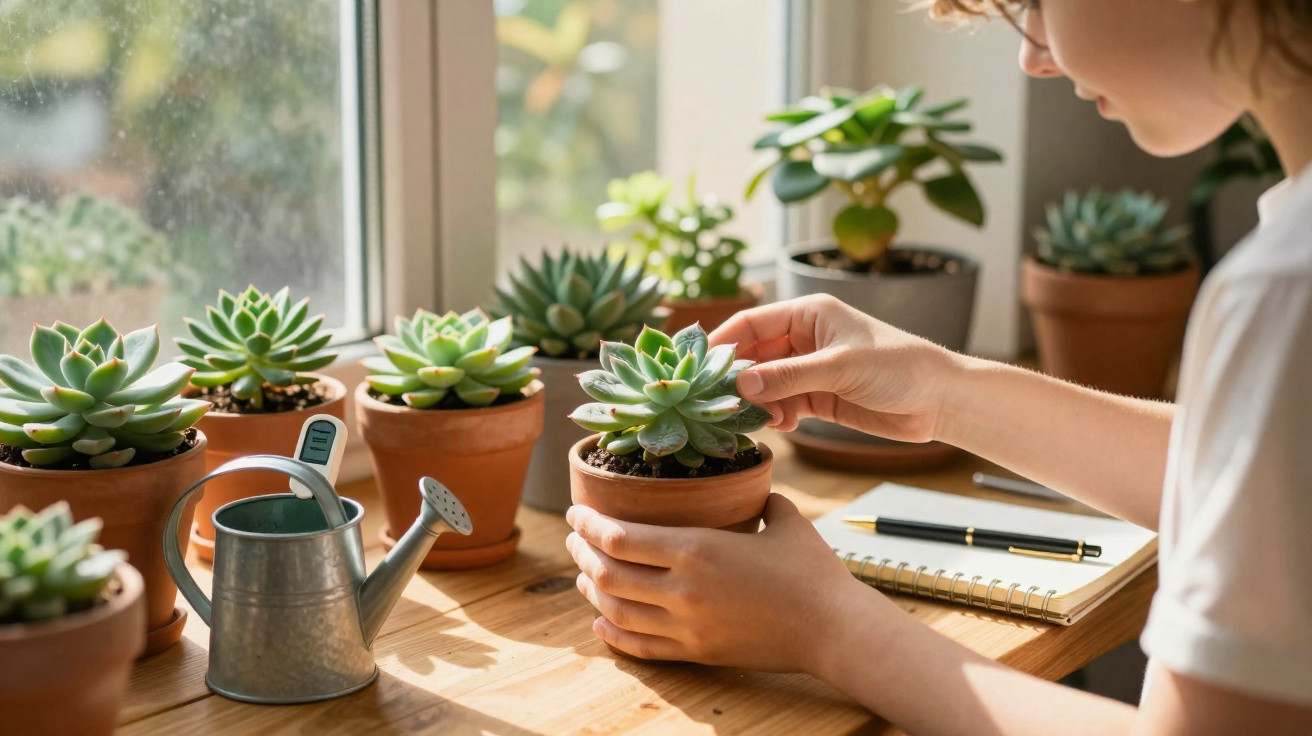
Succulents are often seen as easy-care plants, yet their look can still raise questions-especially when they start developing wrinkled leaves. In many cases, the first instinct is to water more, but that does not always fix the issue. Knowing what the wrinkling is actually signalling helps you avoid overwatering, save water, and keep the plant healthy for longer.
What does it mean when succulents have wrinkled leaves?
Succulents with wrinkled leaves tend to look a little limp, slightly folded, or as though the leaf surface has small ripples. Most of the time, this relates to changes in the amount of water stored within the plant’s tissues, which can drop or rise depending on conditions and watering habits.
To read the sign correctly, it is essential to assess the compost, the pot, and the light. Checking whether the growing medium is dry or waterlogged, whether drainage is working, and whether the plant has been moved recently can clarify whether the wrinkling is a genuine warning or simply part of an adjustment phase.
How to tell whether a wrinkled succulent does or does not need water
When the cause is underwatering, the leaves usually become thinner but stay relatively firm, with light wrinkling, and the compost will have been completely dry for several days. The plant is drawing on its internal reserves, which is common during hot spells, in windy conditions, or in rooms with constant air conditioning.
If the leaves feel very soft, look translucent, start to darken, or come away easily, the more likely cause is too much water and the beginning of root rot. In that scenario, watering more only makes things worse-so it is crucial to check compost moisture with your finger or a wooden stick before any irrigation.
- Signs of too little water: thin leaves, gentle wrinkling, compost dry for several days.
- Signs of too much water: soft leaves, translucent appearance, compost staying damp for a long time.
- Signs of environmental stress: a recent change of location, intense heat, or excessive cold.
What are the main causes of wrinkling in succulents?
The most frequent causes come down to watering, drainage, and light. Overwatering, pots without drainage holes, saucers that are constantly full, and heavy growing media keep the compost wet for too long, encouraging fungal issues and weak roots. On the other hand, extended periods without watering in a dry climate can also lead to leaves shrivelling.
Too little light can leave the plant weak and stretched, with more delicate leaves, while strong direct sun during the hottest part of the day can scorch and wrinkle exposed areas. In addition, pests such as mealybugs, aphids, and mites sap the plant, making leaves thinner and more wrinkled-particularly when plants are kept very close together in a collection.
How to care for wrinkled succulents and when wrinkling is just adaptation
When you notice wrinkled leaves, it is best to observe and adjust before changing your watering routine. Use a light cactus-and-succulent mix, choose pots with drainage holes, and water only when the compost is dry to at least half the pot’s depth. Indoors, the gap between waterings is usually longer, especially in winter or in spaces with little air movement.
In many cases, wrinkling is simply a sign of the plant adapting to new light, a new pot, or a temperature shift, and some older leaves may shrivel and drop while fresh growth appears firm. If the plant keeps producing healthy new leaves with bright colour and a consistent texture, the wrinkling is typically temporary and suggests the succulent is settling into its environment rather than dying.





Comments
No comments yet. Be the first to comment!
Leave a Comment