
Many home gardeners only start thinking about their strawberries once the first blossoms appear. By then, it’s effectively too late. The groundwork for a really generous, sweet summer crop is laid in the final days of March. One simple, often overlooked task can decide whether your plants put their energy into fruit - or waste it on unnecessary leaf growth.
Why the end of March is the real starting gun for strawberries
When the soil wakes up, you can’t afford to dawdle
As soon as the sun begins warming the ground again, an invisible race starts in the strawberry bed. The plants push sap into their shoots, and tiny new leaves work their way up through the damp soil. From the outside it can still look fairly uneventful, but inside the plant the preparations are already in full swing.
This is exactly when it’s decided where the plant’s energy will go: into strong flower buds - or into old, pointless foliage. If you do nothing now, you risk lots of small berries instead of fewer large, richly flavoured strawberries.
"The end of March is the window in which you can turn an ordinary strawberry bed into a true fruit machine."
Old leaves drain the strength your fruit needs
After winter, strawberry plants are full of dead and half-dried leaves. They may have helped the plants through the cold, but now they’re simply a burden. The plant continues feeding every leaf with nutrients - even when that leaf is barely contributing to photosynthesis.
If this winter foliage stays in place, the plant’s power gets spread across too many “building sites”. The result:
- weaker growth in the plant’s crown
- fewer and smaller flowers
- noticeably smaller fruit in summer
If you genuinely want big strawberries, you need to help the plant focus on what matters most - right now.
The decisive cut: spring clean with the shears
How to tidy the bed thoroughly but gently
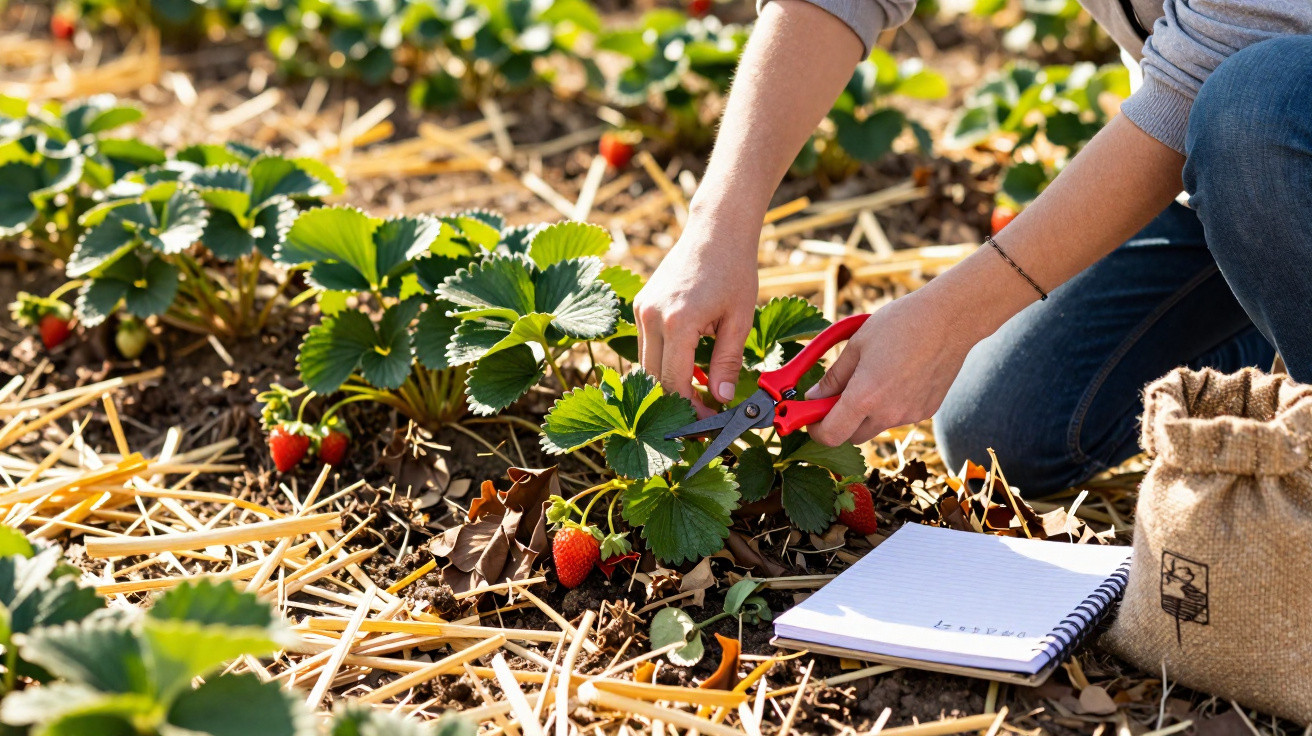
The key to XXL strawberries is a proper spring clean. All you need is a sharp, clean pair of secateurs. Work through the bed plant by plant, and take a methodical approach.
What to look for as you cut:
- cut off all brown, spotted, or dried leaves right at the base
- remove any leaves with visible fungal infection without hesitation
- pick up old leaf debris and stems lying on the soil
- in the centre, leave only the fresh, juicy green leaves
This leaves each plant with a small, open ring of young, healthy foliage. It can look almost bare at first, but that’s the point: the plant no longer has to share its energy with dead weight.
An open crown means less rot and better overall health
This pruning has a second advantage that’s often underestimated. By stripping out the dense old foliage, light can reach the inner part of the plant again. Airflow improves, the crown dries faster, and moisture is far less likely to sit and linger.
"A well-aired strawberry plant is the best insurance against grey mould and other rots - without any chemicals."
In damp springs especially, fungal diseases can spread quickly. They tend to start on weak leaves, then move to the flowers and later onto the fruit. Careful cutting in March reduces that pressure significantly from the outset.
How to feed your strawberries to record sizes
Organic power for a long fruiting period
Once you’ve cut back, the plants are ready for their first proper meal of the year. Strawberries are hungry feeders: they need plenty of nutrients if they’re going to produce lots of big fruit.
Good organic options include:
- mature compost from your own garden
- well-rotted farmyard manure (for example, from horse or cattle)
- specialist organic fertiliser for soft fruit from a garden centre
Spread a small handful of compost or fertiliser around each plant, but don’t pile it directly onto the crown. Work it in lightly, then let rain wash the nutrients into the top layer of soil. Organic fertiliser releases more slowly, but it lasts - ideal for harvesting over several weeks.
Loosen the soil without damaging fine roots
To stop nutrients sitting only on the surface, it’s worth gently loosening the soil. Strawberry roots are very close to the top. If you hoe too deeply, you can damage them easily.
The right method:
- use a small cultivator or hand rake and work only 1–2 centimetres deep
- avoid the crown and start in the outer area instead
- pull out small weeds at the same time
You’ll end up with a well-aerated, crumbly topsoil where water and oxygen can move freely. The root system responds with stronger growth - the basis for sturdy, high-yield plants.
The protective layer: why good mulch is worth its weight in gold
Mulch keeps moisture in and helps prevent rotten fruit
After pruning and feeding, the soil often looks bare and brown. This is when an extra step pays off twice over in summer: adding a protective layer of organic material.
Popular mulches for strawberries include:
- straw
- hemp or flax chippings
- dried leaves (apply only a thin layer)
This layer does several jobs at once:
- It helps the soil stay moist for longer, even during hot spells.
- It suppresses many unwanted weeds.
- It stops ripe fruit resting directly on damp soil and going mouldy.
"If you let your strawberries sit on dry mulch instead of bare soil, you’ll save a large part of the crop from rot and slug damage."
Slugs and more: how to protect plants naturally
Where young, tender leaves appear, slugs are rarely far behind. A coarse mulch such as straw or hemp is already unpleasant for them to cross. With a few additional tricks, you can strengthen your defences.
Proven options for the home garden include:
- a ring of crushed eggshells around each plant
- a light scattering of wood ash (not too much, so the soil doesn’t become overly alkaline)
- avoiding evening watering right around the plants so the area isn’t constantly damp
These barriers irritate a slug’s sensitive body and keep many at bay - without poison and without putting hedgehogs or birds at risk.
Your strawberry plan, step by step
Checklist for an XXL strawberry harvest
So you don’t forget anything at the end of March, a clear list helps. Choose a dry day and work through the following:
- Cut away all old, brown, and diseased foliage completely.
- Remove all cuttings from the bed and don’t leave them lying beside the plants.
- Loosen the topsoil around each plant very shallowly.
- Apply compost or organic berry fertiliser around the root area.
- Cover the fed area with straw or another mulch material.
- Put slug protection in place, for example eggshells or a little wood ash.
In a small garden this often takes barely half an hour, but it lays the foundation for weeks of red fruit in summer.
How to tell you’ve done everything right
In the weeks after your March session, you can almost watch the plants take off. Typical signs of a strong start include:
- deep green, sturdy new leaves in the centre
- hardly any brown patches or mould in the planting
- first flower buds clearly rising above the foliage
Once the first bright white flowers open, the critical work is done. From then on, the main priorities are regular watering - ideally in the morning, straight onto the soil rather than over the leaves - and keeping the bed free of aggressively spreading weeds.
A few extra tips for truly big strawberries
Choosing varieties, the right site, and common mistakes
Even the best March care can only partly compensate for weaknesses in variety choice or location. Strawberries thrive in a sunny, airy spot and in soil that is neither waterlogged nor bone dry. A slightly humus-rich, loose garden soil is ideal.
Common mistakes that reduce the crop:
- planting too closely, which traps moisture
- leaving plants in the same place for several years in a row, which increases disease pressure
- watering with a hose over leaves and flowers, which raises the risk of fungal problems
After three to four years, it’s worth changing varieties completely and moving to a new part of the garden. That keeps plants vigorous and stops older, more susceptible stock from burdening the new planting.
What “XXL” really means for strawberries
Many people think XXL strawberries simply means enormous fruit. In practice, what matters more is the combination of size, flavour, and total yield. A handful of very large but watery berries is less satisfying than a bowl of medium-sized, intensely scented strawberries.
That’s exactly what the March routine is aiming for: it strengthens the whole plant system, supports good root growth, steady leaves, healthy flowers, and resilient fruit. Whether you turn them into a strawberry sponge, jam, or simply a bowl with a little cream is up to you - the basis for a “show-off strawberry summer” is created with that one timely job at the end of March.

Comments
No comments yet. Be the first to comment!
Leave a Comment