
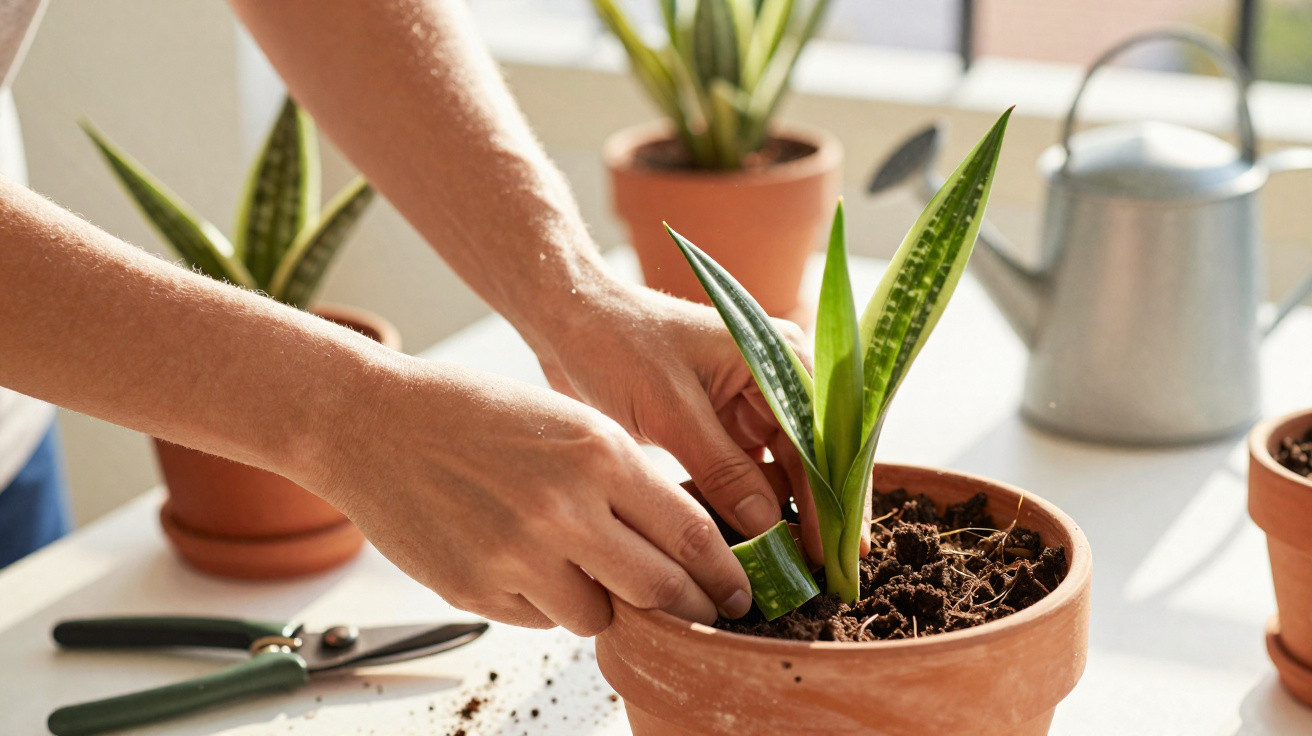
Burying small pieces of sansevieria leaf - the plant also known as Saint George’s sword or mother-in-law’s tongue - has become a popular gardening tip because the leaf breaks down slowly in the potting mix and can release organic matter bit by bit. It is often presented as an easy way to strengthen the soil, but it needs to be done sparingly to avoid rot or too much moisture.
Why is sansevieria used for this tip?
Sansevieria is a succulent plant with thick leaves that hold water and organic compounds. When a cut leaf is placed under the surface of the compost, it starts to decompose gradually and may add carbon and small amounts of nutrients to the potting mix.
Recent gardening posts describe this as a homemade, slow-release feed, particularly when the leaf is chopped into small pieces and buried away from the plant’s main stem. The aim is for decomposition to support the soil without a heavy, one-off dose of fertiliser.
What benefit does this leaf offer to other plants?
The main advantage is a gradual lift in the pot’s organic matter. As the leaf fragments break down, microorganisms in the compost convert that material into simpler compounds, which can support soil life and help with nutrient availability.
Some articles also credit sansevieria leaves with minerals such as magnesium, calcium and potassium, as well as compounds like saponins; however, this kind of home tip should be treated as an add-on, not a replacement for balanced feeding or a properly prepared growing medium.
How do you bury the leaf correctly?
It is best to use an older leaf - one that has snapped or would be removed during routine pruning from the sansevieria itself. Using clean scissors, cut it into small pieces so the breakdown is more controlled and does not create a wet clump inside the pot.
The step-by-step process is straightforward:
- cut a healthy leaf or a damaged one, but make sure there is no mould;
- slice it into small, thin pieces;
- make shallow holes in the compost, away from the stem;
- bury only a few pieces around the plant;
- cover with compost and water only if the potting mix is dry.
What precautions help prevent fungus and bad smells?
The sansevieria leaf should not be buried in large quantities. Because it is succulent and stores water, too many pieces in the same pot can rot before they decompose in a helpful way, especially in compacted or waterlogged compost.
It is also wise to avoid this method in pots that already smell musty, drain poorly, or contain plants with roots that dislike excess moisture. Sansevieria itself, when grown in a pot, needs moderate watering and the compost to dry out between waterings, because soggy conditions encourage fungal problems.
For which plants does this method make the most sense?
This approach is generally safer in pots with free-draining compost and plants that can tolerate some decomposing organic matter. With delicate herbs, small succulents, or plants with very sensitive roots, it is better to trial only a tiny amount.
Burying sansevieria in the pot can work as a light soil boost, but it should not become a weekly habit. Any real benefit depends on balance: a few pieces only, good drainage, controlled watering and watching how the plant reacts. If the pot develops a bad odour, fungus appears, or the compost stays wet for many days, remove the material and adjust your watering routine.

Comments
No comments yet. Be the first to comment!
Leave a Comment