
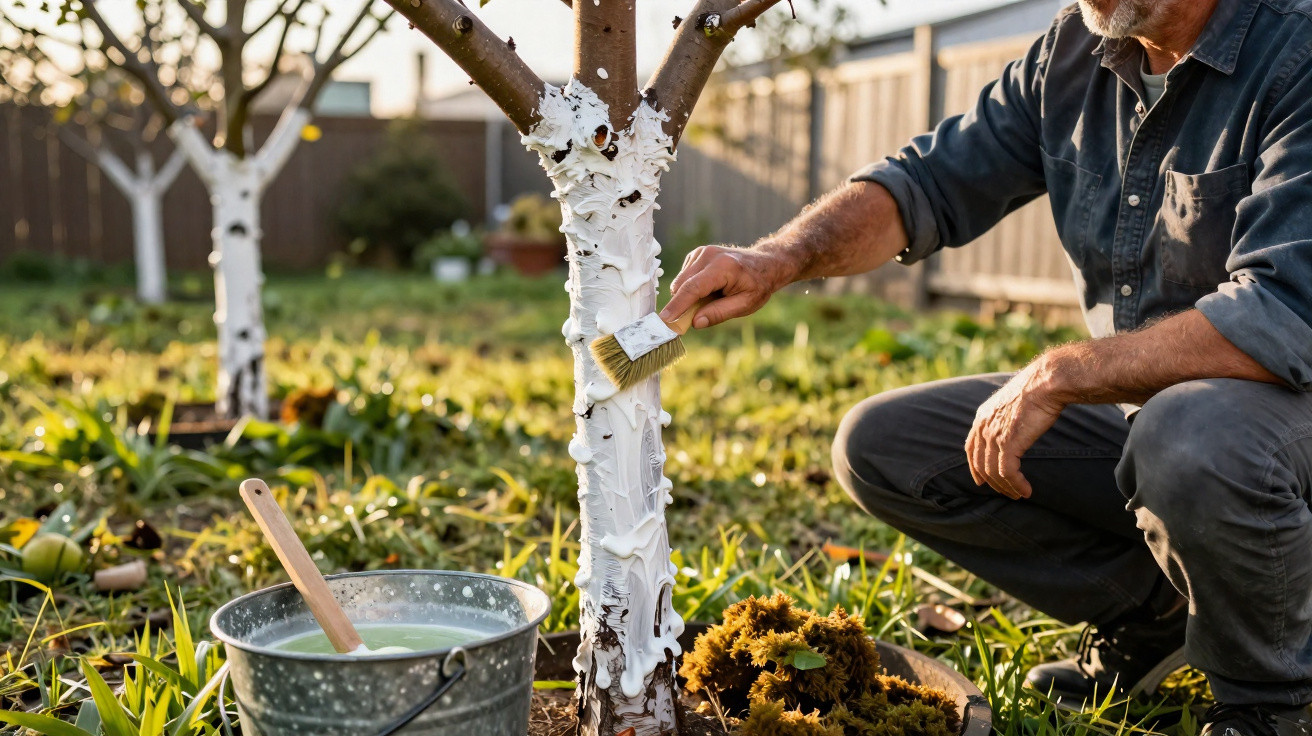
Painting tree trunks white is a practice known as limewashing, traditionally done with hydrated lime diluted in water. The pale coating reflects part of the sun’s radiation and helps prevent the bark from overheating, a form of protection that is particularly helpful for young and fruit-bearing trees whose trunks are still thin and highly exposed to sunlight.
Why does the white colour help to protect the trunk?
Dark trunks absorb more solar energy and can reach very high temperatures during periods of strong sunshine. A white surface reflects a larger share of the light, reducing the sudden temperature swings experienced by the tissues just beneath the bark.
This protection is used mainly to prevent sunscald, a type of damage that can cause dried-out patches, cracking and tissue death. Once the bark splits, fungi, bacteria and insects have easier entry points into the tree.
How is limewashing applied to trees?
Hydrated lime should be mixed into a suitable solution for use on the trunk, without creating an excessively thick layer. Application is usually focused on the side most exposed to the sun:
- Gently remove dirt and any loose pieces of bark.
- Use only a suitable product, properly diluted.
- Brush on a thin coat.
- Start near the base of the trunk.
- Work up to around 80 centimetres to 1 metre in height.
- Choose a dry, mild day with no rain forecast in the immediate period.
Is it right to use wall paint instead of lime?
It is not recommended to improvise with just any household paint. Waterproofing products, oil-based paints and exterior coatings can form unsuitable films over the bark and interfere with the gas exchange carried out through the trunk’s natural structures.
Traditional limewashing uses a thin mineral solution, while commercial products made specifically for trunk protection have their own formulations. Before applying any coating to a young fruit tree, it is important to check that it is intended for plants and to follow the recommended concentration.
Does the white layer also deter insects and moss?
The alkaline conditions created by lime can temporarily make it harder for some organisms to develop on the bark surface, but this should not be treated as its main purpose. The most consistent benefit of a white coating comes from light reflection and protection against excessive heating:
- It can reduce direct radiation hitting the bark.
- It helps to lessen sharp temperature fluctuations.
- It mainly protects young trees with thin bark.
- It may temporarily hinder some surface organisms.
- It does not replace proper pest and disease control.
- It needs reapplying when rain and weather wear away the coating.
Why does the practice make more sense for young trees?
Newly planted fruit trees tend to have relatively thin bark and a small canopy, leaving much of the trunk directly exposed to the sun. In these conditions, a white protective coating can reduce heat-related damage while the tree develops a fuller canopy and tougher outer tissues. For mature trees that are well shaded, the need is usually lower.
In parks and streets, white trunks also appear for aesthetic tradition, even when not every tree needs the treatment. For anyone growing similar species in very sunny locations, the decision should be based on age, species, sun exposure and bark condition, rather than automatically limewashing the entire trunk.
Comments
No comments yet. Be the first to comment!
Leave a Comment