
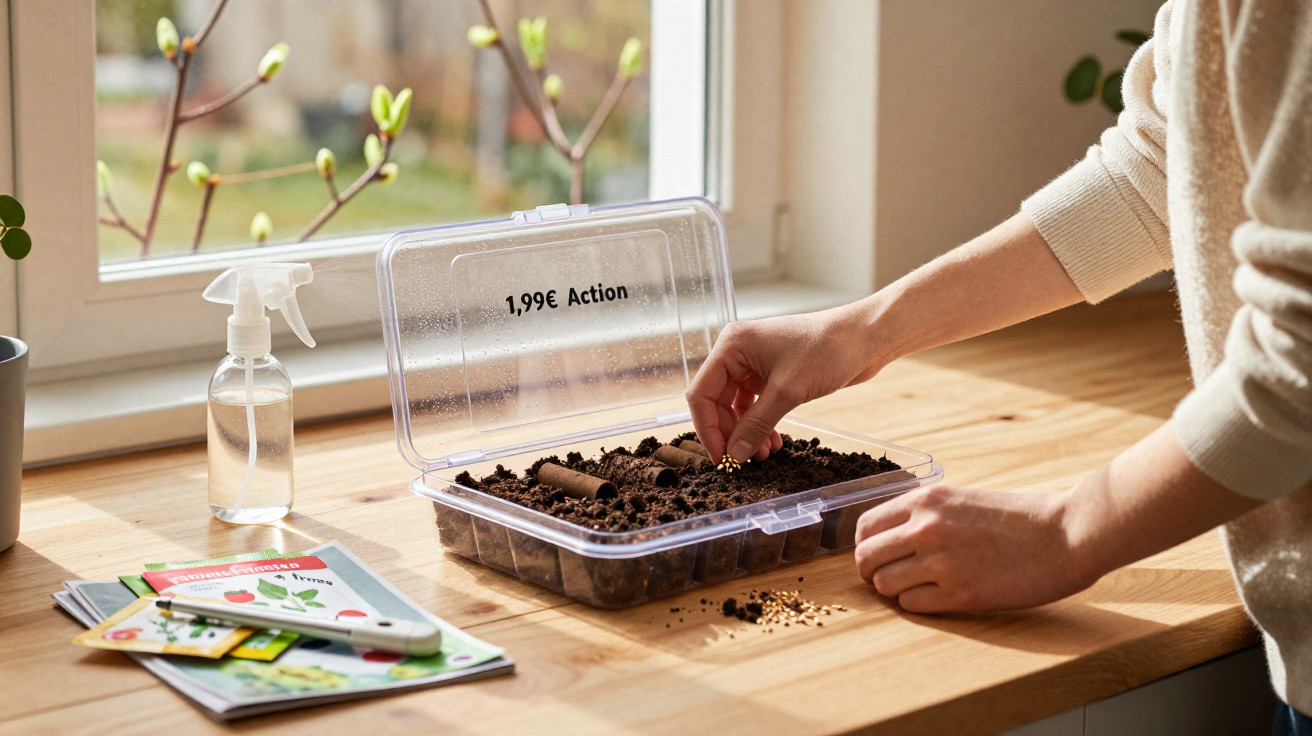
Whether the vegetable garden season becomes a real success or ends in frustration is often decided in March. A miniature kit from discount retailer Action is currently attracting attention: an understated £1.99 set designed to make windowsill sowing more reliable and easier to manage.
What the £1.99 Action kit includes
Called “My Garden”, the set uses a seed-starting, or “snail”, system. It is intended to put everything needed for a compact, clearly arranged start to sowing into one small pack.
The kit components at a glance
The box contains:
- one growing container (a pot that provides a stable base)
- two elastic bands for securing the roll
- a strip or roll of seed paper measuring approximately 60 x 10 cm
Seeds are placed along the paper strip, which is then loosely rolled up and positioned upright in the pot. The elastic bands keep the roll in place. This creates a compact “seed snail”, with seeds arranged in visible rows.
“The biggest advantage: seedlings are neatly arranged, can be checked at a glance, and there is no longer any need to poke around in crumbly compost.”
This is especially useful on narrow windowsills, where plenty of seeds can be started in a small area without creating clutter.
Why March is the ideal time for this kit
In March, many seeds can germinate on a warm windowsill while overnight frost is still possible outdoors. That creates stress for both plants and gardeners, who must continually judge whether conditions are too wet, too dry, too bright or too dark.
Common March sowing problems
At this time of year, mistakes that can ruin entire rows of seedlings are particularly common:
- too much water, mould and seedlings “damping off”
- seeds sown too closely together, causing plants to compete for space
- unidentified varieties, missing labels and disturbed compost
The snail system brings order to this confusion. Seeds sit in clearly defined rows, receive moderate moisture and remain visible at all times. Problems can be spotted early and addressed before the whole sowing fails.
Consistent conditions rather than lucky results
Successful seed sowing is less about having “green fingers” than following reliable routines. Keeping three factors reasonably steady will nearly always pay off: moisture, temperature and light.
Moisture: gently damp, not soaking wet
Many amateur gardeners overwater because they are worried their seeds will dry out. With the snail, the roll is usually moistened lightly and more frequently instead of being drenched in one go. This keeps the paper evenly damp without making it sodden.
“Consistently, lightly moist conditions are the real starting switch for germination – not a watering can running continuously.”
If too much water is poured into a shallow tray, seeds may float away or be washed deep into the compost. In an upright roll, moisture spreads far more gently.
Temperature: warm but never hot
Windowsills in spring may look ideal, but they are not always suitable. Sunshine can heat the glass considerably during the day, while temperatures drop sharply overnight. These fluctuations drain seedlings of energy.
A calm location with moderate warmth is much more helpful than placing seeds directly on a radiator. A bright, draught-free spot with a largely stable temperature is ideal.
Light: act quickly or plants become leggy
As soon as the first shoots emerge from the paper, they need light. With insufficient light, they grow long and thin, and are more likely to topple over. The snail makes the first green shoots visible very early, allowing prompt action.
Turning the pots slightly each day helps prevent shoots from growing crookedly towards the brighter side.
Sowing with the Action kit in 15 minutes
The system is clearly aimed at beginners too. The first batch can be completed quickly in just a few straightforward stages.
Choose a suitable growing medium
Use a loose, fine seed compost mix. Coarse container compost or garden soil is unsuitable because hard clumps hinder delicate roots. Lightly dampen the compost before filling, until it feels moist but not muddy.
Prepare the roll, sow and press gently
Lay out the paper strip, cover it with a thin layer of compost and space the seeds according to the instructions. Carefully roll everything up afterwards. The aim is a stable roll that is not wound too tightly and will sit securely in the pot.
Place the roll upright in the pot and fit the elastic bands around the outside – the structure is complete. Pressing it very gently ensures good contact between the seeds and compost.
Water correctly without creating a mess
For the first watering, use a spray bottle or a watering can with a very fine rose. This keeps everything in position. Moisten in several small stages until the roll is evenly damp throughout.
Cover, ventilate and check daily
Many people loosely place a transparent cover or film over the pot to retain moisture. It is important to ventilate briefly every day, preventing a “greenhouse climate” of condensation and mould. Once the first seedlings emerge, remove the cover gradually.
Crops especially worthwhile in March
Starting now means the £1.99 kit can be reused several times in succession. Typical spring sowings in particular benefit from an organised start indoors.
Popular vegetables for an early start
- Tomatoes: need warmth, germinate reliably and remain indoors until May.
- Peppers and chillies: get started slowly and benefit from a long growing period indoors.
- Round lettuce and cut-and-come-again lettuce: grow quickly and can be moved into the bed early.
- Brassicas: depending on the variety, they provide robust young plants for outdoor growing.
Culinary herbs from the snail system
Aromatic plants are also particularly suitable:
- Basil: enjoys warm windowsills and is sensitive to waterlogging – making it easy to monitor here.
- Parsley: germinates slowly, so it benefits from consistent moisture.
- Chives: usually emerge reliably and provide fresh green growth early in the season.
Flowers for a long summer display
For ornamental plants, the kit can be used for summer-flowering varieties. Flowers started early can fill balcony planters and beds much sooner later in the year. Orderly rows are an advantage here as well: gaps are immediately visible, making it easy to sow more seeds.
Quick fixes when germination stalls
Even with careful planning, a batch of seeds can fail. Many issues can be corrected without throwing everything away straight away.
Signs of excessive watering
When the paper or compost remains permanently wet, seedlings can collapse and the base of their stems may become glassy or brown. The only solution is to stop watering, ventilate more frequently and move the pot to a slightly airier position.
Too little light – what to do about “giraffe seedlings”?
Long, thin stems are a clear warning sign. Move them to a much brighter spot, using a grow light if necessary. Some plant types can be planted more deeply when pricking out later, helping them stand more firmly again.
Adjust the temperature instead of sowing again
If nothing happens for days, the location is often the cause: perhaps a cooler hallway, a draughty window, or, at the other extreme, a very hot south-facing position with dry airflow. Moving the seeds to a moderately warm, bright room is often enough to encourage germination.
Thin out densely germinated seedlings
Even with the snail system, it is possible to use too many seeds. If that happens, use small scissors to cut the weaker seedlings just above the paper. The remaining plants then have more room and can develop stronger roots.
From a mini kit to a strong supply of young plants
The real work starts once the green rows are growing steadily. At this stage, the priority is to prick out at the right time, harden plants off gradually and avoid stress.
The right time to prick out
Once the first “true” leaves appear after the seed leaves, it is worth moving plants into individual pots. Pricking out too early weakens them, while leaving it too late creates stress through lack of space. The snail makes monitoring easier, as the growth stage of each shoot is clearly visible.
Gradually acclimatise plants to outdoors
Before young plants are moved permanently into a bed or onto a balcony, give them a few days to adjust to fresh air, sunshine and changing temperatures. Start with short periods in partial shade, then increase both the duration and brightness. This avoids scorched leaves and shock-related growth checks.
How the kit remains useful throughout the season
The system is not “used up” after the first round. By replacing the paper or switching to other seed strips, you can:
- raise later sowings of lettuce
- sow herbs in stages rather than all at once
- carry out small trials with new varieties
- start cuttings or offsets in an orderly way
For gardeners with limited space, this type of mini set-up is especially worthwhile. It encourages structure, reduces typical beginner mistakes and makes sowing feel less daunting. And if it produces even a few strong tomato and herb plants, the £1.99 investment has already paid for itself.
Comments
No comments yet. Be the first to comment!
Leave a Comment