
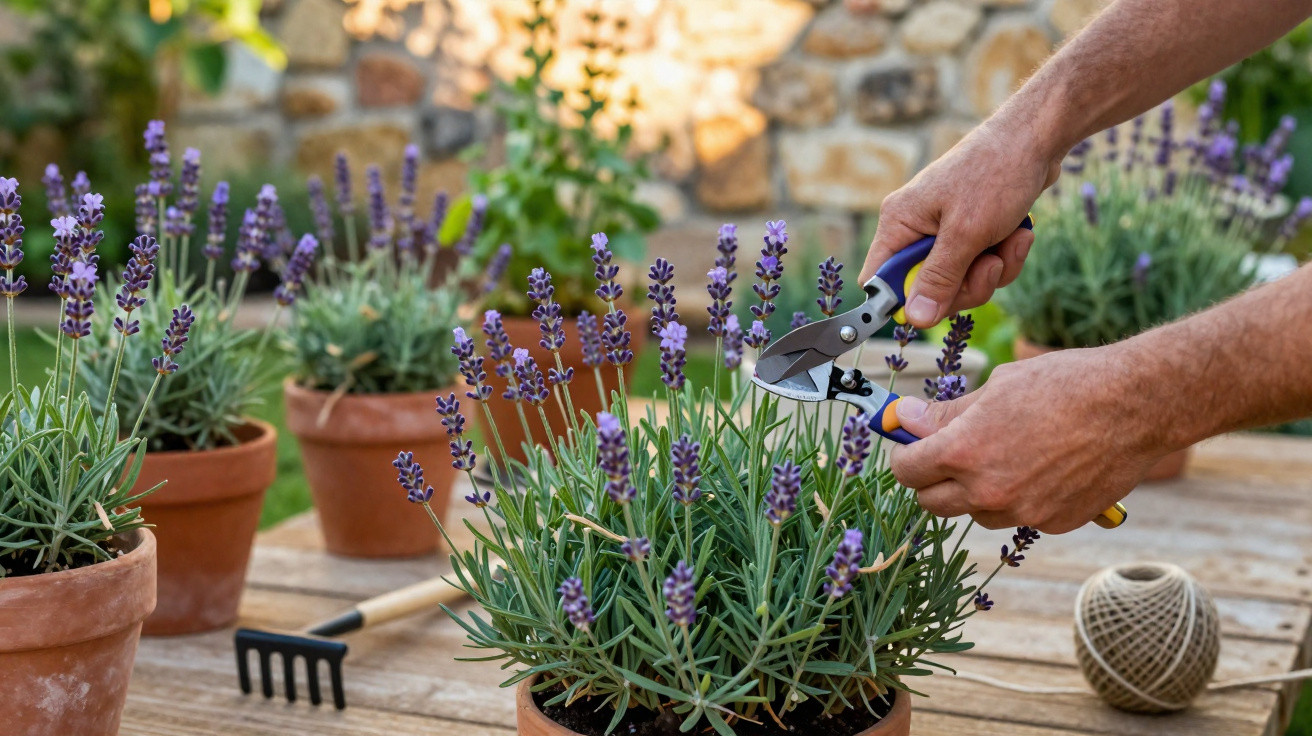
Many amateur gardeners are puzzled every summer when their lavender produces only a few meagre flowers on long, bare stems. The shrub ends up looking grey and woody at the base, with thin, scruffy growth on top. The key moment isn’t summer at all, but a short window in spring: how you prune your lavender by the end of March largely determines how abundant the season’s flowering will be.
Why pruning before the end of March determines your lavender flowering
Lavender naturally becomes increasingly woody at the bottom as it ages. If a plant is left unpruned for years, it develops long, naked shoots with only a small number of flowers right at the tips. Instead of putting energy into fresh shoots packed with buds, the plant invests its strength in old wood.
This is exactly what early pruning addresses. Cutting back in March redirects growth into young, green shoots. From the soft, leafy portion, countless new side shoots emerge-where noticeably more flower spikes will form.
“Anyone who lightly cuts back lavender before the end of March will get significantly more flowers from the same shrub over a longer period.”
Garden experts stress that every week of delay after March can noticeably reduce the volume of flowers. Pruning too late pushes flowering back and shortens the main display. The shrub must first spend time producing new growth, rather than being in full colour in June/July.
How to prune lavender in March without ruining it
Many hobby gardeners hesitate with lavender because they fear cutting “too much”. The reassuring news is that one simple rule of thumb lets you shape it safely and gently.
The golden rule: never cut into old wood
Look closely at a single shoot: the lower section is hard, grey-brown and usually bare-this is old wood. Above it you’ll see a softer, greener section with leaves. You only prune within that green, leafy growth.
- Tools: use sharp, clean secateurs
- Where to cut: always in the soft, leafy part
- Distance: start roughly 2 to 3 centimetres above the woody base
- Avoid wood: never cut back into completely bare, old wood
Lavender either reshoots very slowly from exposed old wood-or not at all. If you cut too deep, you risk dead, brown stubs instead of fresh, cushiony growth. That’s why March pruning is a “light renovation cut”: careful, but consistent within the green area.
Shape matters: turn the bush into a fragrant cushion
If you want lavender to look like a compact, flowering cushion later on, it isn’t enough to simply shorten every stem to the same length. Work your way around the plant and keep the overall outline in mind:
- Work from the outside in.
- Shorten the outer shoots slightly more than those in the centre.
- Aim for a semi-rounded, gently domed shape-don’t create a flat “platform”.
- Remove any bare, dead, or frost-damaged twigs completely.
This produces an even, rounded half-dome. That shape allows light and air to reach all shoots, which reduces fungal issues and encourages dense regrowth from every side.
“Think of the cut like a bowl-cut hairstyle: round, dense, no corners or edges-then the shape and the bloom will be right.”
Light spring prune, stronger summer prune: the yearly plan for lavender
If you repeat the same mistake every year and only cut lavender after flowering, you leave a lot of potential unused. Two dates deliver much better results: a cautious shaping and maintenance cut in March, then a firmer cut-back after the main flush.
| Timing | Goal | Type of cut |
|---|---|---|
| March | Remove winter damage, build shape, increase flower numbers | Light trim in the green growth, no old wood |
| August (after flowering) | Rejuvenate the plant, keep it compact | Stronger cut, but still just above the woody base |
The spring prune tidies the plant and stimulates new shoots; the late-summer prune stops the shrub splaying over winter and becoming more and more woody.
Which lavender varieties respond particularly well to a March prune
Modern cultivars show especially clearly what a consistent March prune can achieve. A popular example is Lavandula x intermedia ‘Phenomenal’. With the right care, it forms round, sturdy bushes of about 60 to 70 centimetres in both height and width.
It carries intensely fragrant, blue-violet flower spikes for months, and copes with heat, drought and colder winters better than many older varieties. The basic set-up is straightforward:
- Position: full sun, open to breezes, no waterlogging
- Soil: fairly lean, sandy to gravelly, well-drained
- Feeding: little to no nitrogen-rich fertiliser; keep it on the poor side
- Care: March prune plus a light cut-back after flowering
The same rhythm also suits classic “English” lavender (Lavandula angustifolia) and the more warmth-loving types with tufted flowers. The key for all of them is the same: let plants root in well first, then prune regularly-carefully, not harshly.
Common mistakes when pruning lavender – and how to avoid them
Many lavender plants look tired after a few years, not because the variety is poor, but because they’ve been handled incorrectly. Typical issues and what to do instead:
Mistake: not pruning at all for years
Result: long, bare shoots, flowers only at the tips, the shrub collapses outwards.
Fix: start now with a gentle March prune, cut a bit more firmly in summer, and keep that routine in the following years.Mistake: pruning too late in the year
Result: delayed flowering, a weakened plant going into winter.
Fix: do the main shaping in March; later in the year, only trim back moderately.Mistake: cutting deep into old wood
Result: parts of the shrub won’t reshoot; dead branches remain.
“The most important rescue measure for battered lavender: from now on, cut only just above the wood and give the plant time to recover.”
Position, soil and care: how the garden supports the March prune
A good cut can compensate for a lot-but not everything. If lavender is permanently sitting in wet conditions, even perfect timing only helps so much. The plant comes from dry, sunny regions and generally prefers lean conditions.
The ideal spot is full sun, at least six hours per day. Soil should be loose, sandy to gravelly, and able to drain water quickly. Heavy clay can be improved with sand or fine gravel. If you plant lavender into very rich garden soil and then fertilise heavily, you mainly encourage leafy growth-while holding back flowering.
Especially after wet winters, it’s worth checking in March for rotten roots, mushy shoots and brown patches, and removing them straight away. The prune that follows takes out weakened parts and gives the healthy growth room.
What to do if the lavender is already heavily woody
If you have an older shrub where the base is nothing but thick, bare wood, a single March prune usually won’t bring it back to peak form. In that case, you need a two- to three-year approach.
In the first year, prune cautiously within the green growth and focus on removing dead branches. In summer, follow up with a slightly stronger cut-back-again without cutting into exposed old wood. At the same time, you can take cuttings from semi-woody, still-leafy shoots to raise new plants.
Over time, you’ll build a younger, more vigorous group while the old shrub gradually becomes less important. That way the garden keeps its lavender scent, even if a veteran eventually has to be replaced due to age.
Getting more from lavender: uses, combinations and risks
A lavender shrub that flowers strongly does more than brighten up a border. Dried blooms work well in scented sachets for wardrobes, as decorative stems in jars, or as an ingredient in homemade soap. If you regularly cut stems in summer, you also encourage repeated flushes of flowers.
In borders, lavender pairs well with roses, ornamental grasses and sun-loving perennials such as sage or catmint. The grey-green, fragrant foliage creates calm structure, while neighbouring plants’ stronger colours provide contrast. At the same time, lavender attracts bees and butterflies and brings more life into the garden.
The main risks appear where the site is wrong: in permanently damp corners, root rot and fungal diseases threaten; in shady places, flowering remains sparse. If you then prune less and less out of frustration, you make the problem worse. Better to check the position, improve the soil-and from this year, set March as a fixed lavender-pruning date in your calendar.

Comments
No comments yet. Be the first to comment!
Leave a Comment