
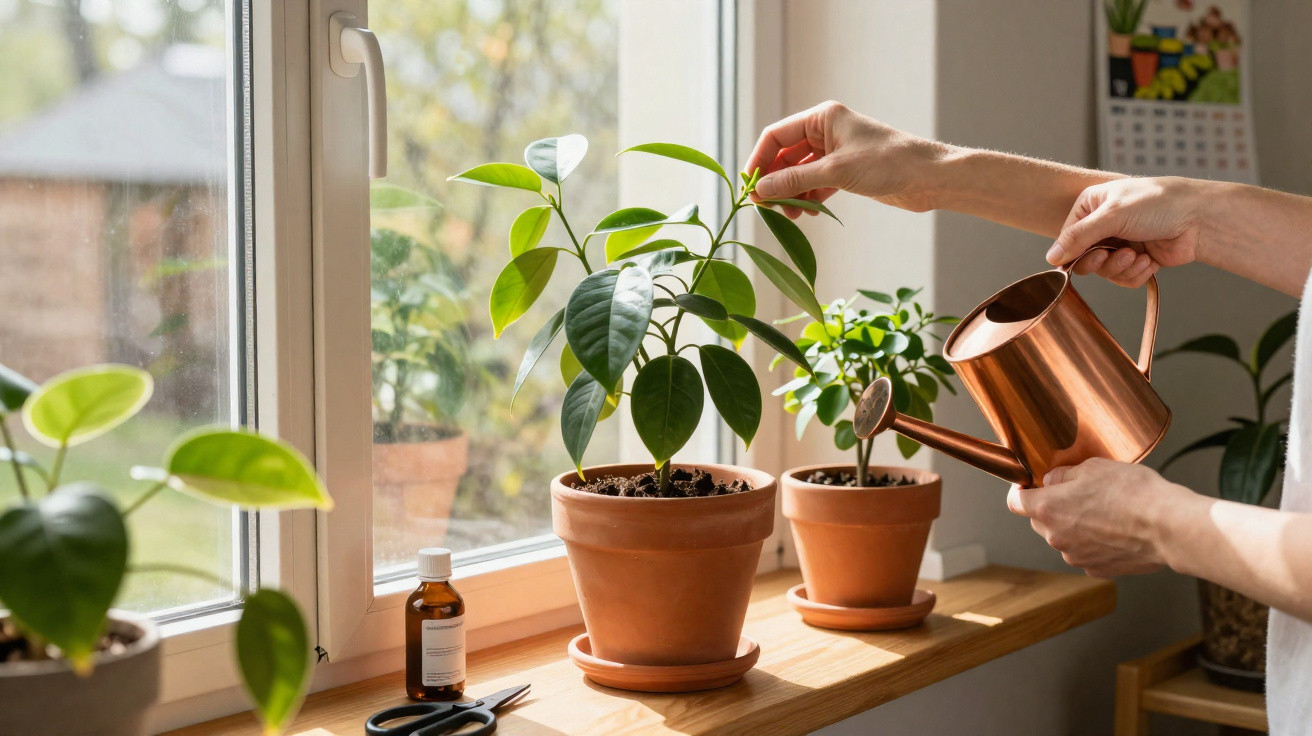
After a quiet winter, a money tree can look as if it has hit pause. The leaves may droop a little and fresh growth can be hard to spot. Yet right now, in early spring, this popular succulent starts to stir again - and it responds surprisingly sharply to how you adjust light, water, feed and its pot at this time.
Why March is such a key month for the money tree
Through autumn and winter, the money tree slows right down. It barely grows, it needs only small amounts of water, and it requires virtually no fertiliser. Many houseplant fans water just once a month - and in the darker season that is usually plenty.
From March onwards, conditions shift bit by bit: daylight increases, the sun gains strength, and the compost dries out more quickly. Tiny buds begin to appear at the tips of shoots - a clear sign the plant is switching back into growth mode.
"Anyone who carries on exactly as they did in January will seriously hold back their money tree’s spring potential."
The trick is not to overhaul everything overnight. Instead, make a few targeted tweaks: brighter light, slightly altered watering intervals, a careful restart of feeding, and possibly repotting. These small levers determine whether your money tree pushes out compact, deep-green, vigorous new growth - or whether it just ambles along.
The right position in March: plenty of light, but no heat battle
A money tree thrives in bright conditions, but it does not appreciate sudden blasts of sun after winter. East- or west-facing windowsills are ideal. A south-facing window can also work, provided a light curtain diffuses the midday sun.
When light is lacking, the plant shows it clearly: shoots stretch out, become thin, and start to flop. The overall shape soon looks limp and tired. Too much direct sun, on the other hand, can leave leaves washed-out with brown edges or patches.
In March, make changes gradually:
- Move the pot closer to the window in small steps
- Turn the pot slightly every one to two weeks so all sides receive light
- Avoid switching abruptly from shade to intense midday sun
Handled this way, the money tree develops an even, rounded crown rather than leaning and growing on one side towards the window.
Watering in spring: neither drought nor constant wetness
In March, the sensitive issue is the amount of water. After winter, many people feel tempted to give it a “proper” drink again - and that can be exactly what damages the roots.
"The rule: only water once the top two centimetres of compost are dry - but when you do, water thoroughly."
Keep watering until water runs from the drainage hole, then empty the saucer after a few minutes. Waterlogging is the quickest route to root rot.
In a bright room, one thorough watering every 10 to 15 days is usually enough in spring. Small pots dry out sooner; large containers take longer. What matters is not the calendar, but checking the compost with your finger.
Reading the warning signs correctly
- Too much water: soft, yellowing leaves; the base of the trunk turns dark and mushy; the compost smells stale.
- Too little water: wrinkled, slightly curled leaves; the plant looks slack but shows no signs of rot.
Adjust your schedule in small steps of a few days, rather than jumping straight from “every 14 days” to “twice a week”. Money trees cope far better with gentle shifts than with sudden changes.
Feeding in March: a gentle start to the growth phase
After the lean winter period, a money tree will benefit from some nutrition - but not at full throttle. A liquid fertiliser formulated for cacti and succulents is a good choice.
To start correctly:
- Use fertiliser from March through to autumn, roughly every four to six weeks
- Begin by using half the dose recommended on the bottle
- Feed a few days after watering, never into bone-dry or soaking-wet compost
If the plant is weak, has just been repotted, or has clearly been overwatered, hold off on feeding for now. Wait until the money tree is growing steadily again before adding fertiliser.
"Correctly dosed fertiliser produces thicker shoots, plumper leaves and a compact structure instead of long, soft branches."
Shaping: now is the time to tidy the money tree’s crown
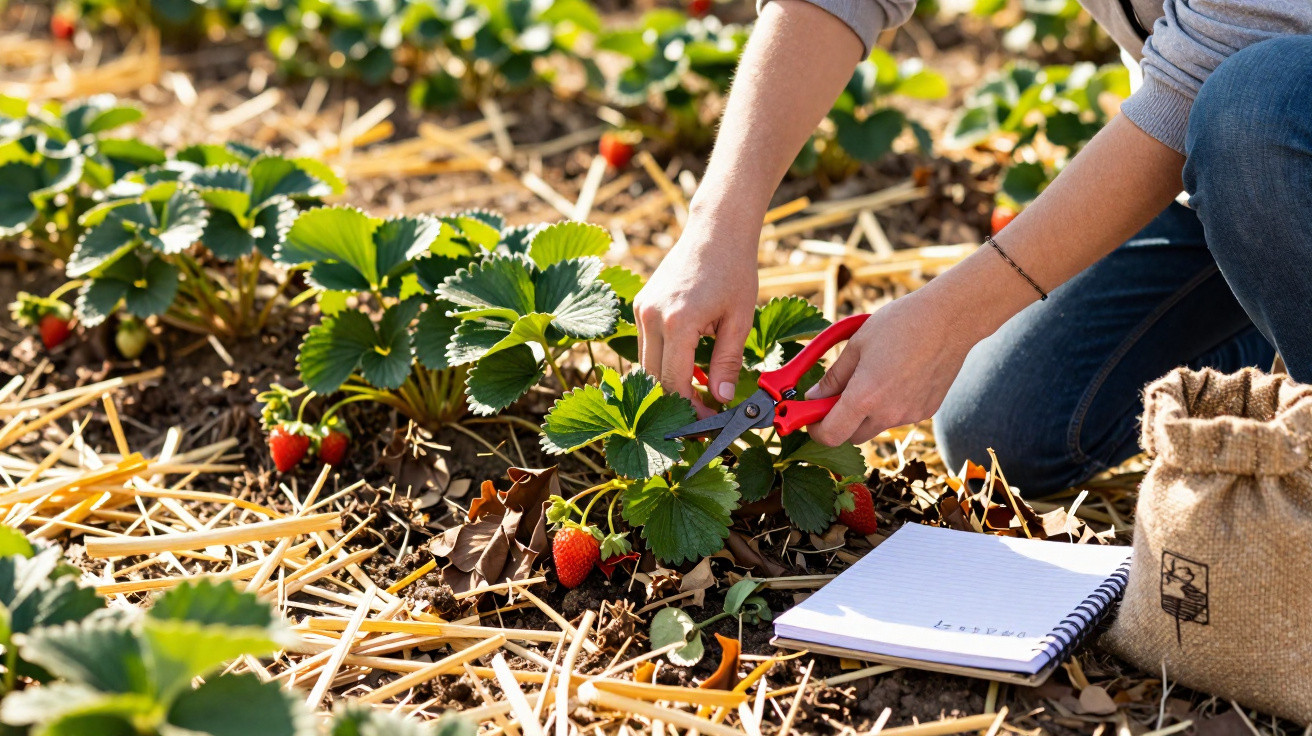
Early spring is a suitable time to give a money tree a light prune. As soon as you can see new leaves forming, you can carefully shorten overly long shoots.
Make the cut just above a leaf node. In many cases, two new side shoots will emerge there. This makes the crown fuller and helps the plant stay stable rather than toppling.
Key rules for pruning:
- Remove no more than 20 to 30 percent of the total mass in one session
- Always use a sharp, clean tool
- Clean the blades with alcohol or disinfectant during the job to avoid spreading disease
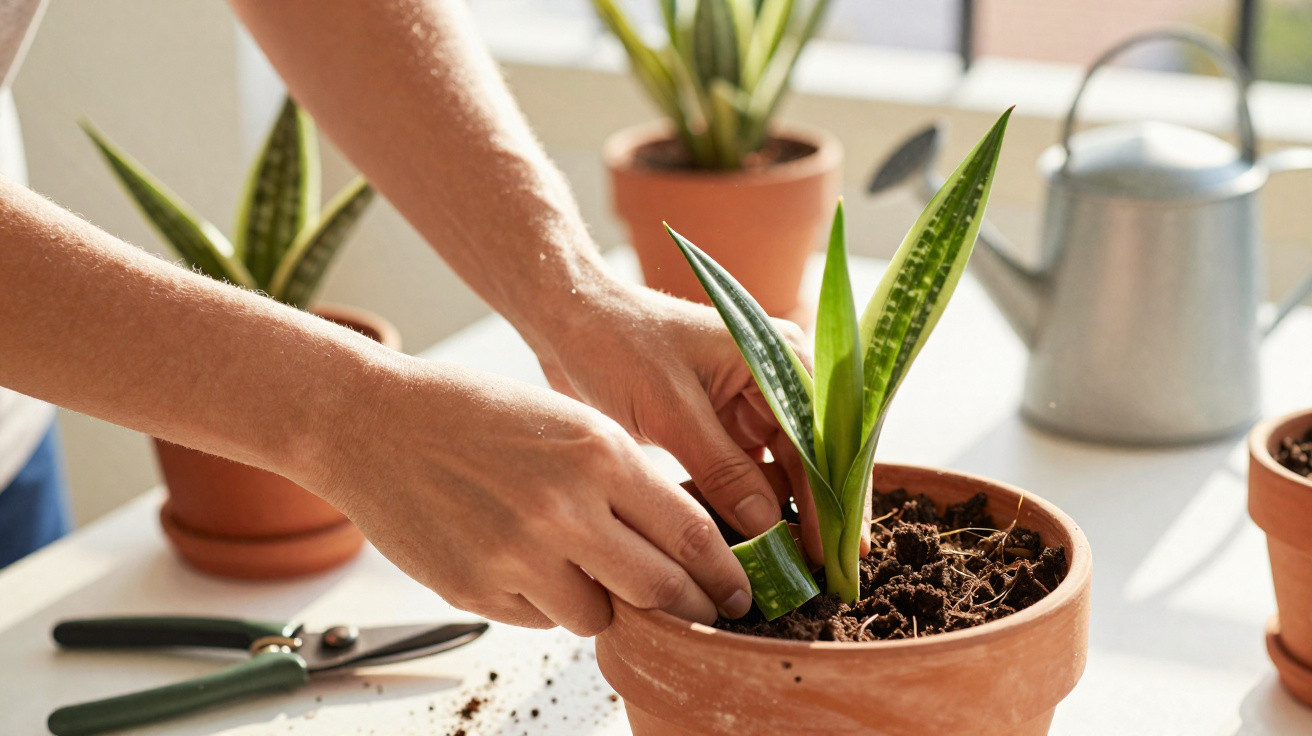
The removed shoot tips are also excellent for propagation. After a brief period drying in the air, they can be inserted into lightly moist, sandy compost and will form new roots within a few weeks.
Repotting: when it is genuinely necessary
Spring is also the best time to repot. A money tree does not need this every year - typically, it is enough every two to four years.
Common signs that it is time for a larger pot:
- Roots are pushing out of the drainage hole or surfacing through the compost
- The compost stays wet for an unusually long time after watering
- Growth has slowed markedly even though you are feeding
Choose a pot that is only slightly wider than the current one and make sure it has a large drainage hole. In very deep pots, the compost tends to remain too wet at the bottom.
| Aspect | Recommendation for the money tree |
|---|---|
| Compost | Very free-draining, for example cactus compost with a mineral component |
| First watering after repotting | Wait a few days so any root wounds can dry out |
| Feeding after repotting | Wait several weeks, as fresh compost is often pre-fertilised |
Typical March mistakes - and how to avoid them
A lot of problems that show up in summer actually begin during this transitional period. Three recurring classics are worth watching for:
- Shock from sudden full sun: If you move it straight from winter conditions onto an unshaded south-facing balcony, your money tree can get sunburn. A slow acclimatisation prevents scorched leaves.
- A “spring shower” for the roots: Switching in March from minimal watering to constant watering encourages rot. Stick to the rule of thumb: let it dry, then water deeply.
- A fertiliser binge out of guilt: Overfeeding leads to soft, unstable growth. Less - but on a regular schedule - achieves far better results.
Why the money tree seems so tough - yet still reacts sensitively
The money tree is often treated as a beginner’s plant: easy-going, forgiving, and able to cope with several weeks of dryness. That apparent toughness comes from its ability to store reserves. Its fleshy leaves hold water and nutrients.
However, the same feature makes it vulnerable to too much attention. Its “stores” can fill up before the pot has properly dried out - and if you then water or feed again, the balance between roots and trunk can be thrown off. If you care for it more like a cactus than like a tropical houseplant, you will be much closer to what it actually needs.
Practical extras for a strong year of growth
Getting your money tree set up well in March lays the groundwork for years. It is a good moment for a quick health check: can you see pests such as small scale insects, or cottony patches? Are any branches soft or hollow? Issues like these are easier to correct during the growing season than in winter.
Many people also use pruning time to build a small collection. An older plant with long branches can be turned into several young plants, which can later be given away or grouped together. On a windowsill, several pots with money trees at different heights often look more interesting than a single, over-aged specimen.
If you follow these March pointers, you will often be rewarded by late spring with fresh, compact new growth. That is when it becomes obvious how much a few well-judged adjustments early in the year can shape the plant’s development.


Comments
No comments yet. Be the first to comment!
Leave a Comment