
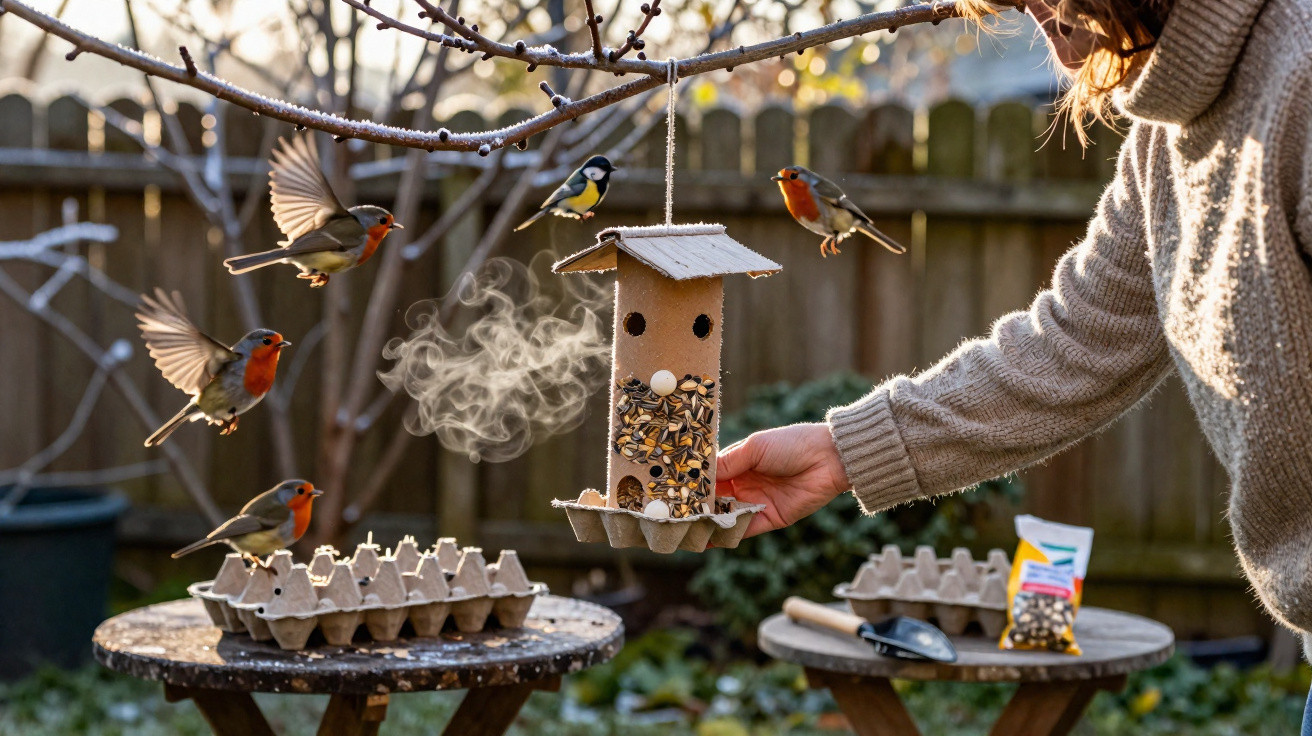
Many households throw away empty egg cartons without a second thought – yet in winter they can turn your garden into a lively bird oasis.
With just a few quick steps, that plain cardboard carton becomes a fully usable feeding station. It costs next to nothing, reduces waste, and draws blackbirds, tits and sparrows right up to your window during the cold months. What matters most is assembling it properly, choosing a safe spot, and offering suitable feed.
Why egg cartons work so well as a bird feeder
Egg cartons already provide the key features a basic feeding point needs. They’re lightweight, sturdy enough for the job, and easy to adapt without any tools. The moulded compartments are ideal for separating and portioning different seeds.
“In just a few minutes, supposed rubbish becomes a working winter feeding station – perfect for anyone who wants to get started quickly.”
Because the cartons are cardboard, they will end up in recycling anyway. Using them first as a feeding spot simply extends their life in a practical way. That helps conserve resources and, at the same time, supports biodiversity in built-up areas where natural food sources become scarce in winter.
Materials: What you need for a simple feeding station
For a standard feeder, you only need items most households already have.
- 1 empty egg carton (for 10 or 12 eggs)
- scissors
- a sharp knife or an awl for making holes
- about 1.5 metres of strong string or cord
- 200 to 400 grams of bird food (e.g., mixed seed, sunflower seeds)
- optional: acrylic paint, felt-tip pens or ribbon for decoration
With these quantities you’ll be well set for the first few weeks. If you have a large garden or expect plenty of visitors, you can prepare several cartons at once.
Step-by-step guide: Turning the carton into a feeder
Preparing the carton
Start by separating the lid from the base. For the feeder, use the side with the compartments. Make sure there are no traces of egg left and that the cardboard is completely dry. Dampness softens the carton more quickly and encourages mould.
Adding the hanging cords
Use a knife or awl to pierce four small holes in the corners of the carton. Thread the cord through these holes. Tie the ends together above the carton so it forms a kind of “hanging cradle”. Important: the knot must be secure so the carton doesn’t tip when several birds land at the same time.
Filling with seed and hanging it up
Loosely fill the compartments with bird food. They don’t need to be packed to the top, otherwise half the seed will spill out with every flap of wings. Then hang the feeder from a sturdy branch, beam or hook.
| Step | Duration | Note |
|---|---|---|
| Prepare the carton | 2–3 minutes | Keep it clean and dry |
| Pierce holes and thread the cord | 3–4 minutes | Make sure the lengths are even |
| Add feed and hang it up | 2–3 minutes | Balance the carton as level as possible |
The right spot: Safe and attractive for birds
Where you place it determines whether birds will use it. They need cover, but also a clear view to spot danger.
- Height: ideally 1.5 to 2 metres above the ground
- Distance from bushes: avoid hanging directly over dense shrubs so cats can’t stalk as easily
- Distance from windows: at least a few metres to reduce the risk of collisions
- Weather protection: if possible, place it under an eave or in a sheltered part of a tree
A slightly covered location keeps the seed drier and helps the carton last longer. Even so, birds should still be able to fly in freely without squeezing through tight branches.
What to put in the carton: Feed ideas for greater variety
The separate compartments make it easy to try several foods at once. That way you can quickly see which species are visiting your garden and what they prefer.
- Wild bird seed mix with millet, rolled oats and wheat
- sunflower seeds (hulled or unhulled)
- small amounts of unsalted nuts, e.g., chopped hazelnuts or peanuts
- a few pieces of unsweetened dried fruit, such as raisins or apple rings
“If you keep different foods separate, it’s easy to watch which birds eat what – a mini nature lesson right at your window.”
Never offer seasoned, sugary or salty leftovers. Bread swells in birds’ stomachs and can harm them. Chocolate and salty snacks are also strictly off-limits.
Looking after the feeder: Keeping it healthy
Routine checks help prevent disease and mould. In particularly damp winters, the carton can deteriorate quickly.
- every few days, check that the seed is dry
- remove mouldy or clumped leftovers immediately
- replace the carton if it becomes heavily soaked
- inspect the cord and swap it out if it shows wear
Many birds feed most actively in the early morning. If you refill the carton in the evening, the birds start the day with a reliable food source. If demand is high, you can place a second feeder elsewhere in the garden to reduce squabbling.
Creative variations: Ideal for families with children
Egg-carton feeders are great as a small craft activity. Children can paint and decorate the carton or add ribbons. Just make sure you use non-toxic paints that contain no solvents.
It becomes even more interesting if you hang several cartons side by side: one filled only with sunflower seeds, one with mixed seed, and one with nuts. Children can keep notes on which carton empties fastest and which bird species appear there. This turns a simple upcycling idea into an ongoing nature-watching project.
Why winter feeding in the garden makes sense
Especially in densely built-up areas, birds often struggle to find natural seeds and berries in winter. Manicured lawns, paved surfaces and closely trimmed hedges provide very little to eat. A feeding station bridges that gap and helps birds get through cold nights.
At the same time, daily feeding encourages many people to look outside more often. Those who watch birds regularly often become more mindful about gardens and balconies: fewer toxins, more native shrubs, and more places to shelter. So a basic egg carton can be the first step towards more wildlife-friendly thinking.
Tips for experienced feeders: Getting more from a simple carton
If you like the approach, you can take it further:
- hang several cartons at different heights to attract different species
- add a simple cover, for example a piece of corrugated cardboard as rain protection
- pair it with a small water container that can serve as a bird bath on frost-free days
- add native shrubs nearby, such as rosehips or elder
What matters is not stopping the feeding abruptly. Birds become used to dependable feeding spots. If you begin in winter, aim to continue at least until spring so the birds aren’t suddenly left with nothing.
With minimal effort, you end up with a project that cuts household waste, brings your garden to life, and gives children and adults alike memorable wildlife moments – all from a carton that would otherwise have gone straight into the recycling bin.
Comments
No comments yet. Be the first to comment!
Leave a Comment