
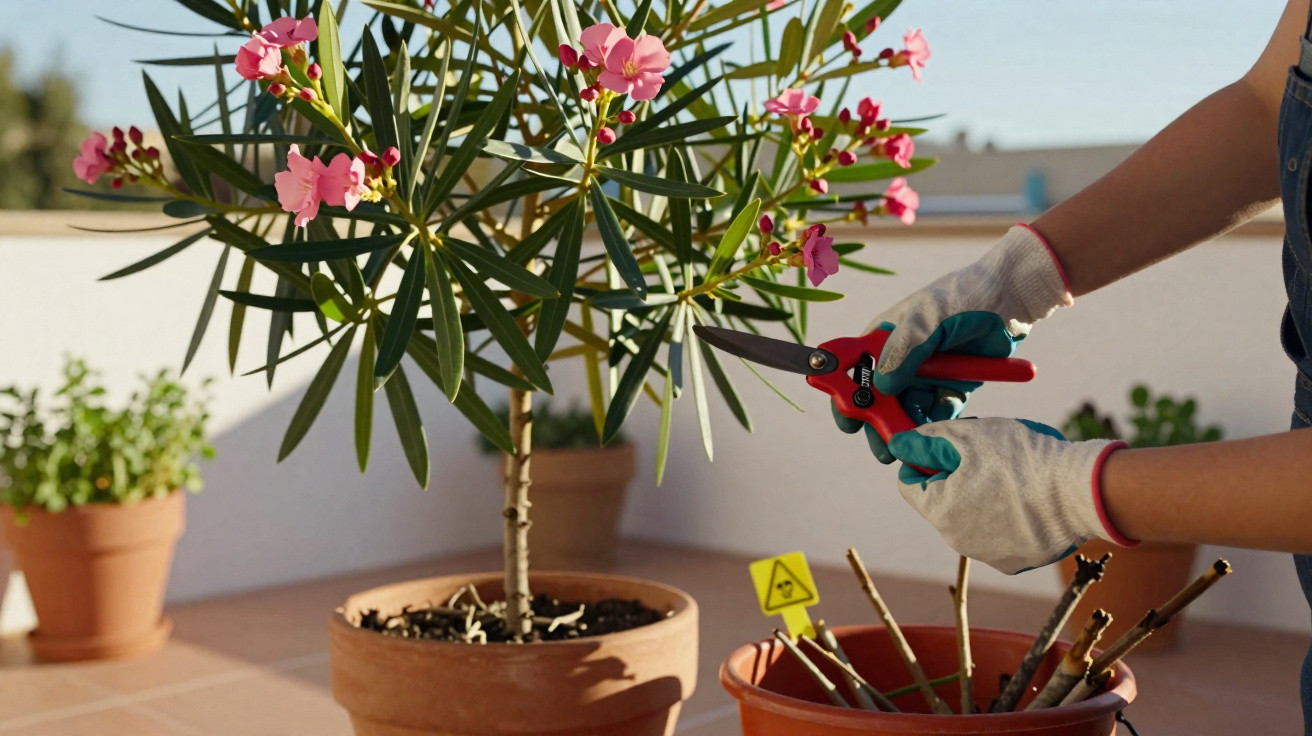
Oleander is often seen as a staple for patios and balconies: a touch of the Mediterranean, masses of flowers and very little fuss. Even so, this shrub does not forgive every use of the secateurs. A poorly judged cut in spring can turn the hoped-for display into nothing more than greenery. With the right timing and a few straightforward rules, you can noticeably boost flowering through summer.
Why spring pruning determines summer flowering
Oleander starts forming its flower buds from late summer of the previous year – particularly at the tips of the shoots. If you shorten it indiscriminately in spring, you can easily remove exactly those developing buds. At the same time, the plant needs young, well-lit growth so it can keep flowering during the summer.
"The ideal spring prune keeps the balance: retain enough older bud-bearing wood, while encouraging fresh shoots for even more flowers."
Oleander flowers on new shoots that grow from existing wood. A gentle tidy in late winter or early spring helps ensure that:
- more young, vigorous shoots are produced,
- light and air reach the centre of the plant more effectively,
- the plant stays compact and stable,
- flowering from June into autumn is abundant.
A heavy cutback right before the season, by contrast, usually results in long shoots that initially carry few flowers. The plant then puts its energy into leaf growth rather than buds – and the real burst of colour is pushed back by at least a year.
Best time to prune oleander: climate makes the difference
In mild areas and Mediterranean climates
In coastal locations or regions with very mild winters, oleander is often grown outdoors in the ground. In those conditions, the best window for pruning is between mid-March and April.
A simple rule of thumb applies: only prune once hard frosts are realistically off the table. Oleander can be badly damaged at around –5 °C. Freshly cut growth is even more vulnerable because the cut surfaces are exposed.
In colder areas and inland regions
Across much of Central and Northern Europe, oleander is typically grown in a container. It is overwintered somewhere frost-free – such as a garage, conservatory or cellar – and only goes back outside in spring.
For these plants:
- prune no earlier than late March, and preferably in April,
- bring it out of its winter quarters first on milder, frost-free days,
- then do a light trim straight afterwards.
If you keep your cuts modest at this stage, you protect the coming summer’s flowers. Severe reductions to knee height or below are better left for autumn, or for a year when you deliberately accept fewer flowers because you want to rejuvenate the plant.
How to prune oleander in spring, step by step
Safety first: oleander is highly poisonous
Every part of the plant – including the milky sap – is highly toxic. That applies to people and pets alike, so pruning should always be done with proper protection.
| Step | What to do |
|---|---|
| 1. Protection | Put on sturdy gardening gloves, long sleeves and, if needed, safety glasses. |
| 2. Tools | Use sharp, clean, disinfected secateurs (alcohol or diluted bleach). |
| 3. Disposal | Do not put prunings on the compost; dispose of them in the general waste. |
When you’re finished, wash hands and forearms thoroughly, even if you wore gloves. Children and pets should not be nearby while you are cutting.
Remove old and diseased wood
On the first pass, the priority is health rather than shape. Work through the shrub methodically:
- Cut dead shoots back into healthy, greenish-white wood.
- Identify frost damage (dark brown-black, soft-looking sections) and cut it out as well.
- Remove any diseased, spotted or fungus-affected shoots generously.
This limits the spread of disease and makes space for strong new growth. After this kind of “clear-out”, the plant usually responds with noticeably better regrowth.
Thin the crown and shape the plant
In the second stage, you give the oleander a clear framework. The aim is an open, airy crown rather than a tangled mass. Typical candidates for removal include:
- shoots that cross or rub hard against one another,
- branches growing inward that “clog” the centre,
- thin, weak, very long water shoots.
Cut these branches right at the base or just above a side junction. That way you avoid leaving stubs, which later tend to produce weak side shoots.
Shortening: no more than one third per shoot
Once the main structure is right, you move on to the crucial fine trim. This is where you influence how generous summer flowering will be. A reliable rule is:
"Shorten most shoots by only about one third – that way, enough flowering-capable wood remains."
Always place the cut just above a pair of outward-facing buds. Hold the secateurs at a slight angle so water runs off and the cut dries more quickly.
If you reduce more than this, you remove many of the buds already formed. That may be necessary if the oleander has become too tall or lopsided, but it will cost flowers in the next season.
What to do with old or badly damaged oleanders?
Some container plants look battered after a harsh winter or years without attention: long bare stems, little foliage and hardly any young shoots. In these cases, a stronger rejuvenation prune is often the only real option.
With such problem plants, you can cut all shoots back to 30 to 50 centimetres above the soil. It looks drastic, but it frequently encourages dense regrowth from the base.
Important points to keep in mind:
- Don’t expect many flowers in the year you do this.
- After the cutback, move the pot into brighter conditions gradually so young shoots do not scorch.
- Feed appropriately but not excessively, so the plant has enough energy to push new growth.
Care after pruning: helping the plant restart
After pruning, oleander channels energy into new shoots. The right aftercare supports that process:
- Position: As sunny and sheltered from wind as possible. More light generally means more flowers.
- Watering: Keep evenly moist, but avoid waterlogging. In pots, make sure drainage is good.
- Feeding: From April onwards, feed regularly with a flowering-plant fertiliser or a dedicated oleander fertiliser.
If you plan to repot after winter, it makes sense to do it alongside the spring prune. Fresh, structurally stable compost and a slightly larger pot encourage root growth – the foundation for a dense crown.
Risks, misconceptions and practical everyday examples
Common mistakes often come from good intentions. Many hobby gardeners prune oleander “like roses” – hard and short. Roses respond with masses of flowers, whereas oleander tends to react poorly. Another frequent issue is pruning too late: if you cut back heavily in May or June, you remove the basis for the flowering that is just getting under way.
A practical approach for balcony gardeners is this: in the first year after buying, remove only spent flower clusters and any clearly troublesome shoots. In the second and third years, you can then cut a few older branches back lower down in a targeted way, gradually rejuvenating the plant without sacrificing the entire crown.
One more point that is often underestimated is what to do with the clippings. Oleander branches do not belong in the fireplace, nor should they be left unattended in the garden. Even small pieces can cause severe poisoning in pets. If you want to be completely safe, bundle the waste securely and dispose of it via the general waste.
With a bit of planning in spring, this seemingly tricky shrub is easy to manage. If you understand the link between pruning time, bud formation and the weather, you have the best chance of what every oleander fan wants: a summer in which the pot barely shows any leaves – because it’s packed with flowers.


Comments
No comments yet. Be the first to comment!
Leave a Comment