
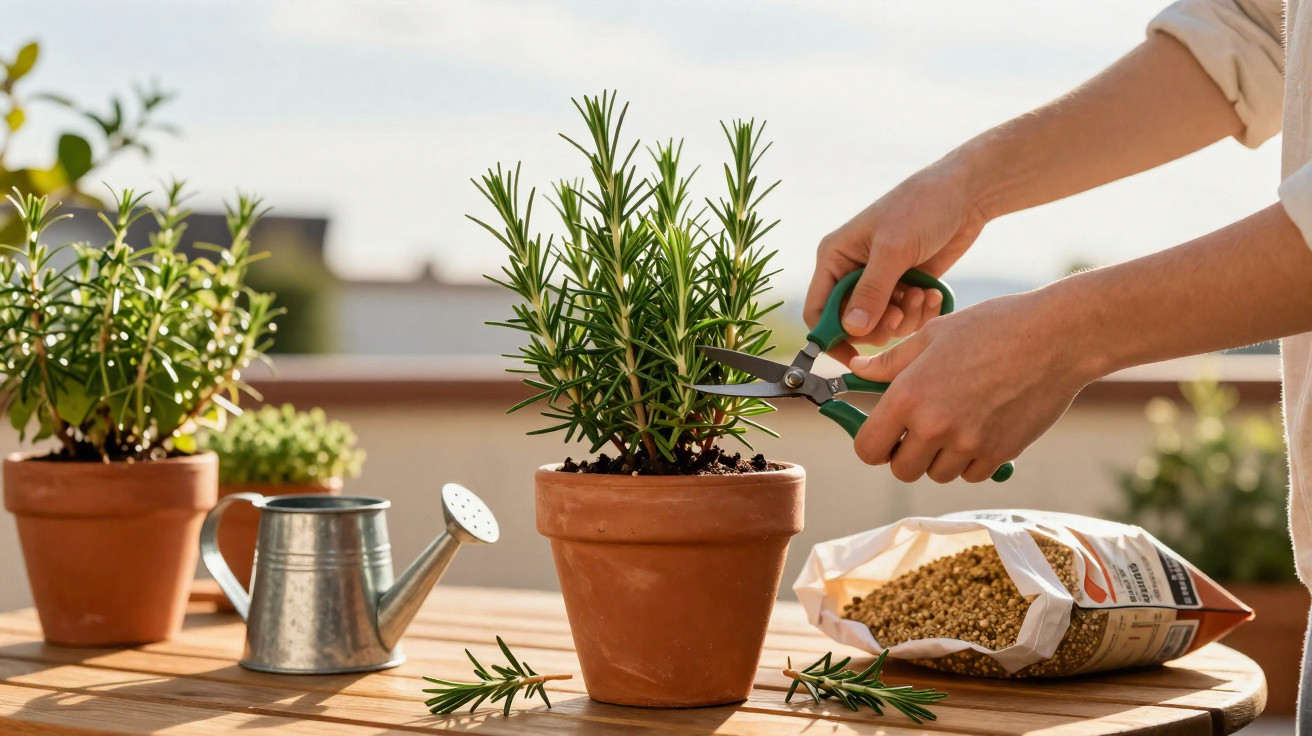
Rosemary needs direct sunlight, free-draining soil and spaced-out watering to develop sturdy, leafy stems. Although it is a hardy aromatic herb, too much moisture, insufficient light and a lack of pruning can make the plant leggy and weak, with growth concentrated only at the tips.
How much sun does rosemary need each day?
Rosemary performs best with at least six hours of direct sun every day. Strong light encourages new shoots, keeps the leaves more fragrant, and lowers the chance of fungal problems caused by dampness trapped between the stems.
In flats, place the pot on the sunniest window ledge or balcony. Dim indoor conditions often lead to thin, widely spaced stems, even when feeding and watering are otherwise correct.
- Choose a spot that receives direct sun for much of the day;
- Turn the pot each week so all sides get light;
- Avoid stuffy corners with little air movement;
- Only shield the plant from severe frosts and very cold winds.
How do you get watering right without rotting the roots?
Before watering, press a finger into the top few centimetres of the compost and check whether it has dried out. Rosemary copes better with short dry spells than with constantly wet soil, so watering should be guided by the moisture level in the pot rather than a fixed timetable.
What is the best potting mix for growing in a container?
The potting mix should be light and open so water can pass through the container quickly. Dense, compacted soil holds moisture around the roots and may cause yellowing leaves, dieback of stems and rotting at the base of the plant.
A blend of compost with coarse sand or perlite improves drainage. The pot must also have clear drainage holes, and it should never be left sitting in water in the saucer after watering.
- Use a pot with several holes in the base;
- Mix a drainage material into the compost;
- Do not bury the stem deeper than it was originally;
- Tip away any water that collects under the pot;
- Repot once the roots have filled the entire container.
Does pruning make the plant bushier?
Regularly removing the tips encourages side shoots and stops rosemary from growing only upwards. Make cuts just above a leafy section, keeping to the green, flexible growth and avoiding hard pruning into old woody stems, which may struggle to reshoot. These steps for keeping rosemary full also include taking out any dry or damaged stems.
How can you keep it growing through every season?
In spring and summer, vigorous rosemary needs closer checks on moisture because warm weather makes pots dry out faster. This is also the best time to pinch out the tips, harvest stems and apply a light feed-without overdoing fertilisers high in nitrogen.
In winter, reduce watering and avoid heavy pruning, especially in colder areas. With plenty of light, roots protected from waterlogging, and regular trimming during the active growing period, rosemary keeps its aromatic leaves and a denser, fuller shape throughout the year.



Comments
No comments yet. Be the first to comment!
Leave a Comment