
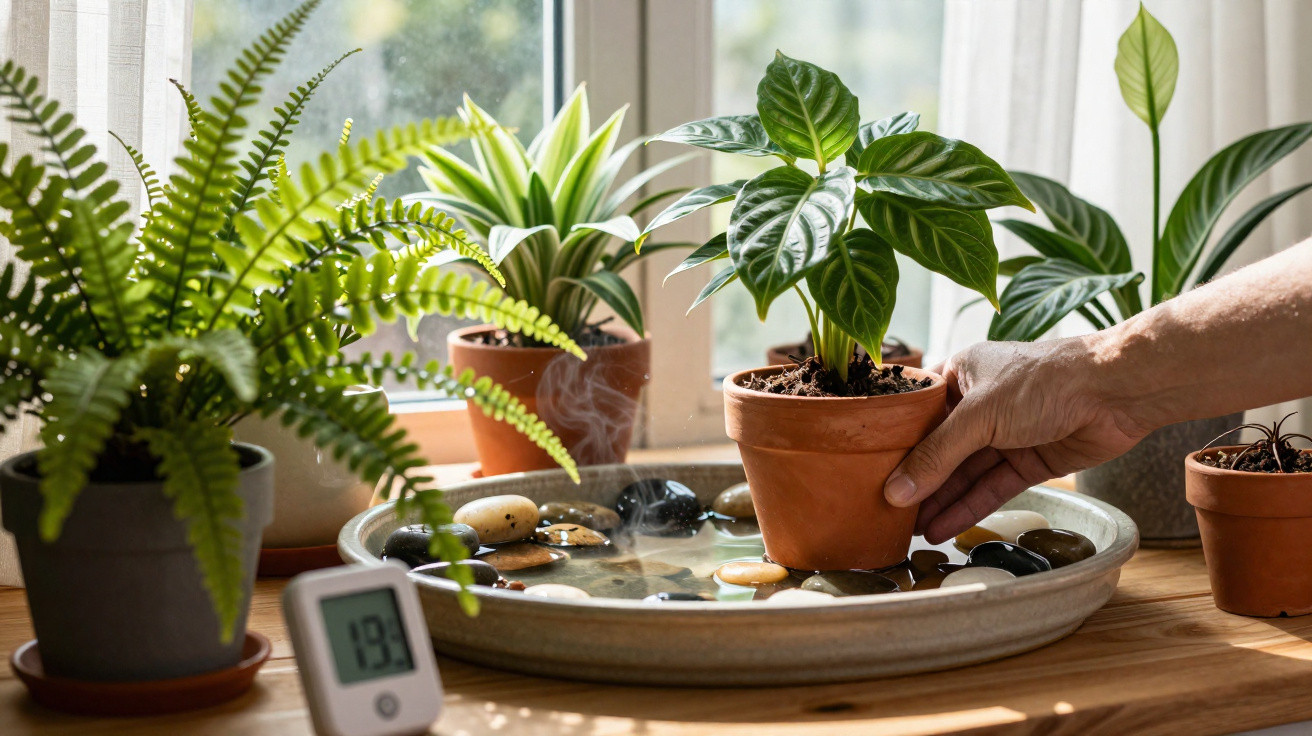
Placing a shallow bowl of water close to your plant pots can slightly increase the humidity around the leaves as the water evaporates. This tends to help tropical houseplants such as ferns, marantas and calatheas, which may develop dried, crispy tips when kept indoors in air-conditioned rooms.
How does a water container help plants?
Water gradually changes from a liquid into vapour and blends into the air around the pots. The result is a small, more humid pocket of air near the plants-especially if the container is wide, positioned close to the foliage, and kept away from strong draughts.
Relative humidity describes how much water vapour is in the air compared with the maximum it could hold at that temperature. A bowl of water provides a local, subtle boost; it will not meaningfully raise the humidity of an entire room.
Which plants can benefit from this method?
Plants that originate in tropical forests generally prefer air that is less dry than what you often get near air-conditioning units, heaters, or very breezy windows. Species that may benefit from this small increase include:
- Ferns with fine fronds that dry out easily;
- Calatheas that develop brown edges in very dry air;
- Marantas grown away from draughts;
- Monstera plants kept indoors;
- Fittonias and other small tropical plants.
How to set up a tray with stones and water
A broad tray creates a larger evaporation surface than a narrow glass. Add clean stones to the tray, pour in water without fully covering the stones, and sit the plant pot on the dry upper layer. The base of the pot should not be standing in water, as that would keep the compost constantly wet and increase the risk of root rot.
You can also place a container of water next to the pots, although the effect is usually smaller. Grouping several plants together helps retain the moisture released from the compost and from leaf transpiration, strengthening the small microclimate created by the tray.
What care prevents stagnant water and waterlogged roots?
The container needs regular cleaning and refilling. In areas where mosquitoes are present, the water should not be left standing for several days-even between the stones. A correct setup depends on a few precautions:
- Keep the water level below the surface of the stones;
- Make sure the pot does not touch the water directly;
- Replace the water and wash the tray regularly;
- Clear away algae, fallen leaves, and other debris;
- Keep watering the compost according to the needs of the species;
- Use a humidifier when the air is very dry.
Does a bowl of water fix brown leaf tips?
Low humidity can dry out the edges of leaves, but it is not the only possible cause. Overwatering or underwatering, salt build-up, damaged roots, direct sun, and draughts can also lead to spotting and browning. Before trying to raise humidity, check the compost, the light levels, and where the pot is positioned.
A water container is best seen as simple support for tropical plants, not a replacement for overall care. Just as some species are chosen to suit more humid indoor conditions, each plant should match the room it lives in. Keeping the tray clean, ensuring roots stay out of the water, and maintaining good ventilation lets you lift humidity slightly without waterlogging your plants.
Comments
No comments yet. Be the first to comment!
Leave a Comment