
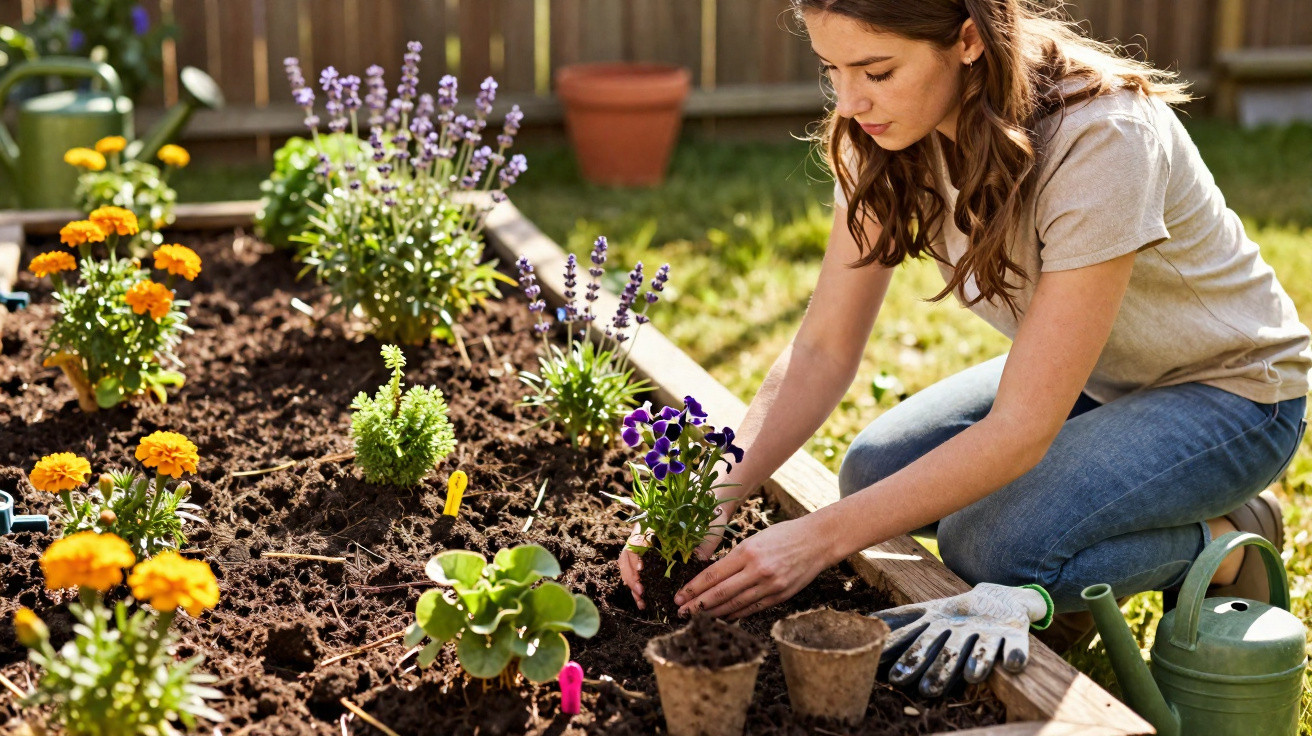
Yes, it is possible – provided you choose the right plants.
Many beginners stand bewildered in front of the plant display at the garden centre, buy according to appearance, then watch their new treasure die within a few weeks. The wrong spot, a forgotten watering can, poor soil – frustration is almost inevitable. Yet an attractive border does not require a luxury rose garden: it needs a few tough, dependable plants that return each year, fill out the space and can cope with dry spells or beginner mistakes.
Why these 6 plants save beginners so much effort
People new to gardening often underestimate how much attention many ornamental plants genuinely require. Exotic perennials, delicate roses and specialist planting mixes demand experience, regular watering and often costly compost. This is exactly where the six featured choices stand out:
- they usually cost only a few pounds at garden centres or discount shops;
- they are perennial and return by themselves;
- they provide good ground cover and suppress weeds;
- they tolerate missed watering and ordinary garden soil.
By cleverly combining flowering periods, these plants provide colour for almost the entire year without the need for constant replanting.
Garden websites often call this a “flowering relay”: winter-flowering plants begin, spring bulbs take over, followed by free-flowering perennials – all with manageable effort. This is especially appealing for newcomers on a limited budget.
An overview of the 6 cheap, low-maintenance plants
| Plant | Flowering period | Strengths |
|---|---|---|
| Hardy geranium (Geranium, perennial) | May to October | Long flowering season, ground cover, very hardy |
| Crocus | February to March | Spring herald, grown from bulbs, readily naturalises |
| Hellebore / Christmas rose (Helleborus) | December to March | Winter flowering, frost-hardy, plant once – enjoy for years |
| Coral bells (Heuchera) | May to July (depending on variety) | Decorative foliage, ideal for partial shade |
| Bugle (Ajuga reptans) | April to June | Fast ground cover, crowds out weeds |
| Ivy (common ivy) | Inconspicuous flowers, foliage all year | Evergreen, exceptionally tough, suitable for fences and walls |
Winter colour with hellebores: flowers when everything else is grey
Hellebores, often known as Christmas roses, are among the few perennials that flower in the depths of winter. Depending on the variety, their blooms appear from December to March, while the rest of the garden is still dormant. They prefer partially shaded positions, such as beneath deciduous shrubs, and cope well with standard garden soil.
When planting, soak the root ball thoroughly once; after that, rainfall will usually be sufficient. Extra water is needed only during extended dry periods. From then on, it is largely self-sufficient.
Crocuses: minimal budget, maximum spring impact
Crocuses are one of the most affordable ways to add colour to a garden in late winter. Plant the bulbs in autumn at a depth of around 8 to 10 centimetres, and they will return every year. Many varieties even spread if the lawn is not mown too early in spring.
One simple approach is to plant crocuses in groups in front of hellebores and among later-flowering perennials. This creates a second burst of colour just as the winter flowers are nearing their end.
Hardy geraniums: the long-flowering choice for low-effort gardening
Perennial Geranium varieties are among the most popular plants for beginners. Many form dense cushions, suppress weeds and continue flowering for months. They tolerate sun or partial shade, provided the soil does not dry out completely.
In many gardens, they thrive for years without any special care. Cutting them back after their first major flush of flowers often encourages a second wave of blooms. Even if you forget, you will still have a worthwhile border – simply with slightly fewer flowers.
Foliage and ground cover: Heuchera, bugle and ivy
Coral bells: colour beyond flowers alone
Coral bells create interest in borders mainly through their foliage. Shades range from light green and copper to almost black. They work particularly well in partially shaded spots, for example in front of a hedge or close to shrubs and trees.
Rather than constantly buying replacements, simply divide older clumps every few years. One plant can quickly become three or four new ones, entirely without additional cost.
Bugle: the natural weed barrier
Bugle spreads via runners, creating a living carpet across the soil. Once established in a border, it closes gaps that couch grass or ground elder might otherwise take over. Its blue-violet flower spikes in spring are an additional benefit.
It is ideal for edges, beneath shrubs or in difficult areas where little else seems willing to grow. Only very dry, full-sun positions suit it less well.
Ivy: inexpensive screening and gap-filling greenery
Ivy does not have the best reputation because it can spread vigorously. Used properly, however, it is extremely valuable: it covers house walls where the building fabric is suitable, improves the appearance of old fences and ensures that nothing looks bare even in winter.
To keep it under control, cut it back firmly once or twice a year. Cuttings root easily, meaning a single plant can soon provide an entire privacy-screening strip – without further purchases.
How to get the most from a small budget
The price at the till is only part of the calculation. A plant is truly inexpensive only if it stays for several years, can be divided or propagated, and does not require specialist supplies. These six plants perform particularly well on all of these points.
- Buy fewer varieties, but purchase several of each: Three pots of hardy geraniums and three coral bells often bring more calm and impact to a border than ten different individual plants.
- Choose perennial plants: Pay once and enjoy them for many years – especially with hellebores, hardy geraniums and ivy.
- Plan for propagation: Divide Heuchera and hardy geraniums regularly, and replant runners from bugle and ivy.
Over time, a starter border made up of just a few plants turns into a dense, almost continuous band of perennials – without expensive new purchases every year.
How to protect your planting from animals without chemicals
Damage caused by cats, dogs or birds digging over newly planted borders is an often-overlooked expense. Specialists therefore recommend straightforward deterrents that cost very little. One common tip from the English-speaking world is a hot spice powder such as cayenne pepper.
Sprinkled lightly over the soil, its smell discourages many animals from digging. The powder does not harm the plants because it remains only on the surface. It must be reapplied after heavy rain, but the cost stays low because only small amounts are needed.
Alternatively, during the first season, beginners can place small twigs, old wire mesh or plastic cutlery around vulnerable young plants as a “defensive fence” until they are well rooted.
Practical planting ideas for beginner borders
Anyone beginning with a small border can follow a simple basic layout:
- Back row: Ivy on a fence or trellis, with hellebores in front for winter flowers.
- Middle section: Alternate groups of coral bells and hardy geraniums.
- Front section: Scatter crocuses in small groups, with creeping bugle between them as ground cover.
The result is a border that starts in winter, comes alive in spring, and remains green and colourful from summer into autumn. Maintenance stays manageable: water occasionally, remove spent flower stems and take out runners where they become unwanted.
What beginners should also know
Terms such as “herbaceous perennial”, “perennial” and “ground cover” can seem confusing at first. Put simply, perennials and long-lived plants may partly die back above ground in winter, but return from their roots. Ground-cover plants are intended to close over the soil rather than stand in neat rows like lettuce plants.
Anyone who does not mind plants occasionally “moving around” or spreading will do particularly well with this approach. The six plants presented here are exactly suited to this looser, more natural style of garden design – while also being kind to the budget.

Comments
No comments yet. Be the first to comment!
Leave a Comment