
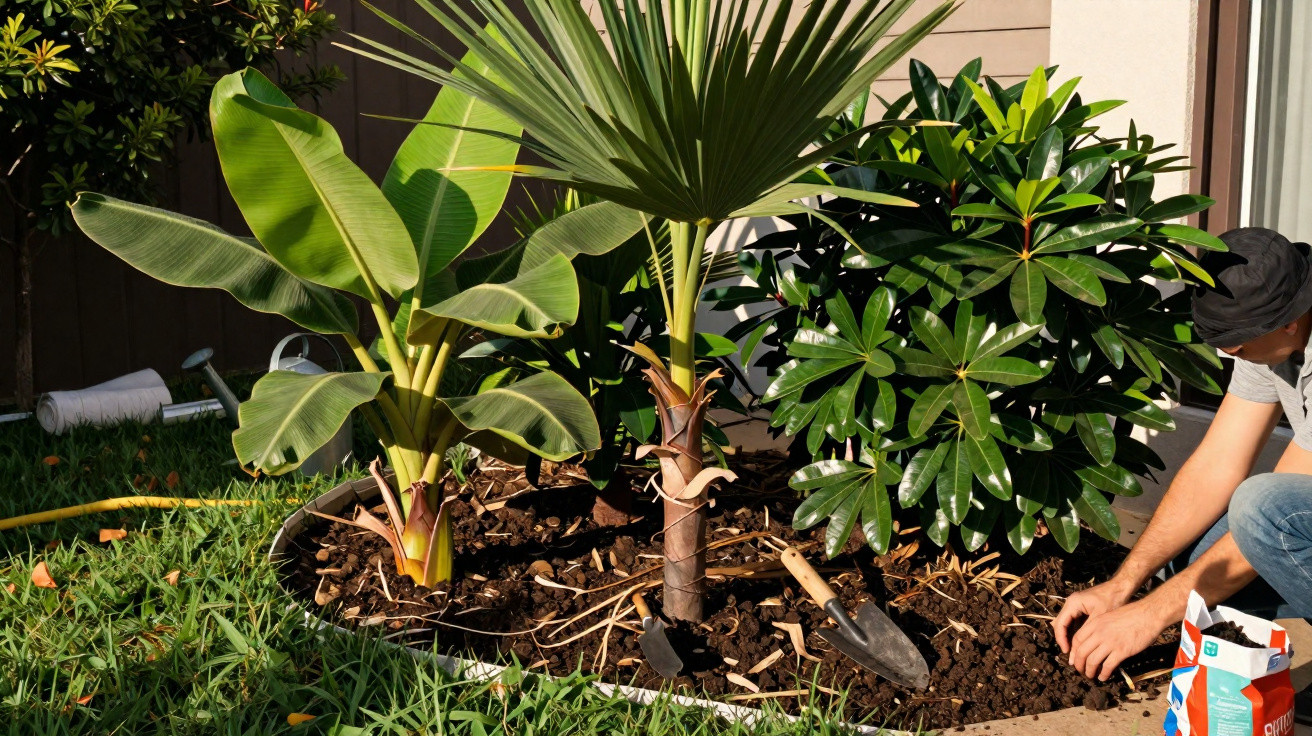
With three remarkably hardy exotic plants, you can bring a holiday atmosphere to even the tiniest garden.
Many homeowners stick with a traditional lawn, only to be frustrated each year by yellow patches, watering pressure and the sound of mowing. Yet even a very small patch of soil can be planted to evoke Bali rather than a standard DIY-store green space. Just three resilient species can turn a dreary leftover plot into a palm-filled mini paradise that largely looks after itself.
Why lawns are often frustrating – and exotic plants make sense
A lawn may appear easy to maintain at first. In reality, it demands considerable time and water. It scorches in summer, needs fertiliser in spring and requires moss treatment in autumn. Anyone with a busy routine can quickly fall behind, both visually and mentally.
A densely planted bed of hardy exotic plants needs less water and work, while providing more shade than a comparable area of lawn.
Climate trends are another consideration: heatwaves are becoming more common and rainfall patterns are shifting. A thirsty carpet of grass is increasingly ill-suited to these conditions. Long-lived, structural plants with deeper roots cope far better.
Three stars for a tropical feel: palm, banana and Japanese aralia
The approach is simple: few species, major impact. A tried-and-tested trio for a low-maintenance bed with maximum visual effect consists of:
- Trachycarpus fortunei – a hardy fan palm
- Musa basjoo – a frost-hardy Japanese fibre banana
- Fatsia japonica – glossy Japanese aralia for shaded areas
Trachycarpus fortunei: The structural plant with palm appeal
This fan palm forms the backdrop and gives the bed height. Its fronds instantly suggest a holiday setting. In many areas, it tolerates temperatures down to around -15°C, provided the soil drains freely.
It is ideally suited to a sunny or partially shaded position. Used as a specimen plant at the back of the bed, it creates the distinctive outline more usually associated with beach hotels than suburban gardens.
Musa basjoo: A banana plant with jungle-scale volume
The Japanese fibre banana brings drama to the planting scheme. Its enormous leaves act like a natural screen, lending even the smallest courtyard garden a jungle-like character. Give it a bright but sheltered location, as wind can quickly tear the foliage.
During winter, the growth above ground often dies back. The pseudostem can be protected with straw and horticultural fleece. With this cover in place, the plant starts growing vigorously again in May and can reach impressive heights within a single season.
Fatsia japonica: Glossy foliage for darker corners
Japanese aralia excels where other plants struggle: in shade beside the patio, in a courtyard or beneath balconies. Its large, deeply cut leaves have a striking graphic quality and remain attractive throughout the year.
It performs well both in a large container and planted in the ground. In courtyards with limited sunshine, a single strong Fatsia shrub can transform the entire space.
How to create your mini tropical bed: step by step
The aim is to create a dense, lush effect in just five to ten square metres – without a sophisticated irrigation system or hours of weeding.
Choosing the right time and position
The best planting window runs from spring into early autumn, as long as ground frost is not expected. This gives the roots time to establish without disturbance.
Key points to consider when planning:
- Palm towards the back, in sun or partial shade
- Banana in a bright, sheltered position
- Japanese aralia in shaded or partly shaded corners
Soil, drainage and planting distances
None of the three species tolerates waterlogged soil. Loose, free-draining ground is essential. A mix of garden soil and well-rotted compost is ideal, with gravel or grit added if further drainage is needed.
Arrange the plants in staggered positions rather than in a straight row. This allows the foliage to overlap more quickly, making the bed appear fuller.
| Plant | Distance from neighbouring plant | Position |
|---|---|---|
| Trachycarpus fortunei | 1.0–1.5 m | Sun to partial shade |
| Musa basjoo | 1.0–1.5 m | Bright, sheltered from wind |
| Fatsia japonica | 0.8–1.2 m | Partial shade to shade |
Straight after planting, apply a generous mulch layer of bark chippings, leaves or straw. It retains moisture, suppresses weeds and improves the soil structure over time.
Water, maintain, relax: how little work your tropical bed needs
The all-important first season
During the first year, the plants develop their root systems. From May to September, water thoroughly around every two weeks during this period. Infrequent, deep watering is preferable to giving small amounts constantly.
Once this establishment phase is over, their needs reduce significantly. In an average summer, occasional targeted watering is enough. During hot spells, one substantial watering each week is helpful, particularly for a banana growing in a container.
Winter protection with minimal effort
In many areas, the palm requires little extra protection. The main point is to prevent the root zone from sitting in water for days at a time. Planting it slightly raised helps avoid moisture-related problems.
The banana needs attention in late autumn: cut back dead or damaged leaves, place the remaining material around the pseudostem, surround it with wire mesh and fill this enclosure with straw. This enables the central growing point to survive even harder frosts.
Japanese aralia generally manages without special protection in mild locations. In harsher areas, a layer of leaves around the roots or horticultural fleece on exceptionally cold days will help.
How much time and water do you save compared with a lawn?
Anyone replacing lawn with a densely planted exotic bed gets their weekends back and cuts water consumption considerably.
A conventional lawn requires the following during the growing season:
- regular mowing, often every week
- repeated watering during dry periods
- fertiliser, scarifying and overseeding
- continual weed control
By comparison, the exotic planting bed needs:
- one focused planting session
- targeted watering in the first year
- occasional checks during heatwaves
- winter care for the banana once a year
As mulch and dense planting shade the soil, fewer weeds germinate. The ground also dries out more slowly, eliminating many watering sessions. Anyone paying for metered water will notice the difference on their bill.
Practical ideas for small spaces and courtyards
The strength of this approach is that it works even in very restricted spaces. A courtyard receiving only a few hours of sunshine can become a leafy retreat in this way.
Examples:
- Small terraced-house garden: a palm as a focal point at the back, a banana to one side of the patio and Japanese aralia in partial shade beside the house wall.
- Urban courtyard: Japanese aralia in an extra-large container, paired with a smaller palm grown in a pot. Use bark mulch on the ground instead of paving joints.
- Front garden without lawn: combine gravel paths with island beds planted with the exotic trio, adding individual grasses between them for movement in the wind.
What else you should know about these plants
Those accustomed only to herbaceous perennials and ornamental shrubs may find large leaves intimidating. In fact, the three featured species are remarkably straightforward. Their hardiness comes from deeply positioned buds and robust roots, rather than delicate evergreen shoots.
There are, of course, certain risks: exceptionally severe winters can cause damage, while serious waterlogging weakens even hardy plants. Good drainage and a basic level of protection reduce the risk substantially. In densely built-up areas, the additional leaf mass also provides noticeable cooling, which benefits neighbours too.
The trio also combines well with other plants. Evergreen grasses, low ferns and ground-covering perennials work visually and fill any gaps. For a calmer colour scheme, use different shades of green; for highlights, add flowering perennials in yellow or white in selected spots.
The result is a garden area offering more quality of life than any neatly edged lawn: shade, privacy and a touch of holiday atmosphere – without spending every weekend wielding a brushcutter.
Comments
No comments yet. Be the first to comment!
Leave a Comment