
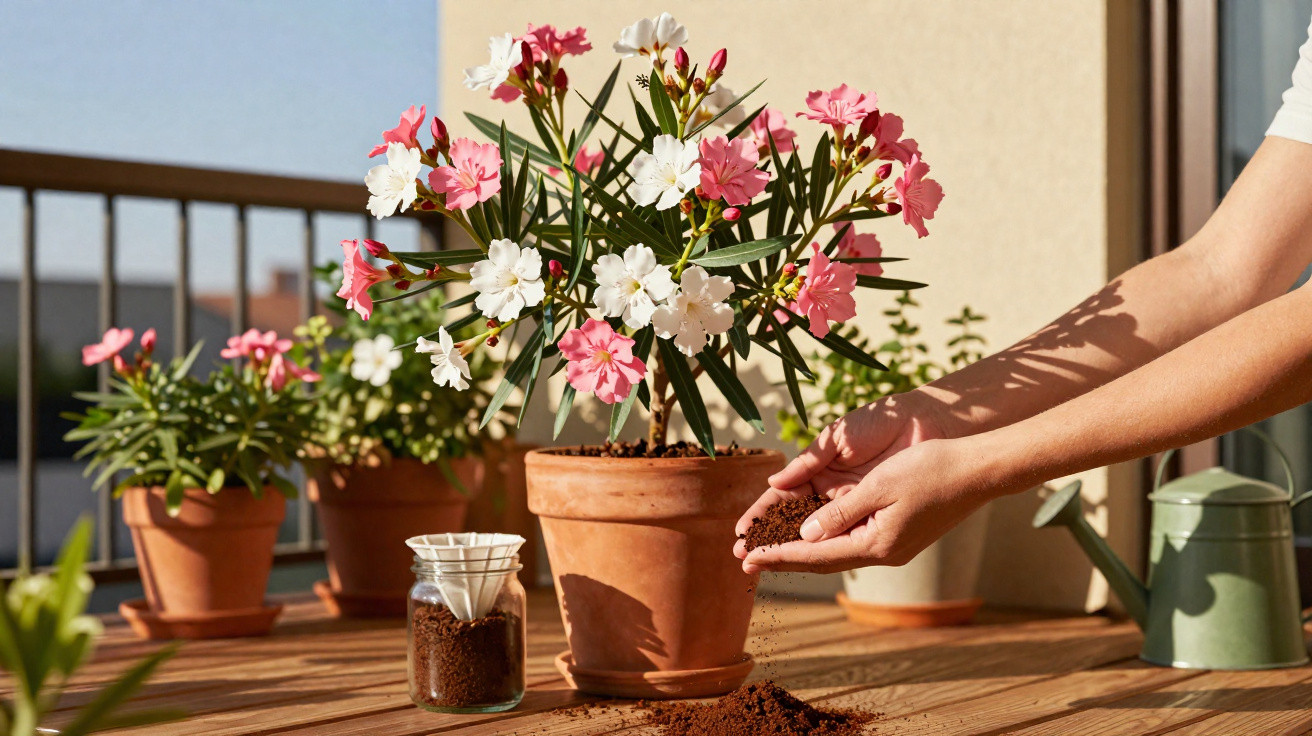
Many keen gardeners know the situation: the oleander looks healthy and keeps producing new leaves, yet there are barely any flowers – or none at all. Instead of romantic Mediterranean flair, all you get is plenty of foliage. This is rarely because the shrub is “bad”; more often, a specific care mistake is responsible – and it can be surprisingly easy to correct with a simple kitchen leftover.
Why oleander is so popular – yet can refuse to flower
Oleander is regarded as a classic Mediterranean shrub. In Germany, it is commonly grown in large containers on balconies, patios and by front doors, while in southern regions it can even grow as a small tree in parks and along roadsides. It copes with heat and drought far better than many other ornamental shrubs.
Despite this resilience, it has a more sensitive side when it comes to flowering. If flower buds fail to appear, the cause is generally one of three things:
- insufficient nutrients during spring and summer
- an unsuitable position that is too dark, shady or windy
- incorrect watering or pruning
Nutrient shortages in particular are often underestimated. Following winter, the shrub is depleted. From March until no later than the end of August, it needs feeding to form flower buds: especially nitrogen for growth and phosphorus for flowering and root development.
“Water alone is not enough for abundant flowers – oleander is a heavy feeder and needs regular fertilising.”
The overlooked kitchen helper: coffee grounds
The good news is that many of the substances oleander needs for plentiful flowering are thrown away daily in many households – in the coffee machine’s filter. Once dried, coffee grounds make an excellent natural fertiliser for container and garden plants, including oleander when used correctly.
Coffee grounds contain, among other things:
- phosphorus – encourages flower formation and strong roots
- nitrogen – supports leaf and shoot growth
- potassium – reinforces cell structure and improves resilience
- tannins and antioxidants – have a mildly inhibiting effect on certain fungi and bacteria
These are precisely the ingredients found in many commercially available fertilisers. The major advantage is that coffee grounds cost nothing extra, are already available and also improve soil structure.
“Coffee grounds are not a miracle cure, but they are a remarkably effective addition for encouraging oleander to flower again.”
The most important step: always dry coffee grounds first
Many people make the same mistake: they tip warm, damp coffee grounds straight from the machine into the plant pot. For oleander – as with almost every container plant – this is not advisable.
Moist coffee grounds provide an ideal breeding ground for fungi and mould. In a pot, where the volume of soil is limited, fungal diseases can develop easily. These weaken the roots and can have exactly the opposite effect to the one intended.
A better method is as follows:
- Remove the coffee grounds from the filter and spread them over a large, shallow surface, such as a plate or baking tray.
- Allow them to dry fully in the air, ideally for one to two days.
- Loosen them occasionally so that they do not form clumps.
Only use the grounds as fertiliser once they are genuinely dry and crumbly.
How to fertilise oleander properly with coffee grounds
Apply coffee grounds sparingly and distribute them evenly. This straightforward rule of thumb helps with the dosage:
| Amount of coffee grounds | Amount of soil | Use |
|---|---|---|
| approx. 30 g (the contents of one coffee filter) | approx. 10 litres of potting compost | New planting or repotting |
If you are not repotting the oleander, proceed as follows:
- Work dried coffee grounds lightly into the top layer of compost.
- Make sure that none of the grounds sticks directly to the stem.
- Water thoroughly afterwards, so the nutrients reach the root area.
Between spring and the end of August, repeating this treatment every four to six weeks is usually sufficient. More does not automatically mean more flowers for oleander – excessive organic fertiliser can compact the compost or make it too acidic.
“Less is better: a thin layer of coffee grounds at intervals of several weeks is entirely sufficient for oleander.”
A welcome extra: coffee grounds deter unwanted visitors
Coffee grounds offer more than fertilising benefits. Many gardeners notice that the scent of dried coffee deters slugs and ants. If young shoots show signs of being eaten, you can place a loose ring of dried coffee grounds on the compost surface.
The effect is not a completely reliable form of protection, but slugs often avoid such areas. For owners of balconies and patios, this can be a small but welcome benefit when oleander is kept in containers beside paths or against house walls.
Watering, pruning and position: even the best fertiliser needs good basic care
For coffee grounds to have an effect, the rest of the care routine must also be right. Oleander is one of those plants that becomes very thirsty in summer. In hot weather, the compost in a container can dry out completely within a single day.
Watering correctly in summer
- Check oleander every day when temperatures exceed 25°C.
- It is better to water deeply, until water runs out through the bottom of the pot.
- Avoid waterlogging; the container must have drainage.
If the shrub dries out completely several times, it will shed its buds or fail to produce them in the first place. Even the best fertiliser is then of little help.
Pruning for new flowers
When shoots become very long and reluctant to flower, moderate pruning can help. Cut dried-out and ageing branches back to just below the dry sections. Oleander often responds with fresh growth, on which the following year’s flowers will develop.
Important: never cut it back drastically in autumn, otherwise flowers will be missing the next year. A light shaping prune immediately after flowering is preferable.
The right location
Oleander loves sunshine. A partly shaded balcony is usually not enough to encourage abundant flowering. A position in full sun, receiving at least five to six hours of direct sunlight a day, is ideal. The more light the shrub receives, the more buds it will form – provided its water and nutrient supply are adequate.
How does oleander respond to a coffee grounds treatment?
Patience is important. After the first application of coffee grounds, the plant’s appearance will not change overnight. It needs several weeks to take up the nutrients and turn them into new growth and developing flower buds.
Those who begin in spring have a good chance of seeing noticeably more buds on their oleander by high summer. If the shrub remains persistently reluctant to flower despite correct care, take another critical look at pot size, root condition and overwintering.
Risks and limits of coffee grounds in containers
Useful as coffee grounds are, they should only be used in moderation for container plants. Excessive quantities can lower the pH value of the compost, making it more acidic. While rhododendrons and hydrangeas may like this, oleander tends to react sensitively. If in doubt, use coffee grounds only as a supplement to a balanced liquid fertiliser.
It is also sensible to loosen the surface of the container from time to time. This keeps the compost open and allows the coffee grounds to blend evenly into the growing medium, rather than forming a hard layer that prevents water from soaking in.
Practical additions for a long oleander flowering period
Many gardeners combine coffee grounds with other simple measures:
- A bright overwintering position, so the shrub gets going quickly in spring.
- Timely repotting every few years into fresh, nutrient-rich compost.
- Regular checks for pests such as scale insects, which weaken the plant.
By following this approach, a problem plant that is reluctant to flower will usually become an impressive container star again. The supposedly “temperamental” oleander then responds surprisingly gratefully to a little more attention – and to the unassuming kitchen helper that would otherwise be discarded without a second thought.


Comments
No comments yet. Be the first to comment!
Leave a Comment