
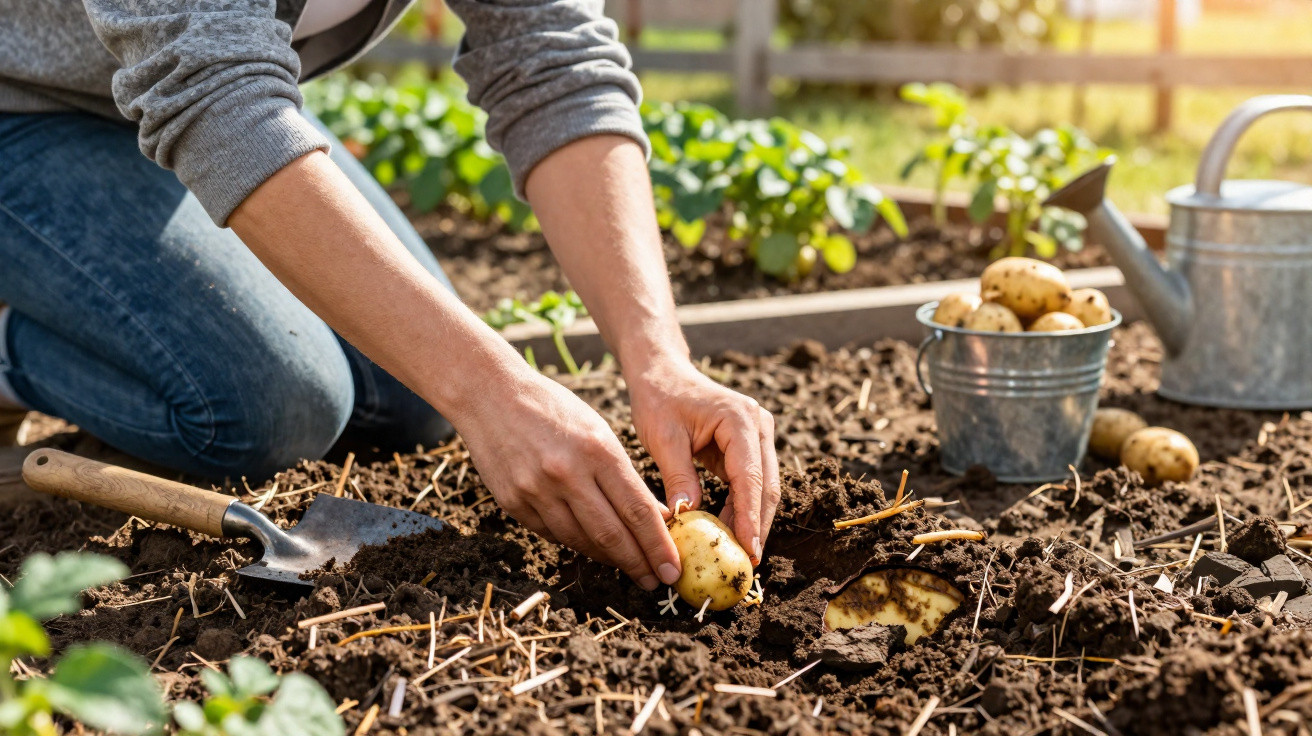
Many amateur gardeners spend money on varieties and fertiliser – yet the real yield booster sits just a few centimetres beneath the soil.
When planting potatoes in spring, most people picture crates brimming with tubers rather than a handful of undersized potatoes. Attention often turns first to recommended varieties or specialist fertilisers. Yet one particularly inconspicuous detail frequently decides whether the result is rewarding or disappointing: the correct planting depth. A difference of only a few centimetres can separate sparse rows from a potato bed overflowing with vigorous foliage and substantial tubers.
Why planting depth affects potato yields
A seed potato is essentially a compact store of energy. Its reserves must support the development of roots, stems and, later, numerous new tubers. To achieve this, the tuber needs a secure position in the ground: protected from cold and light, but not buried so deeply that emerging shoots exhaust themselves before reaching the surface.
Planting depth determines how quickly plants emerge, how healthy they remain and how abundant the eventual harvest will be.
A tuber placed too near the surface is vulnerable to late frosts, drying out and turning green. If it is planted excessively deep, the young shoots take too long to emerge, use up their energy and often remain weak. The aim is to find the zone where the soil is warm, friable and sufficiently moist without placing too much strain on the plant.
The ideal depth for planting potatoes
Garden guides and experienced vegetable growers agree remarkably closely on one point: tubers should sit beneath roughly 10 to 15 cm of soil.
- 10 cm: more suitable for lighter, warmer soils and sheltered locations
- 12–13 cm: the usual standard depth for many gardens
- 15 cm: more appropriate in exposed areas at risk from late frost, provided the soil has been well cultivated
It is not only the soil depth above the tuber that matters, but also the condition of the ground below it. The soil should be thoroughly loosened to around 15 to 20 cm deep, allowing roots to extend downwards and preventing water from lingering as waterlogging.
Set the tubers in the furrow with their eyes – the small points from which shoots grow – facing upwards. This lets the shoots head relatively directly towards the surface instead of taking a detour. Planting beyond 15 cm can lead to late emergence and slow development. At depths below 10 cm, however, seed potatoes are more exposed to damage from sun and frost.
How soil type changes the best planting depth
No two garden soils are exactly alike. Although the general recommendation of 10 to 15 cm is suitable in almost all situations, it is still worth assessing the soil in your own plot more closely.
Heavy loam or clay soils
Water can collect quickly in heavy soil. The upper few centimetres may easily form a crust, while moisture remains trapped beneath. Potatoes planted too deeply in these conditions may suffer from rot and poor aeration.
- Loosen the soil thoroughly before planting and break up all clods.
- Stay nearer the middle of the range, with around 12 cm of soil above each tuber.
- Ensure water can drain well, for example by forming loose planting furrows.
This gives shoots a manageable distance to travel upwards, while still protecting the tubers without leaving them in wet soil.
Light, sandy or very loose soils
Sandy soils drain water rapidly and can dry out considerably. This is initially favourable for potatoes, but it may become a problem during dry springs.
In these conditions, use the upper end of the recommended range and plant closer to 15 cm deep, as long as the soil remains genuinely loose. Adding plenty of mature compost also helps retain water and nutrients in the root zone for longer.
In dry, light soils, a slightly greater planting depth helps moisture remain around the tuber for longer.
Climate, late frost and the role of earthing up
Gardeners in areas where frosts often arrive late face the same choice each year: plant early for an earlier harvest, or wait until nights are reliably mild. Adjusting planting depth can help reduce this risk to a degree.
In cooler locations, a soil covering of around 15 cm above the tuber is useful. It provides protection against sudden cold spells in the ground. Once the first shoots appear, another protective measure becomes important: earthing up.
Why earthing up matters so much
Earthing up involves drawing soil from between the rows towards the stems to create small ridges. This offers several benefits at once:
- Shoots and young tubers remain in darkness and do not turn green.
- It creates extra space in which new tubers can develop.
- Frost damage is reduced because more soil covers the vulnerable plant parts.
- Weeds between the rows are covered with soil and weakened.
The initial planting depth and earthing up need to work together. Planting very deeply from the outset and then earthing up heavily forces the plant to travel an extremely long way through the soil. A better approach is to choose a medium depth, then add soil in two or three stages once the shoots are approximately 15 to 20 cm tall.
Spacing: how to position potato plants properly
Even the best planting depth has limited value if potatoes are positioned too close together or too far apart. Spacing determines whether every plant receives enough light, water and nutrients.
| Setting | Recommended value |
|---|---|
| Spacing within the row | 30–40 cm between tubers |
| Spacing between rows | 60–75 cm |
| Soil covering | 10–15 cm above the tuber |
These measurements leave sufficient room for strong foliage. They also make it easy to hoe, mulch and earth up between rows without harming the plants.
Mulch and watering: companions to the right depth
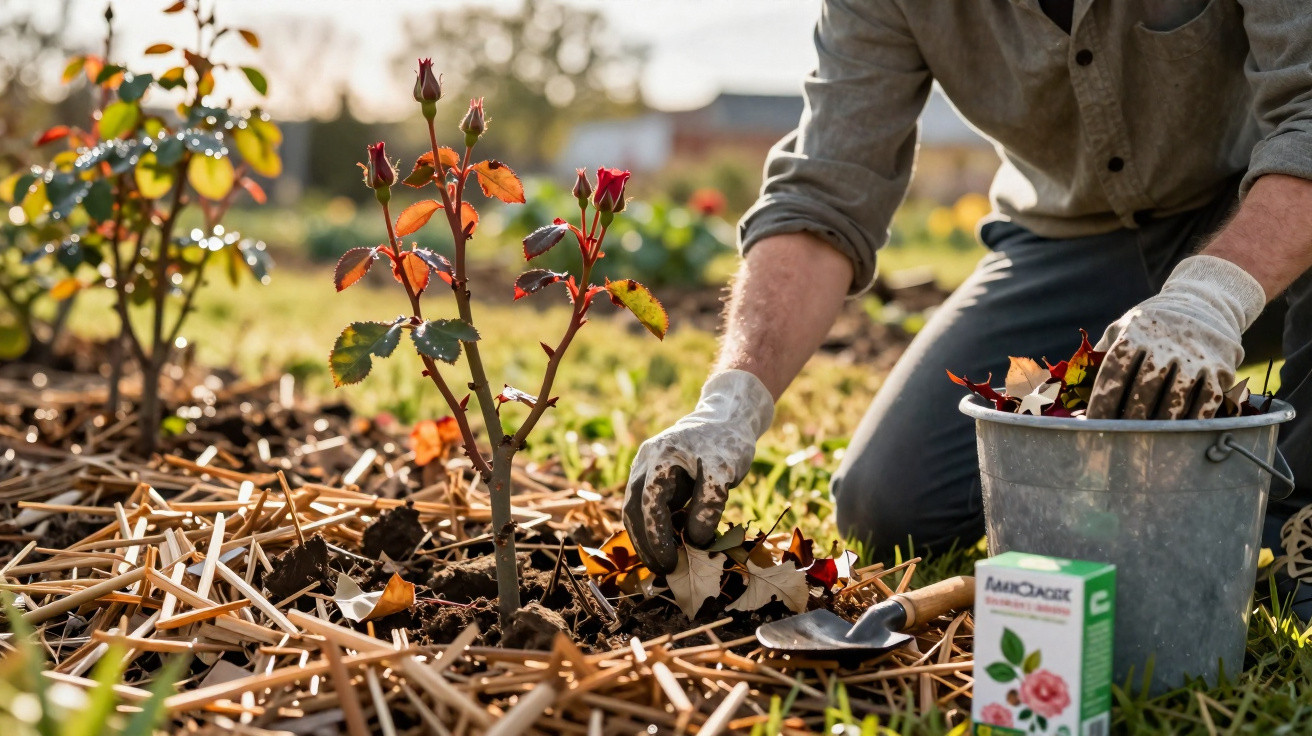
Mulching the soil over potato rows after shoots emerge with organic material – such as chopped straw, dried grass clippings or leaves – helps retain moisture around the roots. This means planting depth does not need to be artificially increased to seek out cooler soil.
Regular, thorough watering during dry periods supports this approach. Tubers develop best when the soil stays consistently lightly moist without becoming saturated. The combination of suitable depth, mulch and adjusted watering prevents plants from suffering either drought stress or waterlogging.
Common planting-depth mistakes – and how to avoid them
Many problems recur year after year. The encouraging news is that a few minor adjustments will usually resolve them quickly.
- Planting too shallowly: Tubers soon lie close to the surface, turn green or shrivel during dry spells. Solution: plant slightly deeper and earth up consistently.
- Planting too deeply: Shoots emerge late or unevenly, and the plants remain generally weak. Solution: keep 10–15 cm of soil above the tuber and loosen the soil below rather than planting deeper.
- Unprepared soil: Tubers sit as though on a bed of bricks, while roots struggle through lumps. Solution: loosen the ground thoroughly before planting, particularly to a depth of 15–20 cm.
Practical example: a method for a typical home garden bed
Many gardens have moderately heavy, slightly loamy soil. A straightforward method works particularly well in these conditions:
- Loosen the bed to spade depth, removing stones and large clods.
- Make rows about 70 cm apart and 8–10 cm deep.
- Place seed potatoes in the furrow every 30–35 cm, with the eyes facing upwards.
- Refill with soil so that the tubers are ultimately around 12 cm below the surface.
- Earth up for the first time after emergence, when plants reach 15–20 cm tall.
- Depending on growth, draw up soil a second time and mulch later.
Following this process uses the recommended depth as a foundation, with earthing up and mulch providing targeted adjustments. The result is generally much better than planting by guesswork.
What terms such as “late frost” and “waterlogging” actually mean
Many instructions refer to late frost without clearly explaining the term. It describes spring nights when temperatures fall below freezing again, even though daytime conditions already feel spring-like. Potato shoots tolerate these sub-zero temperatures poorly: they turn black and must produce new growth. A sufficient layer of soil combined with earthing up cushions this cold shock.
Waterlogging is the condition in which water cannot drain away through the soil and instead gathers around the tubers. The result is oxygen deprivation and rot. The risk is significantly lower when soil is deeply loosened before planting and the planting depth remains moderate, rather than pushing tubers into the wet, heavy zone.
Higher yields through combining measures
Correct planting depth alone will not produce a record harvest. It simply provides the basis on which other factors depend: a variety suited to the region, healthy seed potatoes, loose soil, plenty of organic matter and consistent earthing up. It is the interaction of these elements that turns a few unremarkable tubers into an impressive pile of potatoes.
Anyone keen to experiment next spring can plant two or three short rows at slightly different depths and observe the differences carefully. This makes it possible to tailor the 10 to 15 cm recommendation gradually to your own garden – without costly additions, using only a spade and close attention to the soil.

Comments
No comments yet. Be the first to comment!
Leave a Comment