
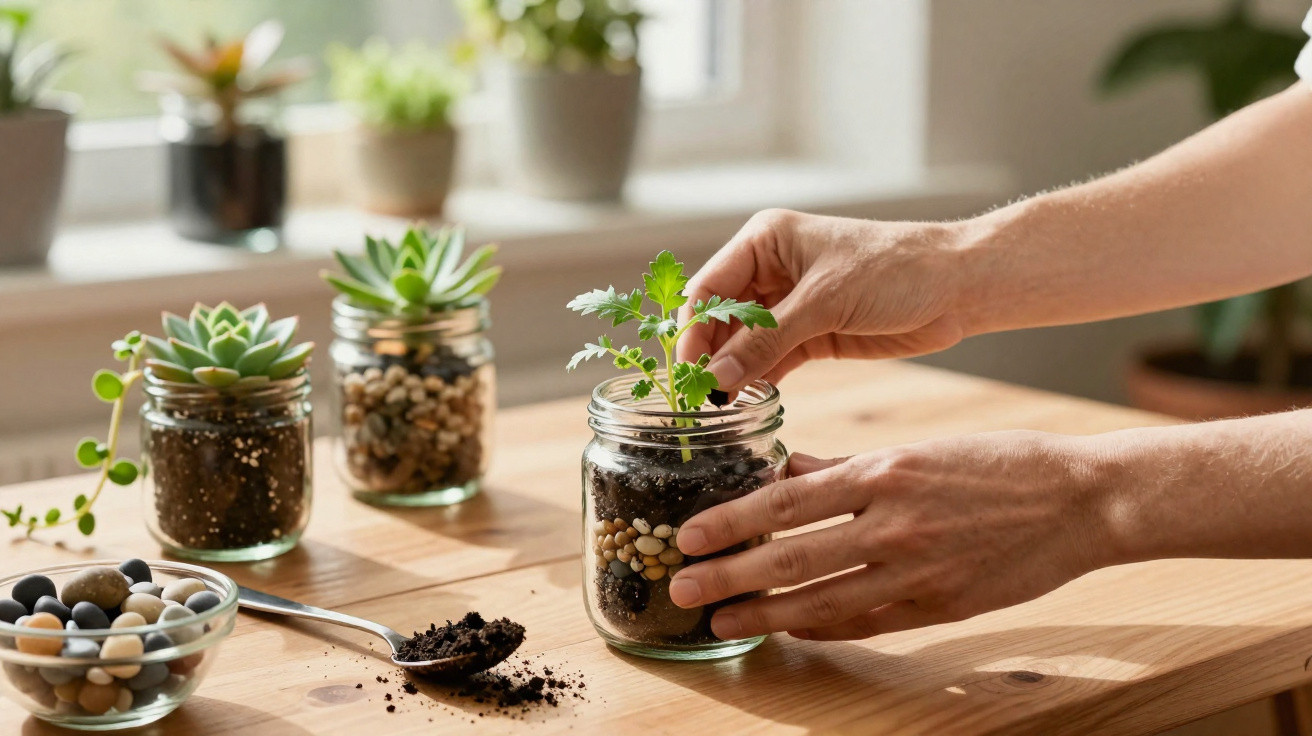
Reusing glass jars as plant pots is a budget-friendly, easy option for anyone who wants to bring more greenery into their décor without spending extra. With a few straightforward steps around cleaning, drainage and choosing suitable plants, these containers can be given a new purpose and used indoors or outdoors-no complicated tools required, just careful assembly.
How do you prepare glass jars to become plant pots?
Before turning a jar into a planter, take a moment to consider its shape, its size and the type of plant you plan to grow. Taller jars can accommodate deeper root systems, whereas shorter containers tend to work best for small plants or succulents, making better use of the limited internal space.
To start, thoroughly clean the glass so the roots have a healthy environment. Washing, removing lingering smells and drying completely helps prevent fungi and contamination that could hinder growth right from the beginning.
- Wash the jar with warm water and mild washing-up liquid.
- Remove labels and all adhesive residue completely, scrubbing with a sponge or cloth.
- Dry the inside and outside of the container fully.
- Check for cracks in the glass that could make it unsafe or unsuitable to use.
How do you create proper drainage in repurposed glass plant pots?
Because glass jars usually don’t have drainage holes in the base, it’s vital to build an internal bottom layer to prevent waterlogging. A simple layered set-up can replicate what drainage holes normally do, protecting the roots while keeping the clear glass looking neat.
A practical way to assemble the jar uses materials that are commonly available at home or from garden centres. Below is one method to arrange the inside without losing the decorative appeal of transparent glass.
- First layer: small stones, gravel, broken ceramic pieces or expanded clay pellets, filling 2 to 4 cm at the bottom of the jar.
- Second layer: a thin layer of charcoal or smaller pebbles, which helps reduce odours and keeps the growing medium better aerated.
- Third layer: a piece of geotextile membrane, mesh fabric, or even a paper coffee filter, to stop soil slipping down and clogging the drainage layer.
- Fourth layer: a growing medium suited to the chosen species, filling the jar without pressing the compost down too firmly.
Which plants adapt best to glass pots?
Not every plant thrives in repurposed glass containers, as root space is often restricted. In general, smaller plants with shallower roots tend to perform better and are simpler to manage when it comes to watering.
Some categories stand out for combining good looks with practicality, making glass jars versatile decorative pieces. Here are examples of plants that typically respond well to this style of home growing.
- Succulents and small cacti: they prefer little water and benefit from effective drainage, though you should watch out for overly intense direct sunlight magnified through the glass.
- Shade or partial-shade plants: such as certain prayer plants and small ferns, provided the jar size matches the plant’s growth.
- Compact culinary herbs: parsley, spring onion or dwarf basil can be grown in larger jars, as long as the drainage layers are well built.
- Simple terrariums: using mosses, mini ferns and slow-growing plants, as long as there is ventilation and watering is kept minimal.
How do you keep glass plant pots stylish and healthy for longer?
Beyond the planting itself, the look of the glass affects how elegant the space feels. Regularly wiping the outside removes water marks and dust, while checking the inside walls helps you spot algae, excess moisture and cramped roots-signs that it may be time to repot.
Over time, you may need to replace part of the growing medium, trim dry leaves and rearrange the display to maintain the balance between appearance and plant health. Tweaking watering frequency, turning the pot to even out light exposure, and even applying specialist paint to part of the glass are small tricks that extend the lifespan of these planters while keeping the overall look light, practical and cost-effective.
Comments
No comments yet. Be the first to comment!
Leave a Comment