
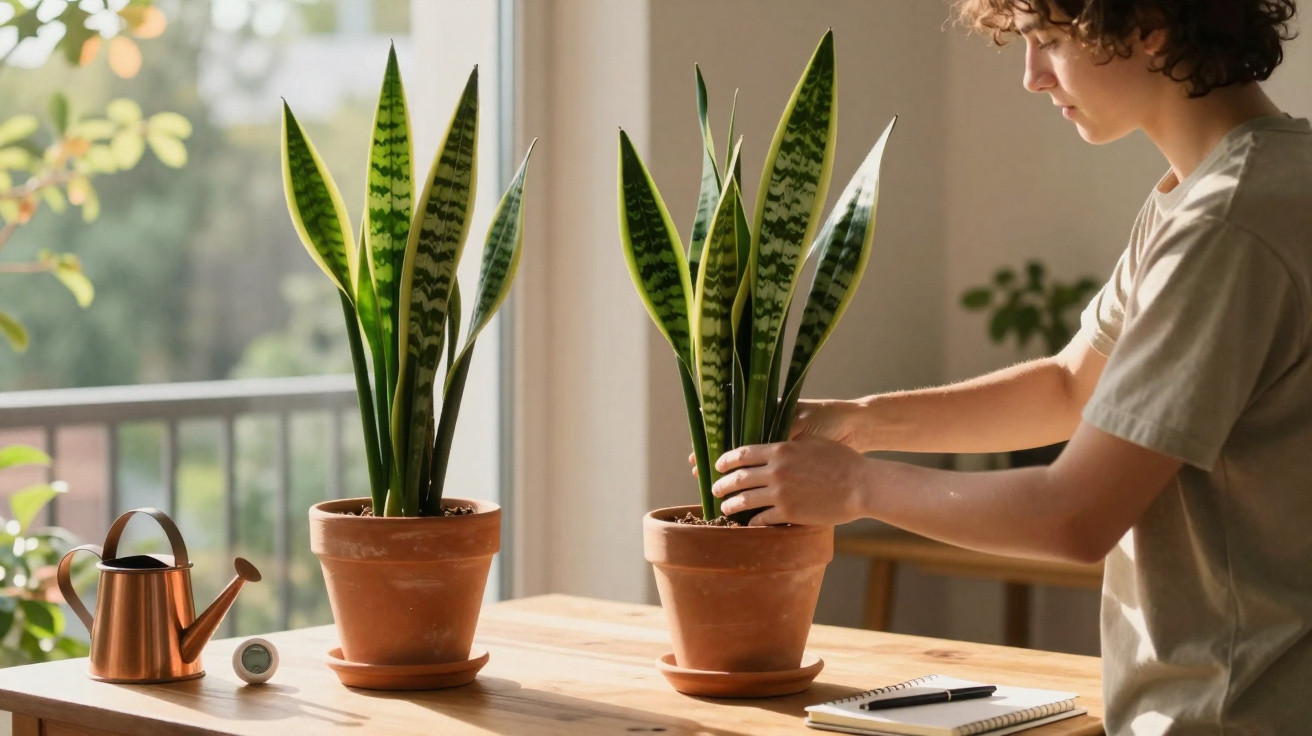
The St George’s sword plant is found in many Brazilian homes because it is hardy and highly adaptable. Despite its reputation as a “plant that survives anywhere”, gardeners note that its appearance shifts noticeably depending on how much light it receives - affecting leaf firmness, colour intensity and even how quickly it grows in each setting.
How does light affect the look of the St George’s sword plant?
The St George’s sword plant is a succulent with stiff leaves, and it responds directly to light levels. In bright spots without harsh, all-day sun, it usually grows in a balanced way, producing firm leaves with crisp edges and, in many varieties, dark-green bands that stand out against a lighter green.
In low-light rooms, the plant tends to stretch its leaves in search of brightness, which can leave it looking awkward and elongated. If light stays insufficient for too long, a few tell-tale signs make the issue easier to spot and fix.
- Leaves become longer and thinner than normal.
- Colour looks washed out, with little contrast in the patterning.
- Greater chance of flopping over due to reduced rigidity.
- Slow growth and few new shoots.
With strong direct sun - especially during the hottest part of the day - brownish or yellowish patches can appear, a sign that the leaf tissue has been scorched. In these situations, bright indirect light or filtered sun is usually the most reliable option.
What is the difference between growing the St George’s sword plant indoors and outdoors?
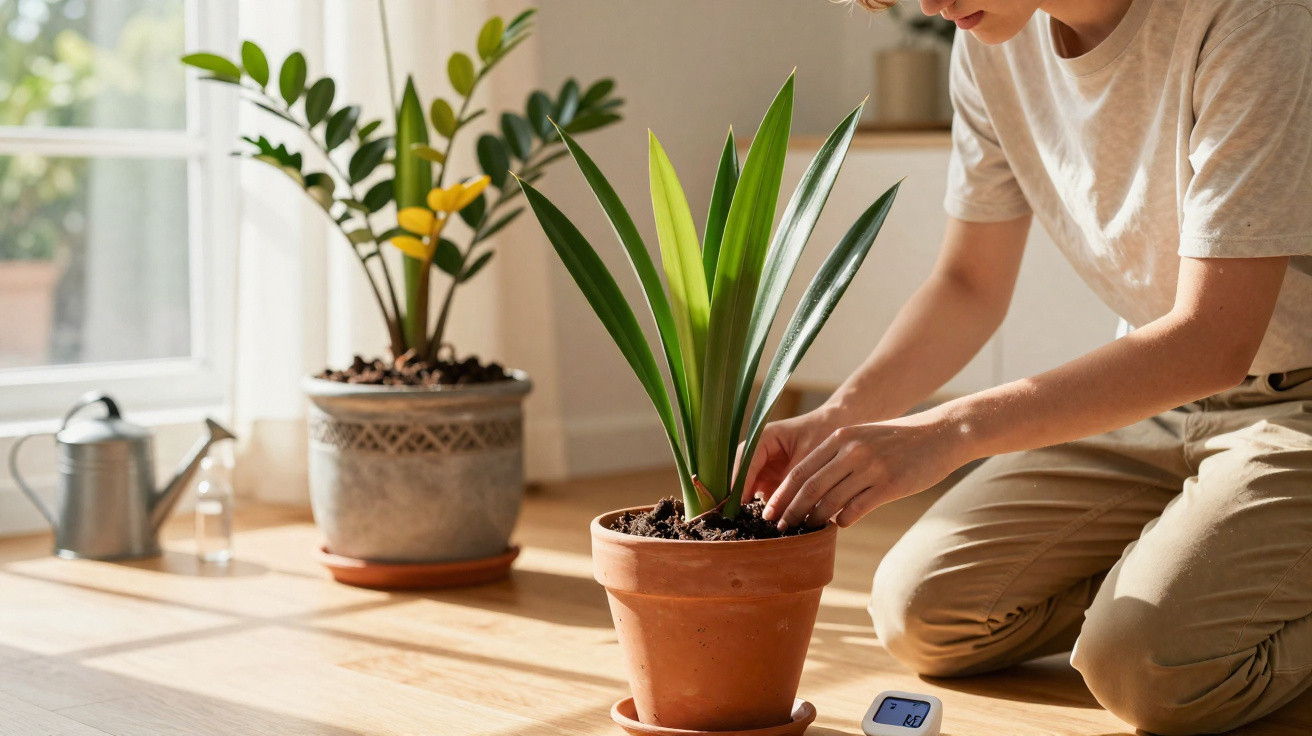
Indoors, the St George’s sword plant is often placed in living rooms, hallways or bedrooms, relying on light coming through windows and doors. Set near a bright window without very heavy curtains, it tends to keep vivid colour and steady, moderate growth; placed in darker corners, the leaves show less pattern and the overall look becomes more subdued.
In partially shaded outdoor areas such as covered balconies or gardens, the plant typically forms dense clumps, with multiple shoots emerging around the pot or directly in the ground. Better air movement helps lower the risk of fungal problems, and more even light supports symmetrical, well-structured leaves that fill the pot more quickly.
How do light and watering affect the colour and health of the St George’s sword plant?
Leaf colour says a lot about the conditions the plant is experiencing. With suitable light, the green appears even and striped varieties display clear contrasts; in overly shady places, the green becomes dull and the markings almost disappear. Too much sun - particularly in hotter regions - leads to yellowing edges and dry patches that do not recover.
Watering frequency also changes with the environment. Indoors, the growing medium takes longer to dry, so watering should be spaced out, keeping the soil only slightly moist in the deeper layers. Outdoors, with more wind and evaporation, the plant may need water at shorter intervals, especially in summer.
How can you adjust care for a more balanced St George’s sword plant?
When a St George’s sword plant starts to look out of balance, gradual tweaks to light and routine care usually put it right. Moving the pot little by little towards a brighter window, using shade netting outdoors, and avoiding sudden relocations all help the plant adjust without stress.
Straightforward steps - such as turning the pot every few weeks, removing badly damaged leaves with clean cuts, and repotting into slightly larger containers or splitting dense clumps - support healthier root development. With these measures, the plant typically shows better shape, stronger colour and more vigour, whether kept indoors or grown outside.
Comments
No comments yet. Be the first to comment!
Leave a Comment