
The zamioculca is widely regarded as a tough, low-maintenance houseplant, yet many growers feel disappointed when it seems to stay the same size for months. In most situations, the issue is not the plant itself but everyday care habits that weaken the roots-such as overwatering, using the wrong pot, and moving it around too often.
How does too much water harm zamioculca growth?
The key to understanding why the zamioculca doesn't grow is getting watering right. This plant stores water in thick stems and rhizomes, so it copes with dry spells far better than it copes with soil that stays wet.
When there is too much water, the compost remains damp for long periods, which reduces oxygen around the roots and encourages fungal problems. Roots may rot, pushing the plant into “survival mode”, with yellowing leaves, dark patches on the stems, and an unpleasant smell coming from the soil.
How can you tell the right time to water a zamioculca?
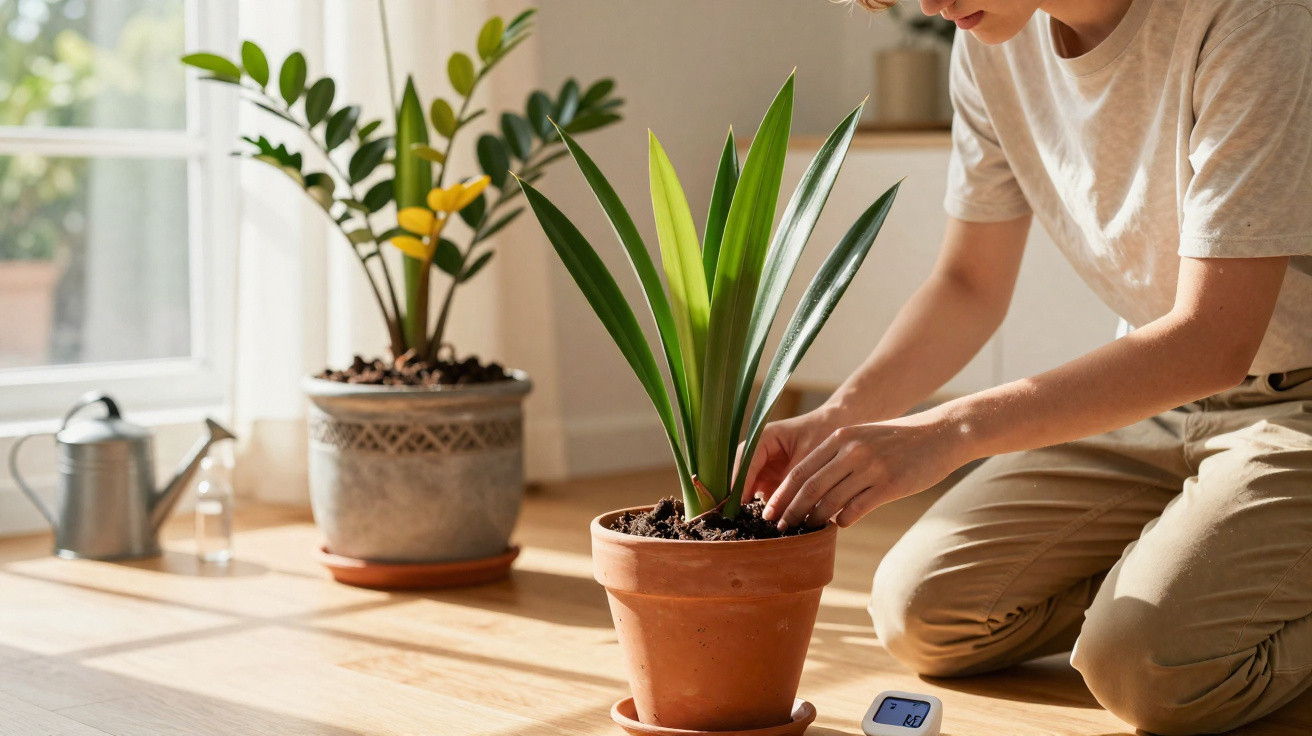
To decide when to water, checking the soil is more reliable than sticking to a fixed schedule. The surface can look dry while the centre is still moist, so the “finger test”-pushing a finger 3–4 cm into the compost-helps prevent both underwatering and overwatering.
Beyond feeling the soil, the plant’s behaviour and the weight of the pot give practical day-to-day clues. The signs below make it easier to tell the most common watering situations apart:
- Too little water: leaves slightly drooping, a dull look, and soil that feels very light and crumbly;
- Too much water: leaves turning yellow, leaflets dropping, compacted compost, and a musty odour;
- Balanced moisture: firm, glossy leaves with an even green colour, with no spotting or wilting.
How do the pot type and location influence development?
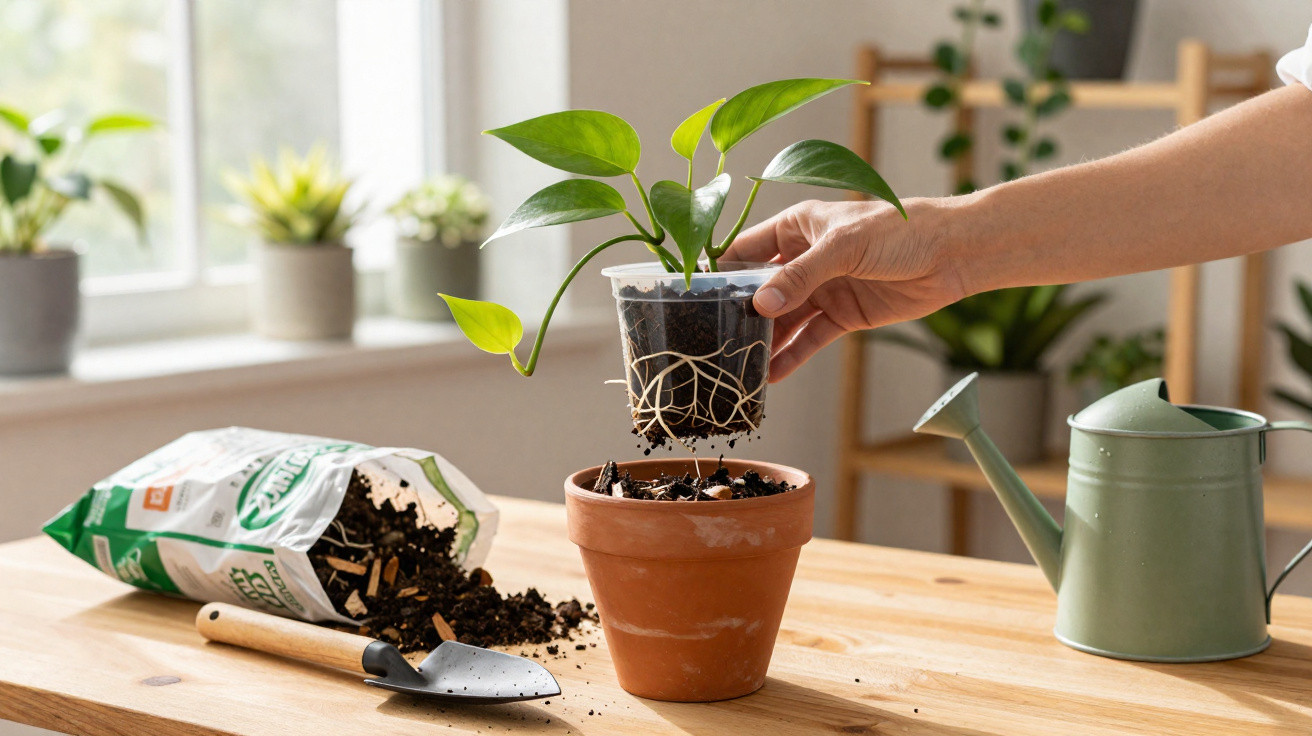
The pot makes a big difference to how a zamioculca performs, particularly because of drainage. Containers without drainage holes hold water in the compost, which damages roots and increases the risk of disease-even if watering seems moderate.
Pots with generous drainage holes plus a drainage layer (gravel, expanded clay, or broken ceramic pieces) are more suitable, along with a light, airy compost. Keeping the plant in one consistent spot-with bright, indirect light and away from cold draughts-reduces acclimatisation stress and supports the emergence of new shoots.
What care supports healthy zamioculca growth?
To encourage healthy growth, it helps to provide a stable setup where roots can develop without stress. That means moderate watering, a pot sized appropriately for the root system, and good indirect light-avoiding strong direct sun during the hottest part of the day.
A few extra details can also help, such as feeding lightly in spring and summer and avoiding frequent repotting unless it is necessary. When it is cared for well, a zamioculca shows steady health through firm, evenly green leaves, occasional new shoots, and a lack of spots-showing that a slow pace is simply a natural trait of the species, rather than a sign of trouble.
Comments
No comments yet. Be the first to comment!
Leave a Comment