
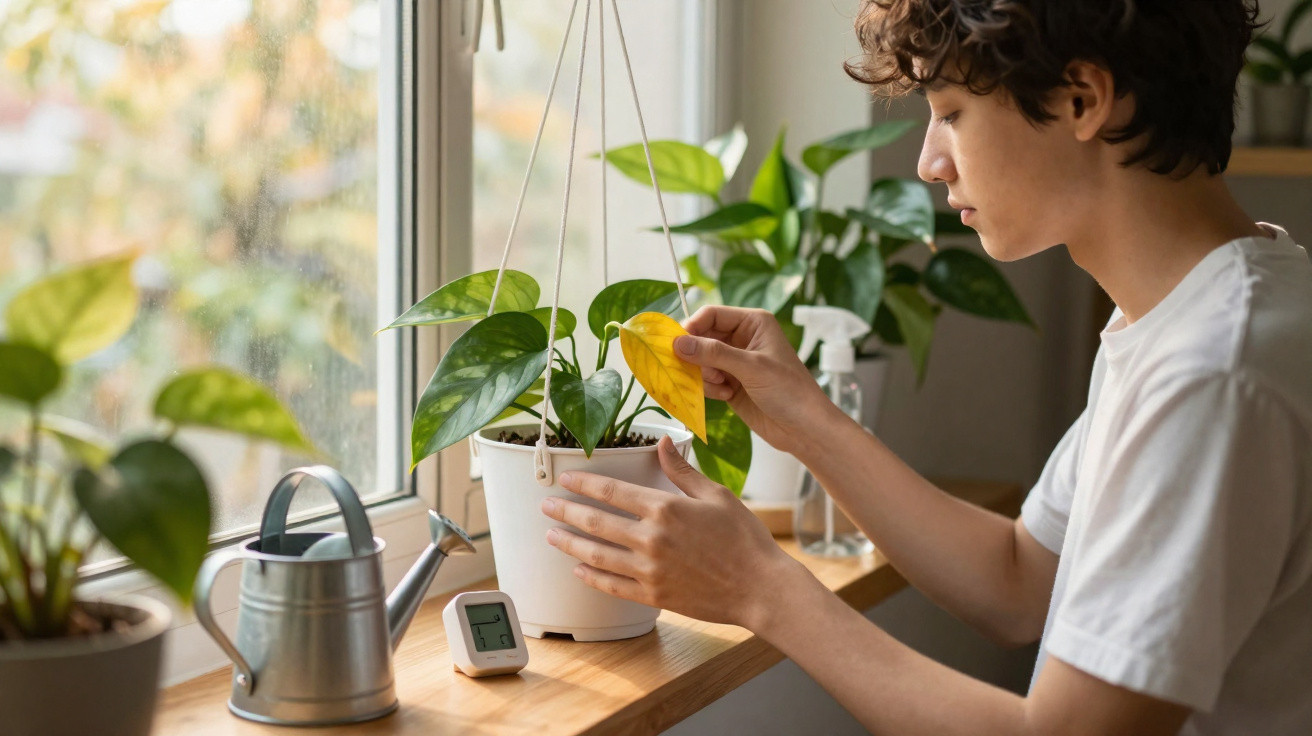
A change in leaf colour on a pothos (often kept as a houseplant) tends to be one of the first things growers notice. When yellowing becomes more obvious, many people immediately blame watering. In reality, the trigger can be a mix of factors such as light levels, nutrient supply, the type of compost, and even the pot itself-meaning a few small tweaks to day-to-day care are often enough to bring back a deeper green and steady, healthy growth.
What does yellowing in pothos actually mean?
Most of the time, yellow leaves on a pothos are a sign that the plant is under some form of stress. It starts producing less chlorophyll, which lowers photosynthesis efficiency and leaves the foliage looking pale, yellow, or marked with uneven patches.
It is also normal for very old leaves to yellow and drop gradually, without putting the rest of the plant at risk. It becomes a concern when several leaves-including newer ones-lose colour quickly. In that case, it is worth checking the pot’s position, airflow, watering routine, soil/compost condition, feeding, and any recent changes to its surroundings.
Main causes of pothos leaves turning yellow
As well as overwatering or underwatering, unsuitable lighting, nutrient-poor compost, and root issues are among the most frequent causes. Very low-light rooms tend to produce paler leaves and slower growth, while strong direct sun can scorch the leaf surface, creating yellow or brown areas.
Compost that is too dense and lacks proper drainage often holds onto water for too long and effectively suffocates the roots, increasing the risk of fungi and rot. On the other hand, a mix that is low in organic matter can lead to nutrient deficiencies, leaving the plant weaker, with smaller leaves and a persistent yellow tone.
How to tell whether water is really the problem
To work out whether the yellowing is due to watering or something else, it helps to run through a simple, practical check. Feeling the compost moisture with your finger, noticing any smell from the mix, watching how long it takes to dry out, and assessing the overall condition of the leaves can all point you towards the right fix.
You can organise what you see into a few straightforward visual signs-almost a quick “at-a-glance guide” when you are unsure what needs adjusting in daily care:
- Too much water: yellow leaves that drop easily, compost staying waterlogged for several days, a strong smell, or signs of fungi.
- Too little water: limp leaves, dry or brittle edges, and compost that is very dry and loose.
- Inadequate light: yellowing leaves even though the compost seems normal, plus stretched growth with large gaps between leaves.
- Too few nutrients: gradual yellowing, smaller leaves, and growth that is slower than usual.
How to revive a yellowing pothos-and when it is natural
Once the cause is clear, a few changes are usually enough: move the pot to a bright spot with indirect light, switch to a light, free-draining compost, water only when the top layer feels dry, and support growth with a balanced feed in moderate amounts. In more serious cases of waterlogging, you may need to take the plant out of its pot, trim away dark roots, and repot using only the healthy sections.
It also helps to recognise that not all yellowing is a problem. Older leaves near the base often turn yellow and drop as part of the normal growth cycle, and shifts in season or location can cause a temporary yellow tinge in a few leaves. If the pothos is still putting out firm, green new growth, the situation is generally considered normal-best handled with careful observation and small day-to-day adjustments.

Comments
No comments yet. Be the first to comment!
Leave a Comment