
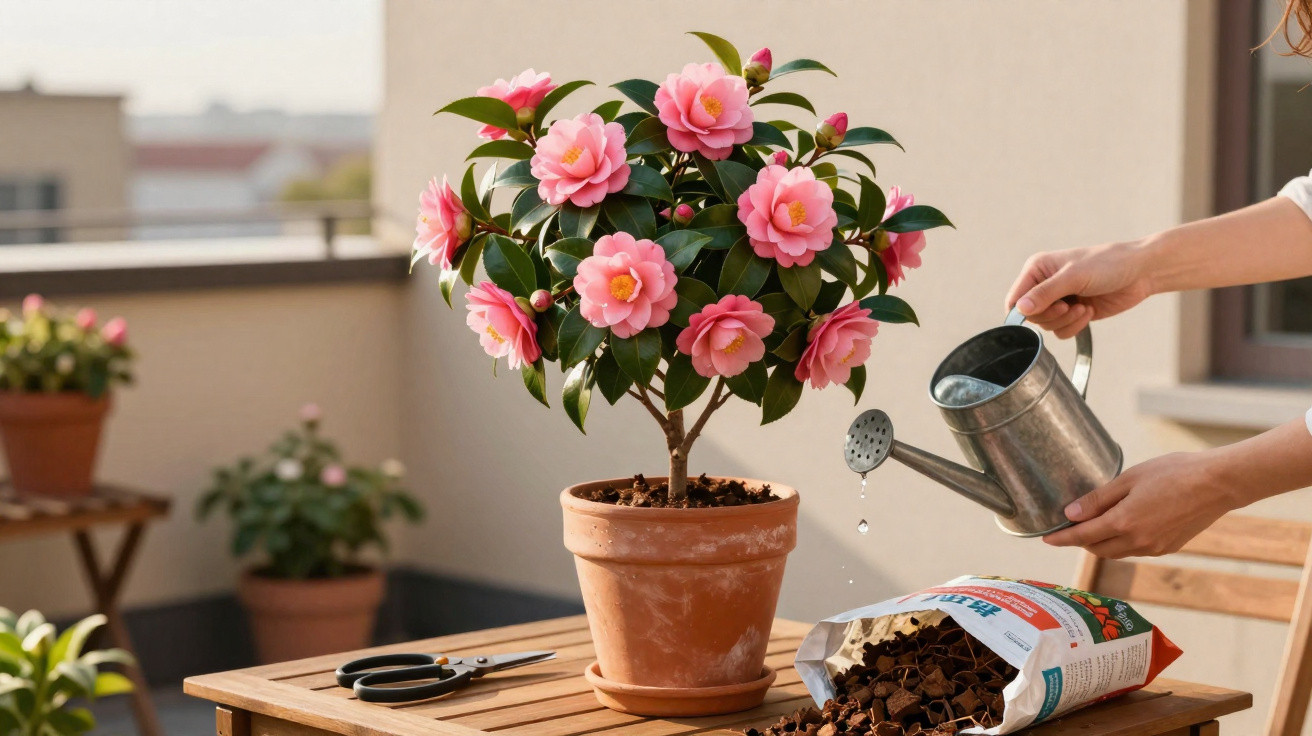
The Japanese camellia keeps its leaves glossy and green all year and can flower right in the coldest months. Well suited to pot culture, it becomes a refined choice for small terraces, as long as it gets filtered light, balanced watering and an acidic substrate.
Why is the Japanese camellia well suited to terrace growing?
This plant grows at a fairly slow pace and can stay in the same spot for many years when you give it light pruning and repot it from time to time. Its dense foliage remains decorative even when it is not in bloom, while the flowers appear in a range of shapes and colours.
- Keeps its foliage through every season;
- Can be grown in large pots;
- Its growth can be kept in check with pruning;
- Flowers during colder periods;
- Adapts well to places with indirect light;
- Takes up less space than many ornamental trees.
What is the right substrate for camellia?
Camellia japonica prefers acidic soil, typically with a pH between 4.5 and 6.0. For that reason, neutral or alkaline general-purpose composts can hinder nutrient uptake and lead to yellowing leaves, slow growth and poor bud set.
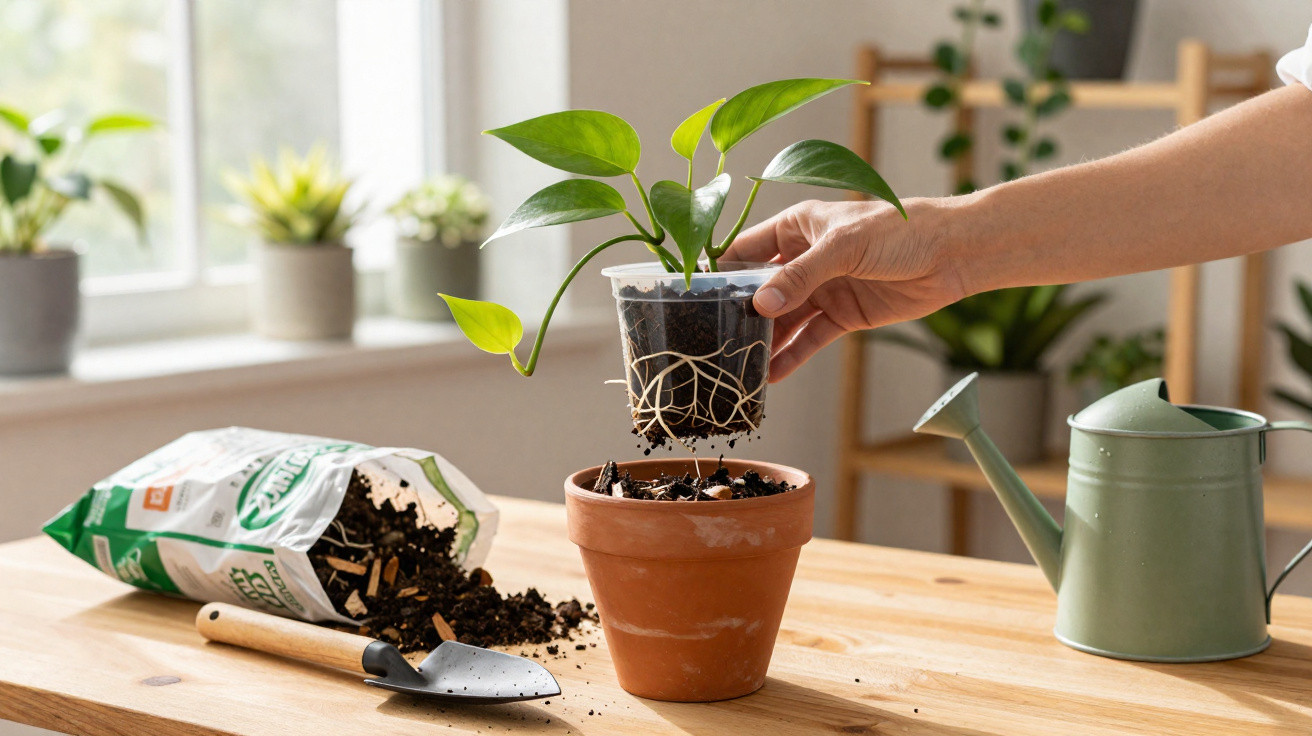
Fill the pot with a mix intended for acid-loving plants such as camellias, azaleas and rhododendrons. Blends containing pine bark, organic matter and drainage-friendly components help hold moisture without leaving the roots permanently waterlogged.
Where should you place the pot to encourage flowering?
The camellia needs plenty of brightness, but it can scorch if it receives strong sun during the hottest part of the day. The ideal position is one with gentle morning sun or filtered light throughout the day, sheltered from drying winds and sudden temperature swings.
- Pick a spot with lots of bright light;
- Favour weak sun early in the day;
- Avoid intense midday and afternoon sun;
- Shield the plant from constant draughts;
- Do not move the pot once buds start forming;
- Keep it away from walls that hold and radiate too much heat.
How do you water a camellia without rotting the roots?
Watering should keep the substrate lightly moist, but never saturated. Before adding water, feel the top layer of compost: when it begins to dry, water slowly until excess runs out through the drainage holes.
The pot must drain well and should not sit on a saucer full of water. In areas where tap water contains a lot of minerals, salt build-up can push up the substrate pH; whenever possible, rainwater can be used to help maintain the conditions the plant prefers.
What helps the camellia produce more flowers?
Bud formation relies on adequate light, steady moisture and balanced feeding. Fertilisers made for acid-loving plants can be applied during the growth period, following the stated dosage, as overfeeding may scorch the roots and encourage leaves rather than flowers.
It is also best to avoid heavy pruning once buds begin to develop. Like other elegant plants grown in pots, the camellia performs best with consistency. With an acidic substrate, protection from harsh sun and regular watering, it can turn the terrace into a flowering space during the colder months.
Comments
No comments yet. Be the first to comment!
Leave a Comment