
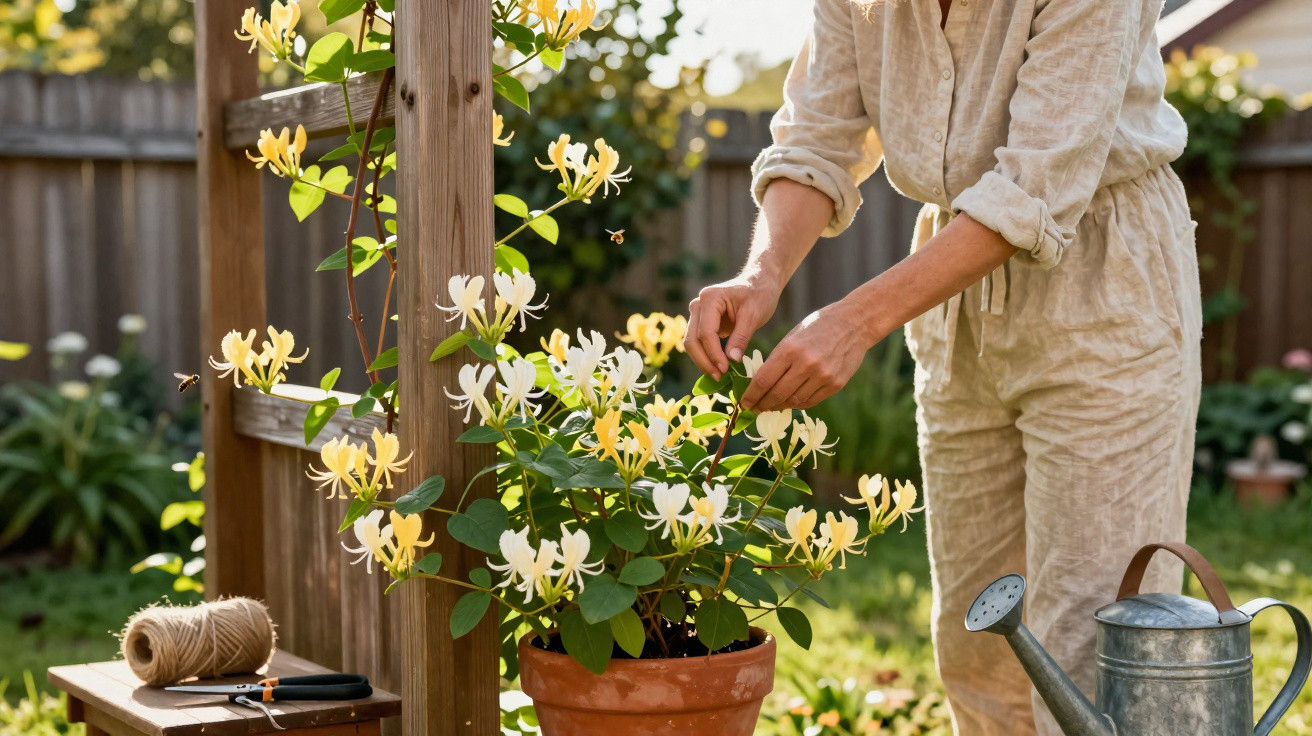
Japanese honeysuckle has become a common choice in landscaping projects because it combines qualities that are highly sought after in ornamental climbers: a noticeable fragrance, prolific flowering, fast growth and easy adaptation-from compact balconies to large pergolas. That makes it a strong option for anyone who wants a flower-filled garden in a short time.
What makes Japanese honeysuckle so valued in landscaping?
Japanese honeysuckle, or Lonicera japonica, originates from parts of Asia such as Japan, China and Korea. Today it is widely used to create flower-lined walkways, frame windows and soften concrete surfaces with a romantic, welcoming look.
The blooms open white and gradually turn yellow, creating an attractive two-tone effect. This colouring also helps pollinators such as bees and butterflies find the nectar, which supports biodiversity and brings more life into the garden.
How to choose the best location and growing medium for Japanese honeysuckle
For healthy growth, the plant needs full sun or at least a few hours of direct light each day. In heavily shaded spots it tends to produce fewer flowers and less scent, reducing its ornamental impact on balconies, front gardens and seating areas.
The soil should drain well while still holding moisture without waterlogging the roots. For that reason, in home gardens it is common to mix topsoil, well-rotted organic matter and coarse sand, ensuring the right balance of lightness and nutrition over time.
After planting, a few ongoing steps help keep Japanese honeysuckle strong and flowering well:
- Water frequently in the first few weeks, keeping the growing medium moist but not saturated.
- Provide sturdy supports-such as trellises, wires or pergolas-to guide the stems.
- Do light formative pruning to encourage side branching.
- Feed periodically with fertilisers formulated for flowering plants.
How to use Japanese honeysuckle on pergolas, fences and in pots
On pergolas, Japanese honeysuckle stands out for its vigorous growth, covering the structure quickly and providing partial shade. In regions with mild winters, it can also flower for an extended period, creating an inviting space for much of the year.
When trained over hedging, chain-link fencing or similar structures, it forms an effective, fragrant visual screen that boosts privacy. In large pots, it can create a green curtain on terraces and balconies, requiring only closer attention to watering because the growing medium dries out more quickly.
What extra care helps keep Japanese honeysuckle healthy and under control?
Because it is a fast-growing, hardy climber, Japanese honeysuckle can spread too far if it is not watched, reaching gutters, roofs or neighbouring plants. Regular pruning and consistent monitoring are important to keep the garden balanced.
It is also worth looking out for signs of pests and disease, such as yellowing leaves or an unusually heavy presence of insects. Plants that are well fed, positioned correctly and given good airflow usually have greater natural resistance-and keep, for longer, the distinctive fragrance and ornamental effect that have made this species so popular with lovers of flower-filled gardens.

Comments
No comments yet. Be the first to comment!
Leave a Comment