
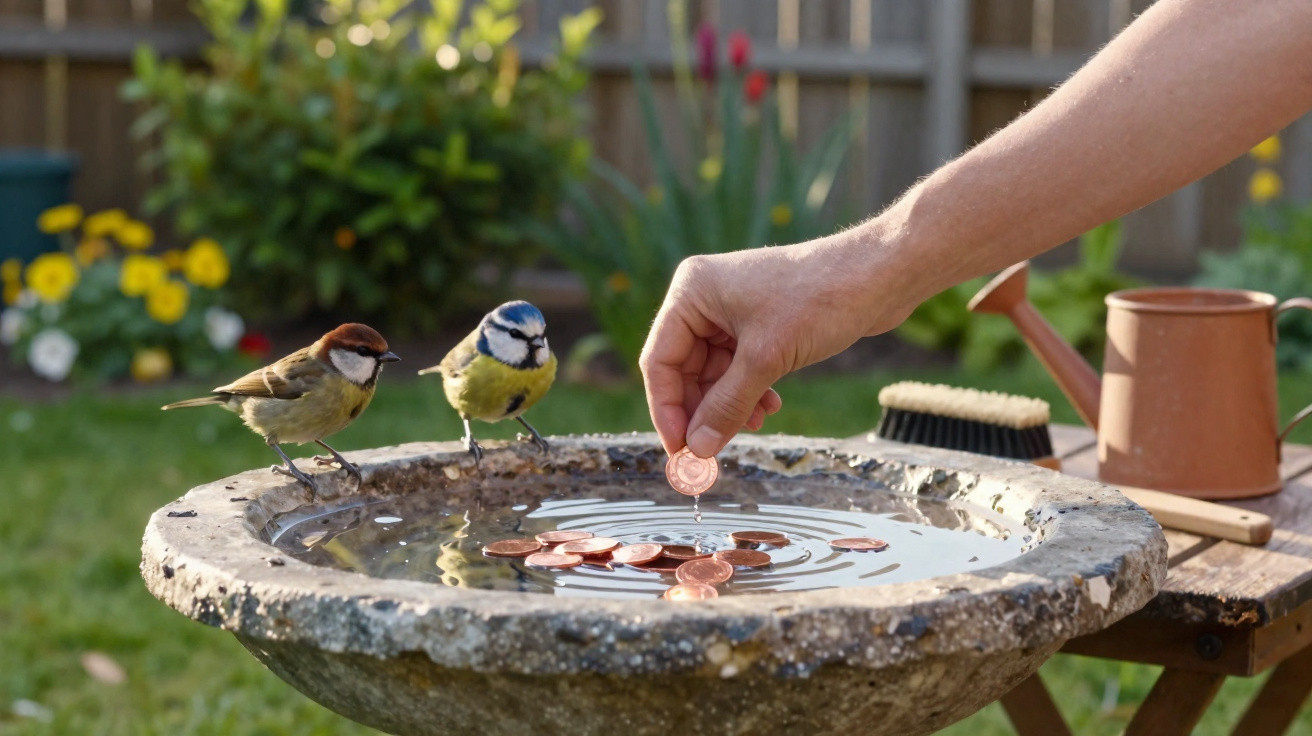
Across gardening forums, TikTok and Facebook groups, the same suggestion keeps cropping up: if you have a bird bath in the garden, place a single copper coin in the water bowl. The advice originated in Great Britain, but it has now spread widely elsewhere too. Behind this supposed “hack” is a very real issue familiar to almost anyone with a bird bath: green water, slimy edges, a nasty smell - and fewer and fewer birds turning up.
Why water in a bird bath turns so quickly
Bird baths look charming, but they are essentially tiny ecosystems. It is easy to underestimate how fast microorganisms, algae and bacteria can take hold in a shallow dish. The pattern is usually the same: leaves drop in, bits of food end up in the water, dust and pollen settle, and birds drink and bathe - leaving droppings behind. Once the sun warms the water, nutrients dissolve and algae get ideal growing conditions.
Garden experts tend to highlight two factors that make things dramatically worse: stagnant water and heat. The longer the bowl sits untouched - and the higher the temperatures climb - the quicker clear water becomes a cloudy, greenish soup.
"A neglected bird bath isn’t just unattractive; it can also encourage illness among garden birds."
Wild bird organisations have warned for years that dirty bird baths can become a breeding ground for germs. Pathogens can spread from beak to beak, mosquitoes may lay eggs in still water, and many species eventually avoid the bowl altogether. That means the garden loses not only an important drinking point, but also a natural ally against insects - because tits, sparrows and blackbirds eat large quantities of pests.
How copper is meant to help in a bird bath
This is where the “cent trick” comes in. Copper has long been known to have a mild antimicrobial effect and to slow algae growth. The metal is used in many hot-water systems, guttering and even in aquarium keeping because it can inhibit certain algae.
Home gardeners apply the same idea: a copper coin sits in the water and, over time, tiny amounts of copper ions are released. These ions interfere with cell processes in algae and some microorganisms. As a result, build-up tends to form more slowly and the water can stay clearer for a little longer.
"A cent in the bird bath isn’t a miracle cure - it’s a small helper that simply extends the time until the next proper clean."
One important detail: in Germany, current 1- and 2-cent coins are made from steel with a copper coating. That surface layer can create the desired effect, but it is noticeably weaker than using solid copper discs. Specialists therefore describe the impact as noticeable, but limited.
How to use the cent trick properly in your garden
If you want to try it, it helps to be systematic - and to treat the coin as an add-on to consistent cleaning, not a replacement. Practical guidance from advice columns and garden planners can be broadly broken into four steps:
- Replace all the water at least every two days.
- Scrub the bowl thoroughly at least once a week.
- After cleaning, place a single 1- or 2-cent coin in the water.
- Swap the coin every few months, especially if it shows heavy corrosion.
For small bowls, one coin is sufficient. With larger bird baths, at most two coins may be appropriate. Adding more coins increases the release of copper ions, which may suppress algae more strongly but, in theory, could also put additional strain on small birds. For that reason, experts are clear: less is more.
What you should never put in a bird bath
Wanting clean water can lead people to reach for the wrong solutions. Products sold in a garden centre for ornamental ponds or fish ponds are completely unsuitable for bird baths, and the same goes for household chemicals.
Experts strongly advise against using:
- chlorine cleaners or bleach
- anti-algae treatments for ponds and pools
- highly concentrated vinegar
- table salt or washing-up liquid
These substances can damage mucous membranes and feathers, or poison birds when they drink. For routine cleaning, a stiff brush and clean water are enough, and for stubborn deposits you can use a small amount of mild washing-up liquid - provided it is rinsed away thoroughly. Afterwards, the bowl must be fully rinsed until no foam is visible.
How often you should clean a bird bath
Using the cent trick does not mean you can clean less often. For healthy garden birds, a reliable routine matters. Many experts recommend:
| Season | Water change | Thorough clean |
|---|---|---|
| Spring | every 1–2 days | once a week |
| Summer | daily | once to twice a week |
| Autumn | every 2 days | every 7–10 days |
| Winter (above freezing) | every 2–3 days | every 10–14 days |
During heatwaves, the bird bath should be checked more frequently. Evaporation lowers the water level while the concentration of nutrients and germs rises. If you already have a watering can in hand, topping up with fresh water is an easy extra step.
Location, material, depth: how to make a bird bath truly appealing
Even the best cent won’t help much if the bird bath is in the wrong place. Garden planners recommend a semi-shaded spot with a clear view of the surroundings. Birds prefer being able to spot approaching cats or martens early. At the same time, light shade reduces overheating and slows heavy algae growth.
Hard-wearing materials such as stone, ceramic or concrete work well. Metal heats up quickly, while plastic often feels slippery and can tip more easily. The bowl should start shallow and be only about 5–7 cm deep towards the centre. That way, small songbirds can bathe comfortably without panicking.
A few flat stones in the water create extra standing points and also help insects climb out if they fall in. If you have space, position the bird bath near shrubs or a tree so birds can retreat after bathing - but leave enough distance that a cat cannot creep up unnoticed.
How much copper can birds actually tolerate?
Many animal lovers are understandably concerned about safety. Copper is a trace element that occurs naturally and is needed in tiny amounts by the body. At higher concentrations, however, it can be harmful to vertebrates.
In a typical garden bird bath with regular water changes, the copper load from a single cent coin is considered low based on current knowledge. It only becomes problematic if many coins are placed in a very small amount of water and the water is not replaced for a long time. That is why specialists keep stressing the same combination: use only a small number of coins and clean frequently.
If you want to be extra cautious, you can use a small piece of untreated copper sheet instead of coins. This can release copper more evenly, and the amount is easier to judge. Even then, the same principle applies: keep it modest and always use fresh water.
Other simple ways to keep bird water clean
Alongside the cent trick, there are several straightforward but effective measures that can noticeably improve water quality:
- Keep a second, smaller bird bath in reserve and use them alternately.
- Remove leaves and food scraps daily with a small net or by hand.
- Don’t position a bird table or feeder directly above the water bowl, to reduce droppings and seed husks.
- If algae are a persistent issue, move the bowl into slightly more shade for a short period.
Following these points creates a small but highly effective refuge for songbirds in built-up areas. Clean water in the garden makes it more likely that tits, finches, robins and blackbirds will visit throughout the year - and, in return, help keep many harmful insects away from beds and fruit trees.
Ultimately, that single cent in the bird bath is mainly a symbol of attentiveness: anyone who thinks about a coin in the water usually also pays attention to cleaning, placement and safety. For birds, it is that combination - clear sightlines, clean water and minimal chemicals - that matters far more than the value of a small copper coin.
Comments
No comments yet. Be the first to comment!
Leave a Comment