
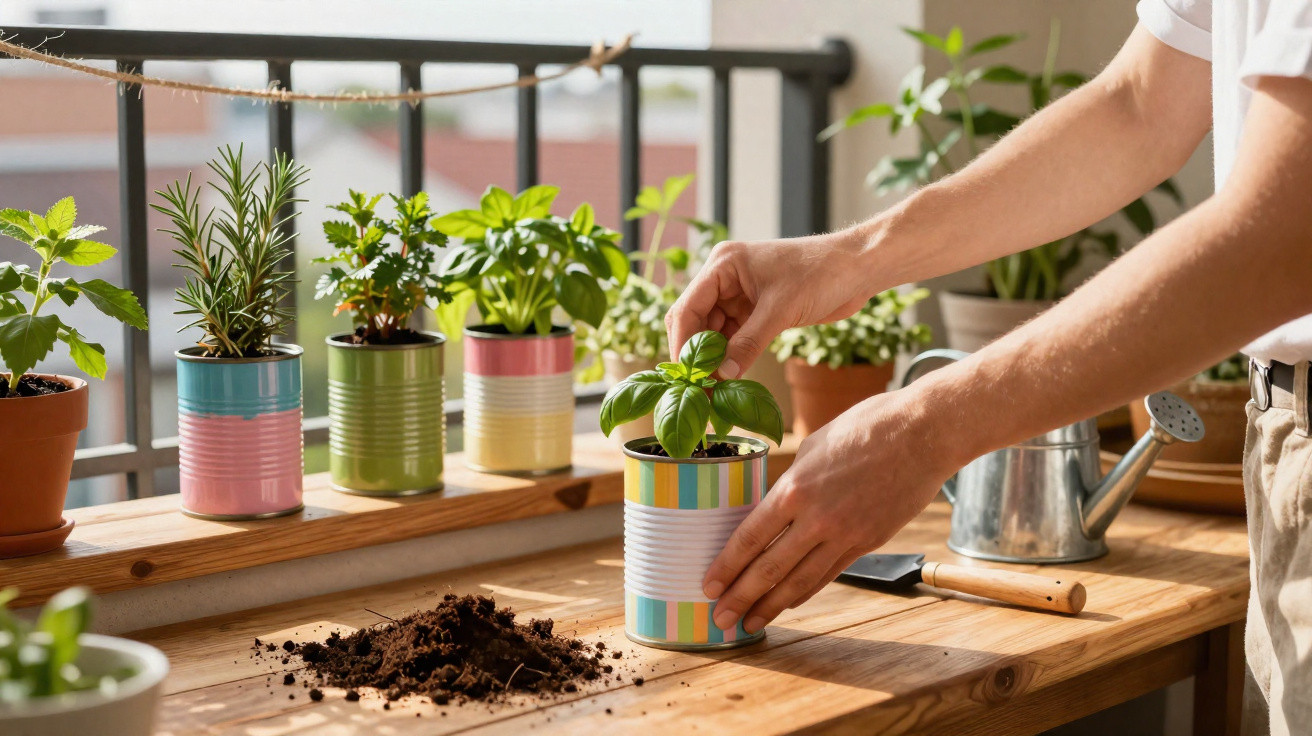
Many households automatically drop empty tins into the recycling bin. Home gardeners are taking a different approach: they turn these everyday leftovers into small, decorative herb gardens that take up hardly any room and look surprisingly attractive.
From throwaway packaging to a green focal point
Food tins are usually treated as nothing more than packaging waste. But look a little closer and their shape and material make sense: the uniform cylinder, sturdy metal and consistent size are ideal for use as plant containers. Gardeners use them deliberately to add greenery to narrow balconies, plain fences or bleak window ledges.
"With just a few simple steps, a typical waste product becomes a decorative and practical herb pot – almost free of charge."
This idea fits perfectly with a time when many people need to watch their spending while also wanting to live more sustainably. By upcycling tins, you avoid buying pricey plastic pots, cut down on waste, and still create a neat, tidy look outdoors.
It’s particularly helpful for renters with limited space: a few hooks, a short length of wire and a handful of herbs are enough to turn a dull wall into a vertical herb garden.
How to turn tin cans into small herb pots
Converting tins is straightforward and quick. One afternoon is enough to put together a complete mini garden.
Step 1: Clean and prep
- Empty the tin fully and rinse thoroughly with hot water
- Remove labels and roughly rub off any sticky residue
- Check the rim for sharp edges and, if needed, bend them in slightly
Cleaning isn’t just about appearances. Leftover food can go mouldy or attract ants - which becomes a nuisance once you start planting.
Step 2: Make drainage holes
Every tin needs drainage so excess water can escape and roots don’t rot.
- Use a small drill bit or a nail to make several holes in the base
- If you plan to hang the tin, add an extra hole near the top on the back
"Without drainage, water and dampness build up inside – one of the most common reasons plants die in improvised containers."
Step 3: Create a hanger
For hanging, you can often use items you already have at home:
- An old wire coat hanger
- Strong wire or tie wire
- String, cord or sisal twine
With pliers, a wire coat hanger can be shaped into small hooks that slot into the side hole of the tin. That way it hangs securely from a nail, a trellis or a fence panel.
If drilling isn’t an option, simply tie a loop of string around the tin and hang it from that. The key point is strength: the hanger must support the tin, compost and plant.
The right filling: compost herbs thrive in
For the contents, peat-free compost or a dedicated vegetable-and-herb mix works best. Peat-free compost protects peat bogs (and therefore the climate) and helps keep the potting mix light and open inside a small container.
- Fill the tin to around two thirds with peat-free compost
- In very wet spots, add a thin layer of expanded clay pellets or gravel at the bottom
- Plant your herb or scatter seeds
- Top up with compost, press down gently, and water in
"Peat-free compost is good for the plant and better for the environment – and it works surprisingly well in small containers like tins."
Which herbs are especially suitable
Not every plant is happy in a small tin. However, some culinary herbs cope very well with tight space and the fact that metal warms up quickly.
| Herb | Suitable for tins? | Notes |
|---|---|---|
| Parsley | Yes | Prefers partial shade; keep evenly moist |
| Chives | Yes | Hardy; regrows well even in small containers |
| Thyme | Very good | Needs little water; loves sun and drier compost |
| Mint | Ideal | Spreads vigorously, so it’s perfect in its own pot |
| Basil | Only to a limited extent | Sensitive to cold; needs plenty of water and nutrients |
Mint, parsley and thyme are especially popular. They add lots of flavour, forgive minor care mistakes, and often grow more compactly in a tin than they do in a garden bed.
How to style your tins for the balcony and garden
Visually, you can do almost anything. If you like the metallic finish, leave the tins unpainted - it creates an urban, industrial feel that suits modern balconies.
If you’d prefer a cosier look, use paint instead:
- Paint with acrylic in pastel shades
- Use chalkboard paint and write the herb names in chalk
- Spray in matt, earthy tones
"A few colourful tins with fresh herbs are enough to turn a drab wall into a small, green corner."
Arranging several tins side by side creates a clean, structured look - for example, five identical tins holding different herbs on a slatted fence. If you want something more playful, mix sizes, colours and plants, and pair herbs with trailing flowers.
Ideas for very small spaces
In cities, where you may only have a tiny balcony or a narrow window ledge, the tin approach really comes into its own:
- Fix a row of tins to the outside of the balcony railing
- Arrange tins on an old wooden board and hang the board like a picture
- Use a grid (for example, an old metal shelving side panel) and hook the tins onto it
The result is a vertical herb garden that needs almost no floor space, yet adds plenty of greenery.
Useful tips on care, safety and sustainability
Because metal heats up quickly, don’t leave tins fully exposed on very sunny, south-facing balconies. Light partial shade - or a pale paint colour that reflects light - helps protect roots from overheating.
Frequent watering is essential, as small containers dry out faster. A quick finger test helps: if the top layer feels dry, it’s time to water. Avoid waterlogging, otherwise the roots may rot.
If there are children in the household, carefully fold any sharp edges at the rim or cover them with tape. This noticeably reduces the risk of injury.
"With a little care, an improvised solution becomes a safe, long-lasting planter that survives several seasons."
Handy to know: food tins also work as temporary seed-starting pots for tomatoes, peppers or lettuce. Later, the seedlings can move into the ground or larger pots, while the tin is reused for the next round - or recycled.
More than decoration: what mini herb gardens add to everyday life
The benefits go well beyond looks. Having fresh herbs right by the door means you can quickly lift soups, salads and pasta without needing an extra trip to the shop. It also cuts food waste, as you’re less likely to buy big bunches that wilt in the fridge.
On top of that, flowering herbs such as thyme or chives attract bees and other pollinators. If you sow wildflower mixes in one or two tins as well, you create a small but valuable feeding spot for insects - especially in densely built-up areas.
For children, tin gardens are a clear, hands-on project: they can watch a plant grow from a seed, do the watering themselves, and later snip the first leaves for dinner. It quietly builds an understanding of nature and sustainability - all from an object that would otherwise have ended up as rubbish.
Comments
No comments yet. Be the first to comment!
Leave a Comment