
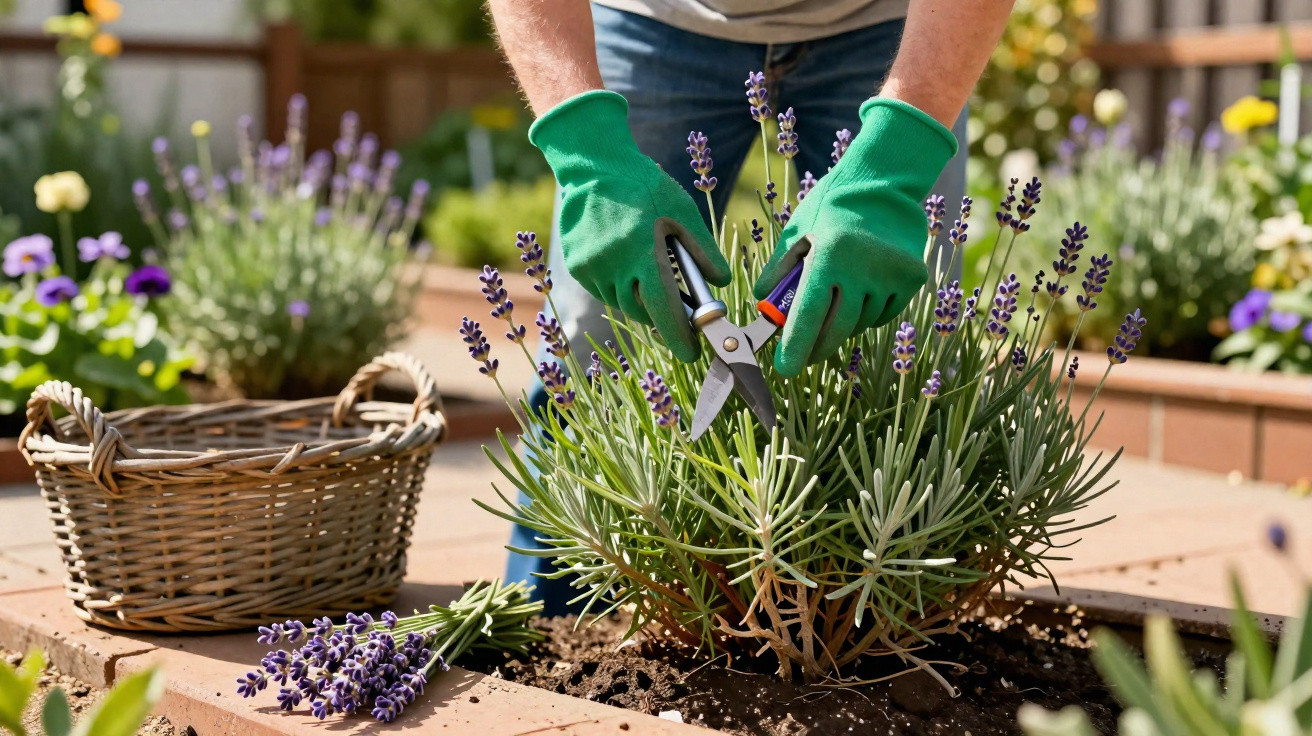
If you want thick, fragrant lavender cushions in your border or on the balcony in summer, spring is the moment to pick up the secateurs. March, in particular, often determines whether your plant flowers generously - or produces only a few miserable stems with blooms perched at the very tips. The good news: you don’t need expert knowledge or special kit, just a few minutes and a clear approach.
Why pruning in March determines your lavender flowers
Lavender is, botanically speaking, a subshrub. Over time the plant becomes woody from the bottom, while fresh, soft growth forms higher up. If you never prune, a predictable cycle sets in: the base grows increasingly gnarled, the shoots lengthen, start to flop outwards and end up carrying only a small number of flowers right at the ends.
"A gentle, early cut in March redirects energy from old wood into young, flower-ready shoots - turning a shaggy bush back into a dense, scented cushion."
Horticultural specialists point out that, at this stage, lavender is already effectively “planning” how many flowers it will produce in summer. Pruning in March acts like a reset button: the plant restarts with fresh foliage, more branching, and far more points where flower spikes can form.
If, on the other hand, you delay pruning until late spring - or even early summer - you effectively sacrifice blooms. By then, the lavender has already invested energy into older shoots and developing buds. Pruning comes too late, flowering is pushed back, and the overall display is noticeably smaller.
How to spot the perfect moment
In many areas, the best window falls between mid and late March. The calendar matters less than what the plant is doing:
- The harshest frosts have passed, and prolonged freezing conditions are no longer likely.
- You can see the first fine green tips on the shoots.
- The plant still looks tired from winter, but it is no longer fully “asleep”.
As soon as these signs appear, it’s worth reaching for the secateurs. If you wait well into April, lavender loses valuable weeks of growing time.
Pruning lavender correctly in March – step by step
Many gardeners hesitate with lavender because they worry about cutting too much. In reality, the ideal spring prune follows a handful of straightforward rules.
1. Use the right tools
Choose sharp, clean secateurs or small rose snips. Blunt blades crush shoots, which slows healing and can encourage fungal problems.
2. Tell wood and foliage apart
Pick one shoot and check it closely:
- Lower section: hard, brown, woody growth
- Upper section: green, softer growth with leaves
The key rule is simple: in March, always cut within the green, leafy part - never back into bare old wood.
3. Set the correct cutting height
Position your cut around 2–3 centimetres above where the woody section begins. This leaves enough young tissue for lavender to push out strong new growth.
Work your way around the whole plant. Trim all shoots to roughly the same height so the shape stays even.
4. Shape matters: aim for a loose cushion
Professionals often recommend shaping lavender into a small dome. To do that:
- shorten the outer shoots a little more,
- leave the inner shoots fractionally longer.
This creates a rounded, compact silhouette. It’s attractive, and it also helps stop the plant splitting apart once the summer flower spikes become heavy.
5. Remove dead and diseased growth
While you’re pruning, tidy up at the same time:
- take out completely dead, brittle twigs,
- cut greyed, soft/mushy, or blackened shoots back to healthy wood,
- remove crossing stems in the centre so air and light can get in.
This reduces the risk of fungal infection, especially after wet winters.
Hard or gentle pruning – what lavender can cope with
The March prune is deliberately on the gentle side. Think of it as a spring clean and a shaping cut.
| Type of pruning | Timing | Purpose |
|---|---|---|
| Gentle shaping cut | March | Rejuvenation, shape, encouraging bud formation |
| Stronger cut-back | Late summer / after the main flowering | Keeping the plant compact, stimulating new growth |
Save the truly strong prune - cutting back much more firmly, sometimes to just above older wood - for after the main flowering period, usually in August. By then, lavender has already delivered its show, and you’re setting it up for next year.
"In spring, it’s better to be slightly too cautious than to cut once too deeply into the plant’s woody core."
Which lavender types respond especially well to a March prune
Not every lavender behaves in exactly the same way. Some modern varieties respond particularly well to this pruning routine.
- Lavandula x intermedia (lavandin): Many varieties in this group form broad, rounded cushions of 60–70 centimetres with regular pruning. They produce intensely scented blue-violet flower spikes for months and cope well with unpredictable weather.
- English lavender (Lavandula angustifolia): A great choice for UK gardens, reliably hardy and very tolerant of pruning. With a spring prune and a late-summer trim, it stays compact for years.
- French lavender (often with “butterfly ears” on the flowers): More sensitive to frost, it appreciates a sheltered spot and needs a gentler hand. In March, keep the cut especially light.
All types do best in a sunny, fairly lean position with free-draining soil. Waterlogging is lavender’s biggest enemy - particularly after wet winters, when roots and the base can otherwise rot or develop fungal issues.
The most common mistakes when pruning lavender
A lot of problems with leggy, flower-shy lavender shrubs come down to two familiar errors.
Mistake 1: not pruning for years
Without regular cutting back, the shrub becomes woody without stopping. The green zone creeps higher and higher until you’re left with only a few leaves and flowers on long, bare stems. Once lavender reaches this stage, it’s often difficult - sometimes impossible - to fully put right.
Mistake 2: cutting aggressively into old wood
Unlike many ornamental shrubs, lavender often won’t reshoot from a bare, ageing base. If you cut too far back into brown wood, the plant may fail to recover, partly or entirely. Older plants are especially prone to this.
"Rule of thumb: a young lavender forgives far more than a ten-year-old veteran. With older bushes, it’s safer to reduce them gradually over several cuts than to chop them back hard in one go."
Care after pruning: how to strengthen your lavender
After a March prune, the shrub mainly needs two things: light and the right growing conditions. In most gardens, rich fertilisers are unnecessary for lavender - and can even work against you.
- Water: Only water newly planted young plants regularly. Established lavender copes well with dry spells.
- Fertiliser: Avoid nitrogen-heavy products. Too much feed produces soft, disease-prone growth and reduces fragrance.
- Soil: Improve heavy, clay soils with sand or fine grit so water drains away more easily.
If you grow lavender in a pot, choose a mix with a strong mineral component - for instance, standard compost combined with plenty of sand, pumice, or crushed expanded clay.
How to rescue old or woody lavender bushes
Many gardeners end up asking: rescue it, or replace it? If your lavender is only slightly woody, you can try rejuvenating it gradually over two to three years.
In the first year, cut a little more firmly within the still-green area; in the second year, go slightly lower again. If new shoots appear from the base, there’s a good chance you can keep the plant attractive for several more years. If the lower part stays bare, it usually makes sense to start again with young plants.
There’s also a bonus: pruning often leaves you with shoot tips that can root easily as cuttings in early summer - a simple way to raise free replacements.
Practical tip: combining lavender with other plants
If you time your March prune well, you can plan the rest of the border at the same time. Lavender pairs beautifully with roses, ornamental grasses, catmint, sage, or drought-tolerant perennials such as coneflower or steppe sage. An early cut creates space for these companions to spread.
In smaller gardens or on a balcony, it’s worth combining lavender with herbs such as rosemary, thyme and oregano in a large pot. They all want similar conditions: plenty of sun, minimal feeding, and a well-drained compost mix. After the spring trim, a container like this quickly looks neat again and provides scent and bee-friendly flowers throughout the summer.
So if you find yourself frustrated every year by woody lavender bushes, put March in your diary. A brief, targeted prune helps the plant channel its energy into fresh, dense growth - and rewards you in summer with a sea of purple flowers.


Comments
No comments yet. Be the first to comment!
Leave a Comment