
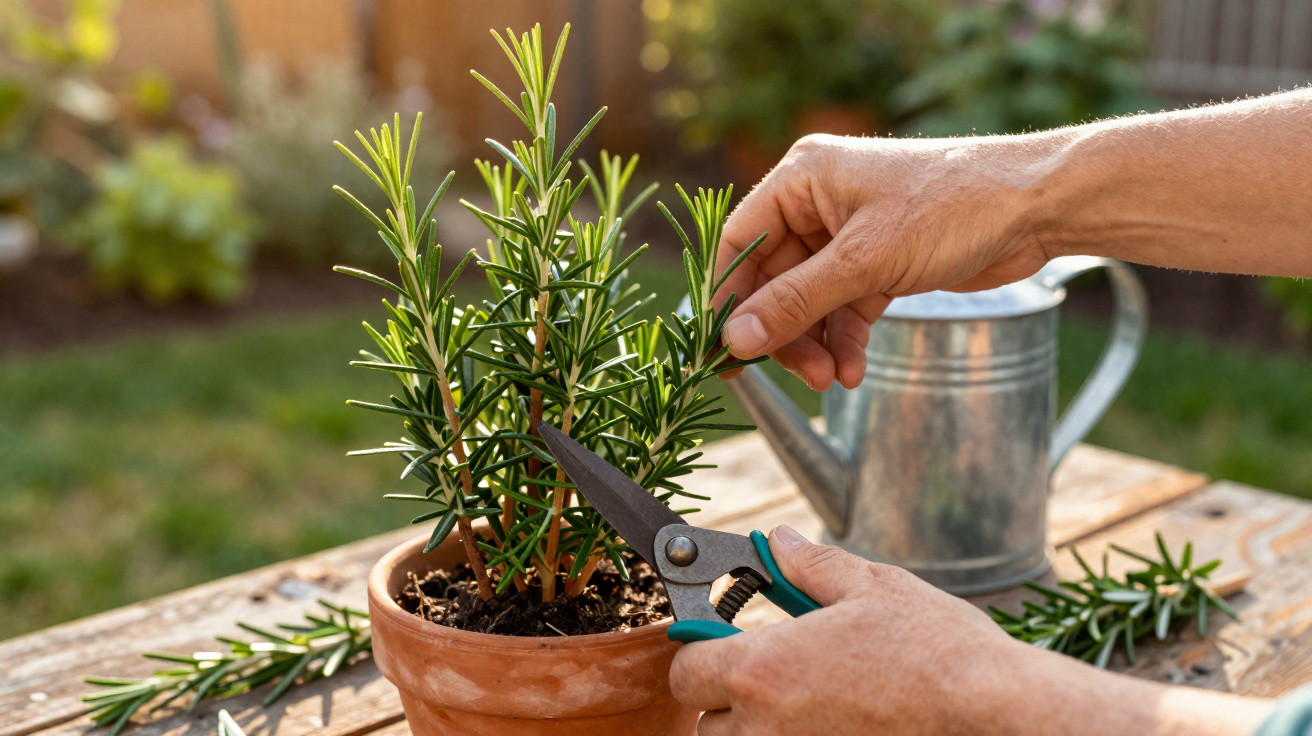
Many rosemary shrubs become sadly woody after a few years – yet a handful of well-placed cuts can prevent this.
Anyone growing rosemary in a garden or pot will usually use it generously in the kitchen, while paying little attention to the shrub itself. The result is bare patches, brown branches and weak growth. Using the right pruning method at the right time keeps rosemary dense, fragrant and attractively shaped for years. And there is no need to be a professional gardener to achieve it.
Why rosemary needs pruning at all
Rosemary is a Mediterranean subshrub. It starts out soft and green, but gradually becomes woody. Without regular pruning, the following happens:
- branches dry out and turn brown
- the shrub becomes bare from the centre outwards
- shoots grow long and splay apart
- the leaves become less aromatic
“A moderate maintenance prune keeps rosemary compact, stimulates its aromatic compounds and provides fresh, soft shoots for the kitchen.”
Lightly cutting back rosemary every one to two years not only keeps it ornamental, but also extends its lifespan considerably.
The best time: when rosemary should be pruned
Spring pruning after flowering
The most important maintenance prune takes place in spring. The ideal period is after the main flowering season, once the risk of severe frost has passed – usually between March and April.
Proceed as follows:
- shorten only green, living wood
- cut back spent flowering shoots by around one third
- make clean, smooth cuts rather than tearing the shoots
This encourages fresh side branches to emerge. The shrub becomes bushier, stays lower and produces young foliage with an especially strong aroma.
In colder areas, it is worth waiting until April so late frosts do not damage the cut surfaces. Young plants should only be lightly pinched out: removing 5 to 8 centimetres from the tips is entirely sufficient.
A light shaping prune in autumn
A second, very gentle cut in October helps prepare rosemary neatly for winter. This is less about major correction and more about routine care:
- remove dead, brown or damaged shoots
- lightly shorten overly long, thin branches
- thin the crown slightly so air can reach the centre
Prune on dry, sunny days. In exposed locations, autumn pruning should be kept to an absolute minimum so fresh cut surfaces are not left unprotected in hard frost. Mineral mulch, such as gravel or grit, around the root area helps protect the base of the plant.
Times to avoid
Pruning at the wrong time is a mistake that costs many rosemary shrubs their lives. You should avoid three periods in particular:
- severe winter frosts: wounds heal poorly and cold can penetrate deep into the wood
- summer heatwaves: pruning adds major stress to a plant already affected by heat
- peak flowering: the shrub is directing its energy into flowers and seed production, so pruning holds it back unnecessarily
If you want to take cuttings, it is best to wait until after flowering or use soft shoots in late spring.
Young or old rosemary: adapting the prune
Building up young rosemary plants correctly
With young plants, the priority is developing a compact, bushy shrub. This requires a particularly gentle approach:
- trim only the green tips by 5 to 10 centimetres
- pinch off shoot ends with your fingers rather than cutting them hard
- never remove more than one quarter of the total growth
Ideally, make the cut just above a pair of leaves. Two new side shoots will later form there, allowing the shrub to become denser naturally.
Reviving older, woody rosemary
An older rosemary shrub with heavily woody, bare branches needs patience. It will rarely tolerate a drastic one-off intervention. Gradual rejuvenation over several years works better:
“Gradual rejuvenation rather than radical pruning: each year, remove only part of the old branches, always where some green growth remains.”
In the first year, focus on the driest and clearly dead branches. During the second and third years, gradually work on further old sections – but always retain enough green foliage for the shrub to generate energy through photosynthesis.
When hard pruning is the last chance
Sometimes there is little alternative: rosemary that has completely lost its shape and consists almost entirely of brown wood cannot be saved without drastic action. In such cases:
- shorten shoots by no more than half
- cut only where tiny leaf buds or buds are still visible
- then loosen the soil and water moderately
The plant will need months before it becomes clear whether it will produce new growth. During this period, water sparingly and do not fertilise under any circumstances – too many nutrients are more likely to cause stress than healthy growth.
Pruning techniques for potted and garden rosemary
Rosemary in pots: beware of limited root space
In a container, rosemary has fewer roots and cannot compensate for setbacks as easily. Slightly stricter rules therefore apply:
- reduce the amount removed by around one third compared with garden plants
- cut only soft, green wood
- consistently avoid waterlogging after pruning
Container plants often dry quickly at the surface while moisture remains deeper in the compost. After pruning, it is better to check with a finger whether the compost is genuinely dry rather than watering automatically.
Rosemary in the ground: more scope, more shape
In open ground, the shrub can sustain itself through an extensive root system, making it far more resilient. It can therefore be pruned more firmly:
- well-established plants can lose up to two thirds of their shoot length
- remove troublesome branches that cross in the centre
- shape the plant as desired – from a loose hedge to a compact bush
Using sharp, clean hand pruners allows cuts to heal quickly, particularly when the plant is in full sun and the soil drains freely.
Special forms: trailing carpet or perfect ball
For ground-covering varieties with trailing shoots, the long stems should be deliberately retained. Here, remove only:
- shoots growing vertically upwards
- dead, brittle ends
Anyone wishing to train an upright shrub into a densely rounded ball should work evenly all around it:
- shorten every shoot by roughly one third
- walk around the plant as you prune to keep checking the shape
- trim once or twice a year to maintain a stable ball shape
The most common rosemary pruning mistakes
Never cut into old wood
The key rule for rosemary is this: fully brown, woody growth will produce little or no new growth after pruning.
“As soon as no green is visible beneath the bark, it is too late to prune at that point.”
To check, lightly scratch the bark with a fingernail. If fresh green tissue shows beneath it and the characteristic scent rises, it can be shortened there. If everything is dry and colourless, it is best to leave that section untouched – or remove it entirely if it is already dead.
Cutting off too much at once
Removing more than about one third of the foliage in one go forces the shrub into considerable stress. The plant must then direct all its reserves into healing wounds rather than making new shoots.
Better practice:
- spread several small cuts over two to three years
- allow one growing season for recovery after each intervention
- look for strong, healthy new shoots – they are the clearest sign of successful care
Unsuitable tools and the wrong location
Blunt, dirty tools tear the wood and can transfer pathogens from one plant to another.
- sharpen and disinfect secateurs before pruning
- use sturdy garden secateurs rather than small household scissors for thicker branches
Rosemary thrives in full sun and lean, well-drained soil. With at least six hours of sunshine a day, it produces more essential oils and copes better with pruning. In overly shady, damp corners, it remains more vulnerable and becomes sparse more quickly.
Propagating rosemary from cuttings – a useful side benefit
Making clever use of prunings
Maintenance pruning often produces ideal shoots for cuttings. This makes it easy to multiply a favourite shrub at the same time:
- choose young but already slightly firm shoot tips measuring 15 centimetres long
- remove the lower leaves from around half of each cutting
- insert the cuttings into a mixture of potting compost and coarse sand
The growing medium should be loose and free-draining, as rosemary is sensitive to waterlogging. Place the containers somewhere bright but out of direct midday sun, and keep the compost only lightly moist.
Water or soil cuttings?
There are two ways to do it:
- In water: place the leafless base in a glass of fresh water, change it daily, and roots will become visible after a few weeks
- Directly in soil: particularly suitable for somewhat firmer, semi-ripe shoots and usually produces more robust root balls
If you pre-root cuttings in water, handle the young roots gently when planting them into compost later. They break easily.
Caring properly for young plants
As soon as a strong root system has developed, move the young plants into larger pots. A pot diameter of around 12 centimetres is a good starting point. As during rooting, the compost should remain fairly lean and sandy.
After potting on, the plants need protection from intense sun and strong wind for a few weeks. Once they produce new shoots and visibly become stronger, they can move to their permanent place in a border or larger container during the following frost-free spring. Anyone who prunes regularly and moderately from the start will prevent rosemary from becoming a problem plant again in the first place.






Comments
No comments yet. Be the first to comment!
Leave a Comment