
On a hot Saturday afternoon, I watched my neighbour haul a heavy bag of fertiliser across the garden, carefully scatter it around her tomato plants, then return to the kitchen and tip a pan of cooled pasta water straight into the sink.
The contradiction was impossible to miss. Her garden plants were struggling, with limp growth and a washed-out pale green colour. Yet indoors, she was discarding the very thing they needed.
From that day, I began spotting the same small wasteful pattern everywhere.
Coffee grounds going into the rubbish. Cracked eggshells swept into the bin. Banana skins wrapped in plastic.
Nutrients were leaving in one direction while hungry plants struggled in the other.
It happens because no one has shown us that these things belong in the same cycle.
Your spotless kitchen habits could be starving your plants
Most of us learnt the same tidy routine: peel, cook, brew, then clear every leftover into the bin or food-waste disposal.
The cleaner the worktop looks, the more satisfying it feels.
But the story is different in your pots and garden beds. Pale foliage and slow stems can simply point to a lack of nutrients, rather than proof that you have a “black thumb”. Plants require small, steady amounts of nourishment, much as we need snacks between meals.
Yet we are taught to throw away the very materials that could provide it: skins, shells, coffee, tea and even the cloudy water left after boiling vegetables.
All of it vanishes before your plants can benefit.
Imagine a young couple in a compact flat with two terracotta pots on their balcony: one holds basil and the other a rather unhappy chilli plant. They purchase an expensive organic fertiliser stick, snap it in two and press one half into each pot.
Every day, though, they make coffee, put the used grounds in a plastic bag, tie it shut and send it down the rubbish chute.
By July, the fertiliser has run out. The basil becomes pale and the chilli flowers fall away. They sigh and say, “We’re just bad with plants.”
What they cannot see is the unnoticed stack of nutrients they have bought twice: first at the supermarket as food, then at the garden centre as fertiliser.
That rubbish bag is effectively a gradual drain on their gardening budget.
There is nothing mystical about it; it is basic biology with marketing layered over the top.
Plants do not know, or care, whether nitrogen comes from a polished bottle with a glossy label or from crushed eggshells and used coffee. They are designed to take up minerals from soil, not to read packaging. Kitchen scraps are simply an intermediate stage in a natural loop that already exists.
When everything is thrown away, that loop is broken. We pay to extract nutrients, pay again to process and transport them as food, and then pay again to get rid of the resulting “waste”.
At the same time, we pay once more for synthetic plant feed.
The straightforward reality is that most households create more potential fertiliser than their houseplants and balcony containers could ever use.
Kitchen waste is plant food
Begin with one small change: regard “waste” as ingredients instead.
Used coffee grounds provide mild nitrogen and organic matter for soil. Crushed eggshells supply slow-release calcium, which can help prevent blossom end rot in tomatoes and peppers.
Banana skins offer potassium, while vegetable peelings and herb stalks decompose into a broad range of micronutrients.
There is no need to turn your kitchen into a farm laboratory.
Choose just one item that you already discard each day and redirect it.
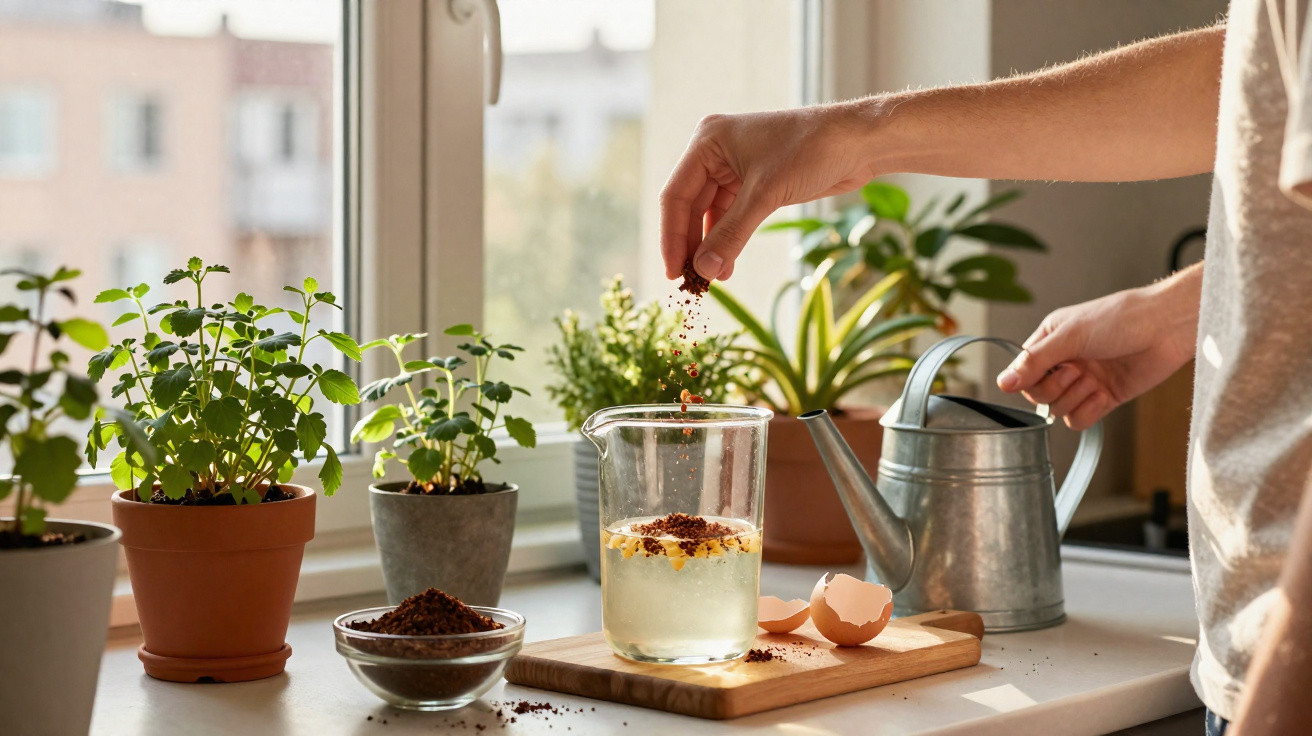
For indoor and balcony gardeners, coffee grounds, eggshells, and cooled pasta or vegetable cooking water are the simplest starting points.
A single jar, a small bowl on the worktop and a pan on the hob are all you need to begin feeding every plant at home.
Here is a practical routine with no theory required.
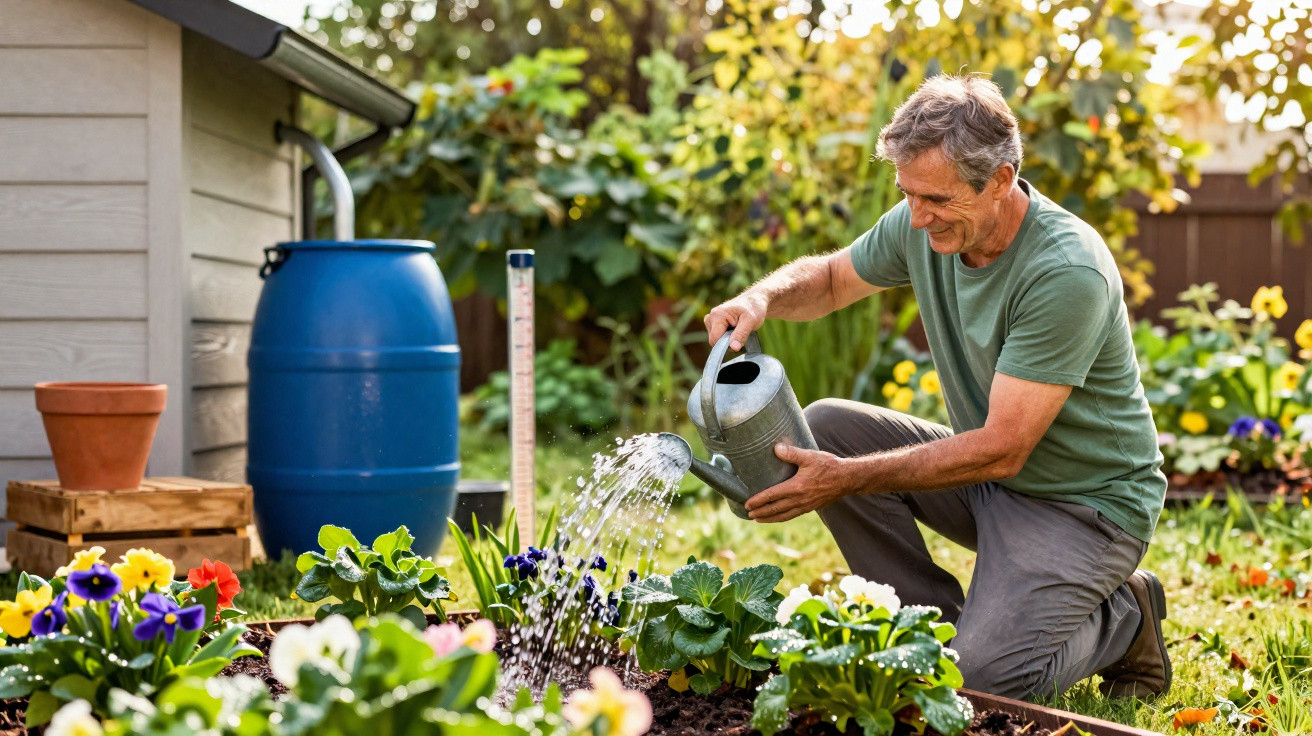
Suppose you make pasta twice a week. Once it has been drained, leave the cooking water in the pan until it cools. Rather than pouring it into the sink, take it to the balcony and divide it between your containers. It should be at room temperature, not boiling.
The following morning, when you make coffee, keep the grounds in a small jar on the worktop instead of putting them in the bin. Gather them over the week, then on Sunday scatter a very light layer over outdoor pots or work them into the soil in a corner of the garden.
Put breakfast eggshells in a bowl. When you have collected a handful, crush them with a spoon or roll a jar over them, then use them sparingly around tomatoes, roses or even houseplants.
There is no complicated system and no spreadsheet involved-only a new habit in which the bin becomes the final option rather than the automatic one.
This is what is happening when you make these choices regularly.
Cooled pasta and vegetable water contain minerals dissolved from the food you cooked: some starch, a little magnesium and calcium, plus trace elements. They will not replace every form of fertilising, but they gently replenish soil, particularly for herbs and leafy greens.
Coffee grounds improve texture and add organic matter, supporting the unseen life in soil that subsequently supports your plants. Eggshells decompose gradually, helping to reinforce cell walls and encourage stronger growth over time.
We have all had that moment of looking at an unhappy plant and blaming ourselves, rather than its depleted soil.
Often, the explanation involves less drama and more deficiency.
Once you view kitchen scraps as components of a soil recipe, throwing everything away becomes much harder to do.
How to feed plants with kitchen waste without damaging them
There is a narrow gap between nourishing plants and smothering them with good intentions. Keep it simple at first.
Treat coffee grounds as seasoning rather than the main course. Work a small quantity into potting compost before planting, or add a couple of teaspoons to large outdoor containers once or twice each month, lightly scratching them into the top layer.
For eggshells, crush them as finely as your patience permits. Powder is ideal, although small fragments will still work in time. Spread them in a ring around the plant instead of leaving them in a thick heap.
Use cooled vegetable or pasta water as you would ordinary water once a week, particularly for herbs, salad crops and balcony flowers. It must contain no salt, oil or sauce-only plain, cloudy cooking water.
It is tempting to commit fully overnight: huge bowls of grounds, piles of peelings and ambitious composting projects. In reality, nobody keeps that up every day.
A thick layer of coffee grounds on soil can create a crust that repels water. Use them lightly, or add them to compost where worms can process them first.
Pouring salted cooking water into containers will gradually poison the soil. The same applies to water used for heavily salted rice or pasta, which should still go down the sink.
And banana skins? They are useful, but not when left whole. Cut them into small pieces and bury them just beneath the surface outdoors, or place them in a compost box or worm bin. In indoor pots, excessive amounts can turn slimy and attract fruit flies.
“Once I stopped treating my kitchen bin like a black hole,” a balcony gardener in Madrid told me, “my plants basically exploded with growth - and I cut my fertilizer budget in half.”
What to save from the kitchen
Unsweetened coffee grounds, tea leaves from paper tea bags, rinsed eggshells, banana skins, plain vegetable peelings, and unsalted pasta and vegetable cooking water.What to avoid completely
Anything containing salt, oil or sauce, along with meat or fish leftovers, dairy products and large quantities of citrus in small containers. These should go into a proper composting system, rather than directly into pots.Simple ways to begin today
Keep a small “plant jar” on the worktop for grounds and shells, water balcony plants with cooled vegetable water once a week, and bury a few chopped banana skins in an outdoor bed or deep planter each month.
From rubbish to cycle: changing how you see your home
Once the pattern becomes clear, it is difficult to ignore.
The bin is no longer merely where things disappear. It becomes a turning point: one route ends at landfill, while the other returns through soil, leaves and flowers.
You begin to view everyday moments differently. Waiting for pasta water to cool no longer feels like wasted time; it becomes the beginning of caring for your basil. Keeping eggshells feels less like an eccentric habit and more like a quiet agreement with the life on your windowsill.
You do not need to become a dedicated composter or cultivate a jungle at home. You only need to shift your habits by a few degrees, allowing what you already have to move in a circle rather than a straight line.
At first, your plants respond gradually, then seemingly all at once: richer greens, more flowers and sturdier stems.
Somewhere between the coffee mug and the watering can, you realise that you are doing more than feeding plants. You are repairing one small part of the broken cycle within your own home.
| Key point | Detail | Value for the reader |
|---|---|---|
| Kitchen “waste” is hidden fertiliser | Coffee grounds, eggshells, peelings and cooking water contain nutrients that plants can use | Spend less on shop-bought fertilisers while supporting healthier plants |
| Use gentle, simple routines | Apply grounds lightly, use crushed shells and water weekly with unsalted cooking water | Straightforward habits that suit real life, limited space and busy schedules |
| Avoid excess and salted leftovers | Thick layers of grounds or salty water can damage soil and roots | Helps protect plants while retaining the benefits of homemade plant food |
FAQ:
Question 1
Can I put coffee grounds directly on all my houseplants?
Use them in moderation. An occasional thin scattering is fine, but adding a large amount to small pots can compact the soil. A better option is to put grounds in a compost box or outdoor bed, then use the enriched soil later.Question 2
Is pasta water really safe for plants?
Yes, provided that it is cooled and unsalted. Plain water from cooking pasta or vegetables contains mild nutrients and is gentle enough for most plants. Do not use water containing salt, oil or sauce.Question 3
What is the best way to use eggshells in the garden?
Rinse and dry them, then crush them as finely as possible. Scatter them around plants or mix them into soil. Because they break down gradually, treat them as a source of long-term calcium support rather than a fast solution.Question 4
Do banana skins attract pests?
Yes, if you throw them whole onto soil, they may attract flies and, outdoors, even rodents. Chop them into small pieces and lightly bury them in outdoor soil or compost to prevent this.Question 5
Will kitchen scraps replace all commercial fertiliser?
For a small balcony garden and a few houseplants, careful use of scraps can meet many needs. For heavy-feeding plants or large vegetable gardens, they provide a strong foundation, although occasional extra balanced fertiliser may still be useful.

Comments
No comments yet. Be the first to comment!
Leave a Comment