
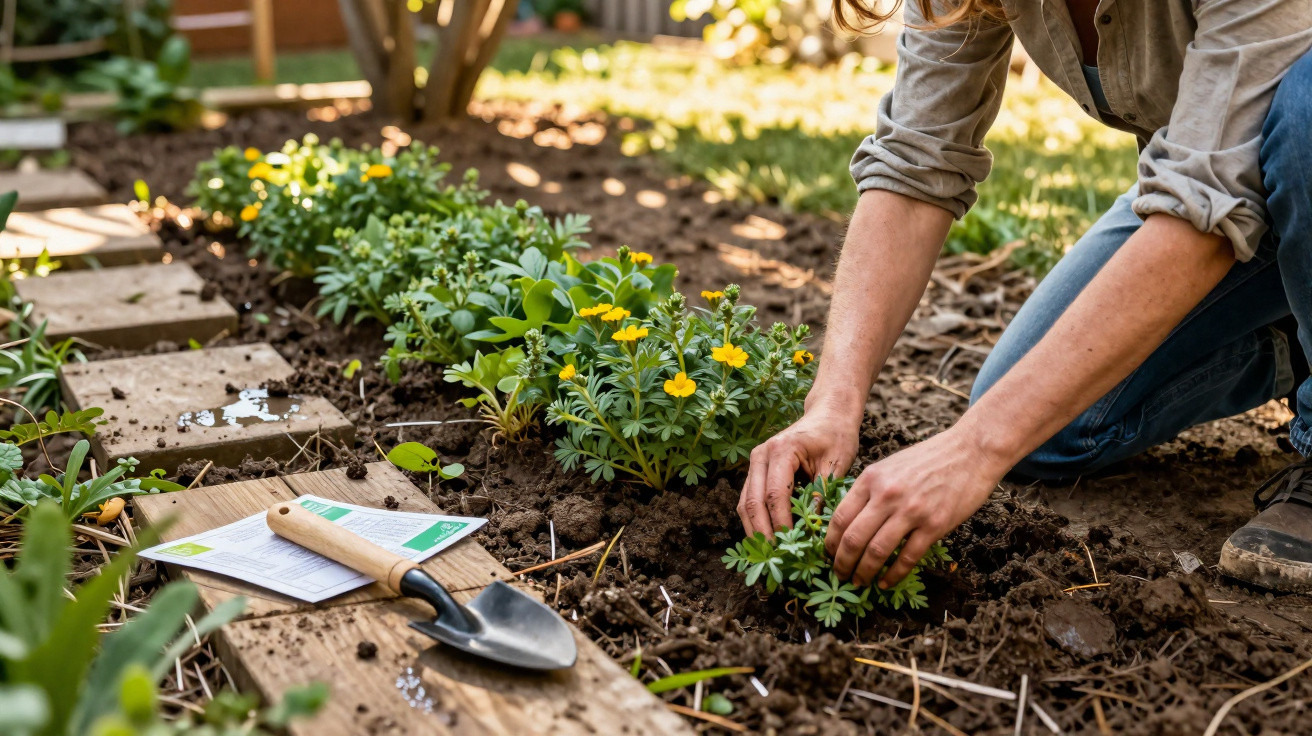
Many plot and garden owners will recognise the pattern: clay-heavy soil, standing puddles, grass that rots away, and paths where every step sinks into sludge. Instead of spending a fortune on drainage pipes, carefully chosen planting can make a surprising difference. Certain ground cover plants actually prefer wet conditions, knit the soil together and take up some of the excess water - turning a muddy mess back into usable ground.
Why ground cover slows down garden mud
A garden stays muddy for the long term when water can no longer soak into the soil. This happens particularly with heavy, clay-rich ground that compacts easily. Rain then runs across the surface, collects in dips, sits as puddles for ages and washes away fine soil particles. That, in turn, creates a slick, greasy top layer where shoes - and children’s wellies - slide with no mercy.
Without roots, the soil has no protection. Each downpour hits bare ground directly. The impact breaks down the soil structure, pocks the surface and seals it over. This is exactly where moisture-loving ground cover plants come in.
"Their roots loosen the soil, hold particles together and create new channels that allow rainwater to soak in again."
Their cushion-like foliage works as a living shock absorber: it softens the force of raindrops, reduces muddy splashback on walls and patios, and spreads moisture more evenly. The plants do not “drink up” all the water, but they do reduce the areas that disappear into boggy mud for days at a time.
These 11 ground cover plants love wet conditions instead of a drainage pipe
If you want to rescue a problem lawn or make a permanently soggy corner usable again, plant choice is everything. The 11 options below cope well with consistently damp - even boggy - spots and will gradually spread over time.
For shady and part-shaded corners
- Ostrich fern (Onoclea struthiopteris) – Forms striking funnel-like clumps, thrives in cool, damp positions and helps stabilise slopes. Grows to just under 1 metre.
- Canadian wild ginger (Asarum canadense) – A low ground cover with heart-shaped leaves. Suits shade, forms a dense carpet and reliably holds soil in place.
- Woodland phlox (Phlox divaricata) – A delicate bloomer for part shade and consistently moist ground. Its roots anchor clay soil, and the flowers attract insects.
- Foamflower (Tiarella cordifolia) – A low, tight carpet plant that works beautifully under shrubs and trees. Handles consistently moist soil and suppresses weeds.
- Bugle (Ajuga reptans) – A tough shade ground cover that even copes with short periods of flooding. Well suited to slopes and difficult, shady lawn areas.
These shade lovers can turn dark, wet corners into small woodland-style garden spaces. Their growth forms a closed mat that keeps both soil and moisture under control.
For sunny, wet ground and puddle zones
- Palm sedge (Carex muskingumensis) – A grass-like perennial with a bamboo-like look; excellent for heavy, wet soils in full sun.
- American sweet flag (Acorus americanus) – Happy with its roots in water and tolerates a water level of several centimetres. Ideal along ditches or beneath downpipes.
- Marsh marigold (Caltha palustris) – Adds bright yellow flowers to wet spots while helping keep stream edges and pond margins stable.
In places where ordinary lawn seed repeatedly rots, sedge and sweet flag can form a surprisingly resilient “grass-like carpet”. Over time, they fill gaps and give the ground much better stability.
Low carpets for paths, lawn edges and stepping stones
- Creeping jenny (Lysimachia nummularia) – A trailing plant with round leaves. Ideal beside stepping stones, on gentle slopes and in the joints of paved paths.
- Lesser periwinkle (Vinca minor) – A classic ground cover for damp banks. Evergreen and fast-growing, and in some areas very vigorous.
- Isotoma fluviatilis (blue star creeper) – Tiny leaves and fine flowers with a lawn-like appearance. Tolerates wet ground and spreads rapidly, but is considered poisonous.
These ultra-low growers are particularly useful where you occasionally need to walk. Creeping jenny, for example, copes with light foot traffic and helps stop muddy holes forming around stepping stones.
How to plant properly: turning boggy ground into a garden step by step
Before planting, a small amount of preparation is worth doing - without turning the area into a full construction site. Walking about on wet soil only compacts it further, so wait for a slightly drier spell.
- Gently loosen the surface with a garden fork or spade, without stamping it down.
- Work in well-rotted compost to make the structure more crumbly.
- Add a handful of coarse sand to each planting hole so water does not sit tightly around the roots.
- Plant in groups and keep spacing fairly tight so a closed carpet forms sooner.
- Mulch the gaps lightly; this keeps the ground moist but helps reduce surface sealing and splashing.
"The trick is not to fight the water, but to choose plants that cope with wet conditions - and place them deliberately where water collects."
Common trouble spots include under gutters and downpipes, low dips beside patios, shaded north-facing areas, or the path to a shed. In these places, ostrich fern, bugle or creeping jenny can form a continuous cover within a few years, noticeably shrinking puddle-prone patches.
Where to take care: poisonous and overly vigorous species
Some of the most effective mud-taming plants come with drawbacks that are worth understanding. Many parts of Isotoma fluviatilis are regarded as poisonous - not a good choice near a small child’s favourite play spot. Marsh marigold is also not harmless when raw and does not belong on the plate.
Canadian wild ginger contains substances classed as carcinogenic. The leaves may smell of ginger, but they are not a safe kitchen substitute. If you have pets or children, choose locations well away from play areas.
Spread is another factor. Lesser periwinkle and some forms of creeping jenny can grow so enthusiastically that they overwhelm more delicate neighbours. In some regions they are considered invasive and should not escape into the wider countryside. Within a garden, growth can be controlled with lawn edging, paving borders or root barriers.
When drainage is worth it - and when the planting trick is enough
If you are permanently standing ankle-deep in water, you will often need building measures. When the water table rises to just below the surface with every spell of rain, even the toughest ground cover plants reach their limits.
In many gardens, though, the issue is less about groundwater and more about compacted topsoil, lack of plant cover and poorly managed rainwater from gutters. Here, a few square metres of deliberately placed ground cover can already make a major difference. The most effective approach is often a combination: guide water via shallow channels or swales towards planted areas, let moisture-loving perennials intercept it, and loosen the soil at the same time.
Practical examples of reshaping a muddy garden
A typical situation: rainwater pools in front of the patio, and the lawn repeatedly rots away. Instead of reseeding yet again, the area can be lowered slightly and planted with palm sedge and creeping jenny. Marsh marigolds and sweet flag add structure around the edge. The result is an evergreen damp border that looks like a mini bog garden - and the patio stays walkable.
Another common case is a shady, damp strip along a garage wall. Here, bugle, foamflower and woodland phlox can form a dense band that keeps splashback off the wall and stabilises the soil. Instead of algae and slime, you get a flowering, low edging.
What terms like “ground cover” and “wet clay soil” mean in practice
Ground cover plants naturally grow outwards, spreading via runners, rhizomes or creeping stems to close over the surface. They do not replace a technical drainage trench, but they can reduce the effects of waterlogging and greatly improve how usable a garden feels.
Wet clay soil is not an enemy - it is a special case. It holds nutrients very well and stores a lot of water, but it needs roots and structure to stop it turning into a sticky, kneadable mass. Moisture-tolerant ground cover plants are doubly valuable here: they stabilise and improve the soil while also creating attractive, more walkable areas instead of grey-brown mud tracks.

Comments
No comments yet. Be the first to comment!
Leave a Comment