
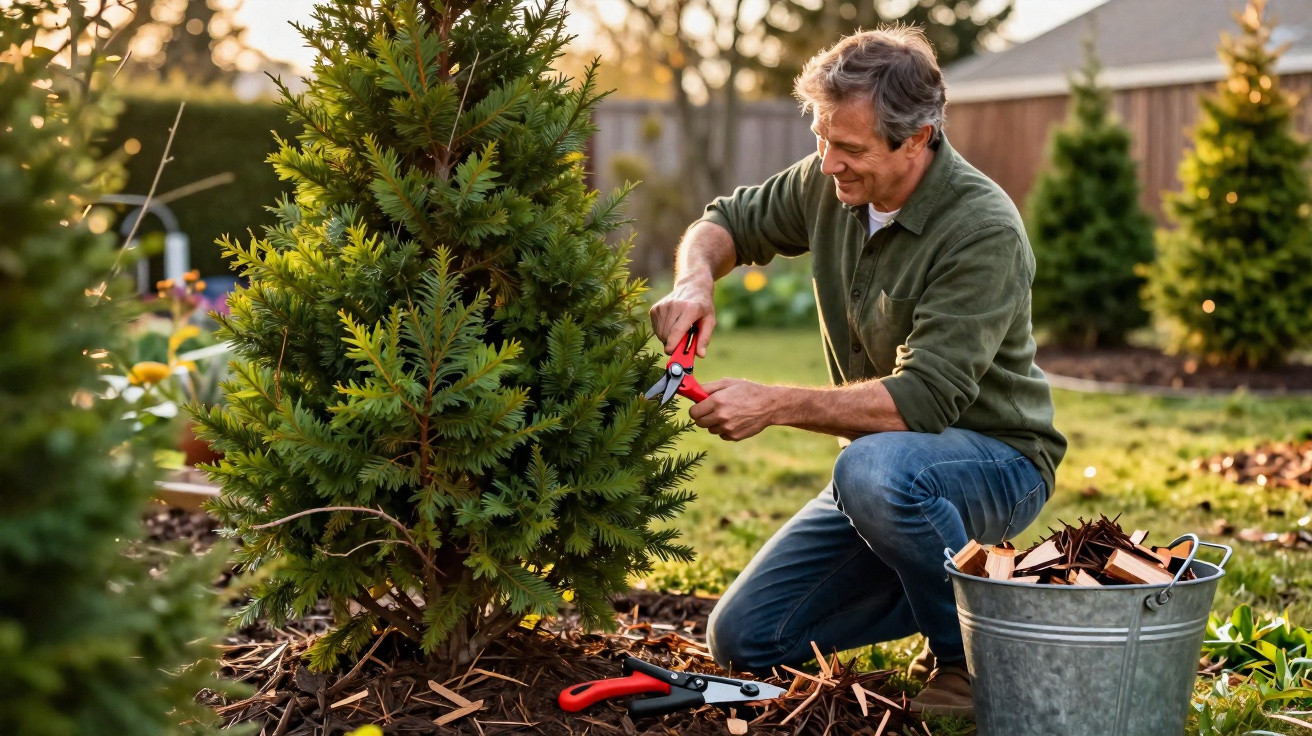
Some gardens look picture-perfect in spring, as if they have stepped straight out of a catalogue; others stay stubbornly sparse and see-through. The deciding factor is often neither fertiliser nor expensive new plants, but a well-timed prune within a fairly tight window - guided by a lesser-known rule commonly called the one-third rule.
Why the key gardening moment falls at the end of February
As February draws to a close, plants begin to stir quietly. Sap starts to rise into the branches, while most buds are still sealed. That in-between stage is ideal for evergreen shrubs such as laurustinus (also known as laurestine), photinia, oleaster (Elaeagnus) or Osmanthus.
Pruning at this point brings a double benefit: the cuts can seal quickly as sap flow resumes, and the shrub has not yet spent energy on soft new growth. Instead, its reserves can go straight into strong, fresh shoots.
If you leave it until March or April, you often end up shredding tender new growth that has already formed. That slows the whole shrub down, leaving it looking “scalped” for a long time and needing weeks to recover. Cutting in the depths of winter, on the other hand, exposes branches to unnecessary frost - a particular risk when temperatures drop sharply.
"The period around the end of February is like a hidden bonus level in the gardening year for evergreen shrubs."
The one-third rule: what sits behind the “magic” pruning principle
Many amateur gardeners do little more than level the top and neaten the sides of a hedge. It looks tidy in the short term, but it does not address the real issue: shrubs gradually thin out on the inside, at the base, and close to the main stems.
This is exactly where the one-third rule comes in. The principle is to avoid merely trimming the surface and instead work into the framework of the shrub, removing selected old wood.
How to apply the one-third rule, step by step
- Identify older growth: these stems are thicker and tougher, with darker, more woody bark and usually fewer fresh side shoots.
- Remove only a portion: cut out roughly one third of the older, stronger branches either at the base or back to a well-branched junction.
- Keep the young, vigorous stems: they provide the starting points for dense new growth.
- Thin properly: take out dead wood, weak twiggy growth and any wind-damaged sections completely.
At first glance, the prune can feel drastic, but the outcome is straightforward: the plant responds by pushing strong new branches from the inner structure and lower areas. Over time this builds a dense, screening “green wall”, rather than a hedge that is bushy on top and bare underneath.
"When you use the one-third rule, you rebuild your shrubs from the inside out - not just the façade."
Clean tools: the often overlooked shield for your plants
Every cut you make is an open wound. In the damp conditions of late winter, fungi and bacteria are particularly active. Secateurs or loppers that are dirty - or only quickly “wiped” - can move pathogens from one plant to the next, much like an injection without disinfection.
How garden professionals handle secateurs and saws
- Before you begin, clean the blades of secateurs, loppers and saws thoroughly.
- When moving between different plants, wipe the cutting edges with a cloth and alcohol or a standard disinfectant.
- Sharpen blunt blades: dull tools crush stems, while clean cuts heal far more effectively.
This small habit can significantly reduce disease pressure. Working carefully here means you are much less likely to need chemical plant protection later, because many infections never get started.
"One minute spent disinfecting tools often saves a whole season of trouble with struggling hedges."
After pruning comes growth: why mulch works twice as hard now
Once the one-third treatment is done, the shrub may look a little more “airy”. The real boost, however, comes from looking after the soil. Fresh regrowth takes a lot of energy, and the plant needs renewed supplies from the ground.
Rather than reaching immediately for granular fertiliser, consider an organic protective layer. A 5–10 cm layer of woodchips, leaves, bark mulch or linseed straw around the root area delivers several benefits at once:
| Function | Benefit for the shrub |
|---|---|
| Frost protection | Roots are better protected from late ground frosts in March. |
| Nutrient source | As the material rots down, it releases nutrients that support new growth. |
| Water storage | The soil dries out more slowly, reducing watering in spring and summer. |
| Soil life | Earthworms and micro-organisms become more active, making the soil looser and more fertile. |
This protective layer pays off particularly in sunny positions. Shrubs cope better through dry spells, produce stronger new growth and develop richly coloured, glossy foliage.
How the one-third rule shows up in summer
If you give evergreen shrubs this treatment at the end of February, you will usually notice the change within a few weeks. Growth comes through more evenly, the foliage sits closer together, and gaps fill in quickly.
A second benefit is often missed: new shoots tend to appear later, when the risk of frost is much lower. Late-frost damage to delicate young growth becomes less common. The shrub keeps a clear, tidy structure throughout the summer, and any extra corrective trimming is usually minimal.
"A ‘high-maintenance worry’ often becomes a dependable, stable garden companion with the one-third rule."
Practical examples: which shrubs benefit most
Evergreen species used for hedges and structural planting are especially popular because they provide screening all winter. These are precisely the plants that often repay the one-third rule with the most striking results:
- Laurustinus: can become bare at the base, and responds strongly to a robust rejuvenation prune.
- Photinia: produces plenty of fresh, reddish new shoots after cutting, which stand out visually.
- Oleaster: develops denser foliage and closes gaps in older hedge sections.
- Osmanthus: grows more compactly, making it ideal for formal hedges or as a specimen shrub.
Other tough evergreen hedge plants can be managed in the same way - the key is to limit the intervention to around one third of the old wood, so the plant is not pushed too far.
What beginners often misunderstand - and how to do it better
Many garden owners shy away from older, thicker stems because they worry about “mangling” the shrub. The result is years of light surface “combing”, while old, low-vigour branches dominate the centre. In the long run, that weakens the entire plant.
The one-third rule provides a simple framework: remove a portion of the old, keep two portions - deliberately spread across the shrub. That leaves enough leaf mass to keep the plant fed, while creating space for new growth.
It helps to step back every so often while you work. Does the shrub still look evenly balanced? Are there spots where several old stems are clustered tightly together? Checking like this prevents overdoing the cut.
Extra tips for a resilient, low-maintenance garden
If you are already pruning with the one-third rule, it makes sense to fold in a few other care tasks at the same time. A quick look at the soil will tell you whether it has become compacted. On very heavy ground, lightly loosening the surface and working a little compost into the outer edge of the root zone can help.
It is also worth checking hoses and water butts so you are set up for spring and summer. Evergreens can be sensitive to severe drought, particularly in the year after a stronger rejuvenation prune. Reliable watering through the main growth periods is what turns the whole process into a real success.
If you make time once a year in late winter for this combination - one-third pruning, clean tools, mulching and basic soil care - you will usually be rewarded with dense, healthy hedges that manage for many years without major rescue jobs.





Comments
No comments yet. Be the first to comment!
Leave a Comment