
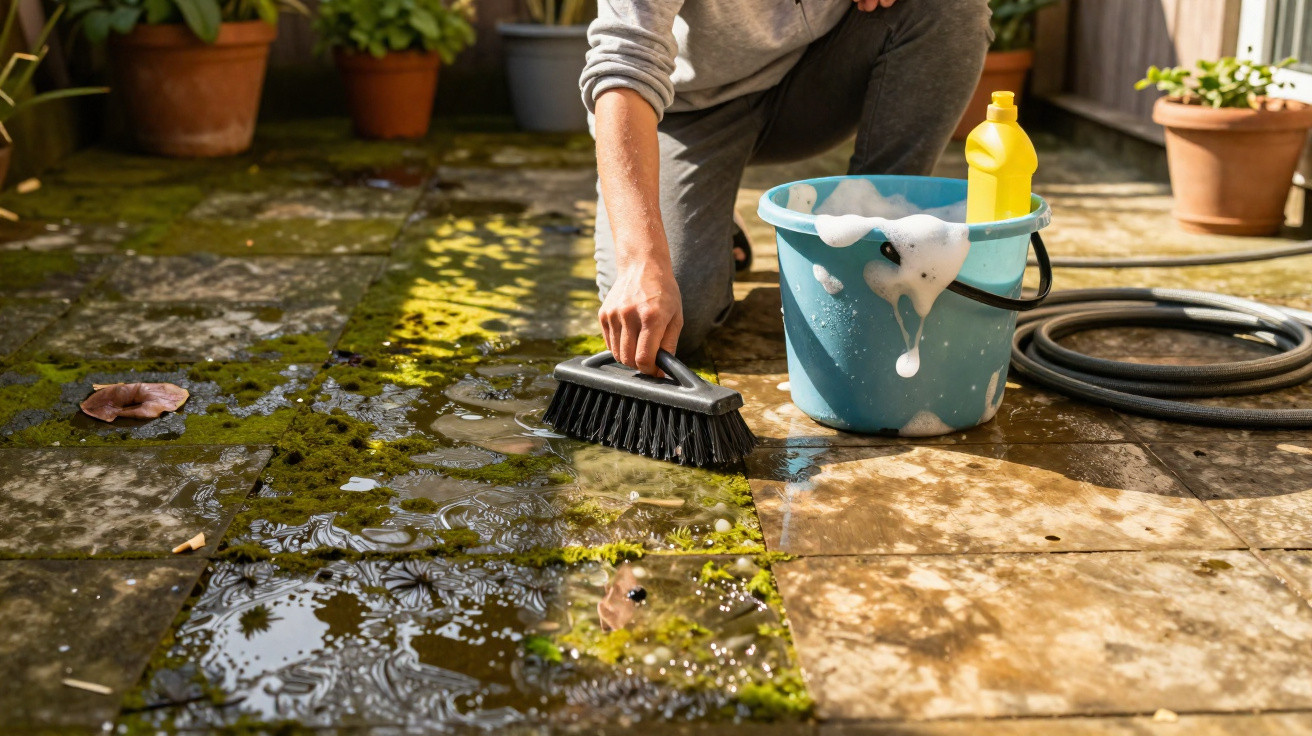
When you open the patio doors in spring, you’re often greeted not by a cosy seating area but by slippery slabs coated in green film. The instinct is usually the same: reach for the pressure washer and hit it with strong chemicals. More and more garden professionals now suggest a very different approach-using something that’s in almost every kitchen and that can keep moss and algae at bay for noticeably longer.
Why patios and yards go green so quickly
Moss and green growth thrive in cool, damp, shaded conditions. That’s exactly what many patios provide, especially:
- on the north side of the house
- in poorly drained spots where rainwater sits for a long time
- on steps and paths near the front door or garden door
- under dense planting where hardly any sun reaches
Through autumn and winter, a greasy layer builds up on stone, and by spring it can become a genuine slip hazard. It isn’t just unsightly: anyone who goes down on slick slabs risks bruises-or even broken bones.
On top of that, moss acts like a sponge, holding moisture right on the surface. Over time this can lead to cracking in stone and concrete, and timber decking can rot more quickly if it never properly dries out.
"Regular green build-up isn’t just ugly; it can damage patio surfaces and timber in the long term-and it makes paths dangerously slippery."
Why a pressure washer is often the wrong choice
Many homeowners automatically reach for a pressure washer. It feels effective at first: the grime flies off and the slabs look clean. Specialists, however, tend to be far more cautious.
A harsh jet can erode the surface of concrete and natural stone flags, cause fine layers to flake away, or blast out jointing and grout. That then allows more moisture to get in later, leaving the surface more vulnerable in the long run.
There’s another problem: while the visible coating disappears, spores in the joints often remain. Within a few weeks, a green haze can return-sometimes even faster than before. And if you then resort to aggressive moss and algae cleaners, you can end up spreading biocides into the garden, where they may reach soil and groundwater.
The underrated kitchen helper: washing-up liquid against moss and algae
That’s why garden designers and landscapers often recommend a gentler method: a simple bucket of warm water with a little washing-up liquid. No specialist product, no harsh “chemical hammer”-just standard washing-up liquid, ideally one that’s readily biodegradable.
How it works on the surface
Washing-up liquid contains surfactants. These substances break down grease and dirt, but they also disrupt the waxy protective layer on moss and algae. As a result, the growth loses moisture, gradually dries out, and dies back.
At the same time, the soapy water seeps into tiny cracks and joints-exactly where the spores sit. Those spores are what re-sprout after every bout of rain. If you tackle them too, regrowth slows down noticeably.
"The trick isn’t the strength of the product, but the fact that the soapy water penetrates into joints and pores and hits the spores there."
Important: choose a mild, biodegradable washing-up liquid with no bleach, no ammonia, and no overpowering fragrance. That’s kinder to the stone surface and also to soil life and nearby plants.
Step-by-step guide: how the bucket trick works
1. Mix the solution
- Pour around 4 litres of warm water into a bucket.
- Stir in three tablespoons of washing-up liquid.
- Mix well until it’s evenly dispersed.
Gloves are a good idea, particularly if you have sensitive skin.
2. Prepare the area
Before applying the mixture, sweep the surface thoroughly:
- remove leaves, soil, and loose twigs
- clear any gravel or chippings off the slabs
- scrape away heavy dirt such as clumps of mud
The cleaner the surface to begin with, the better the soapy solution can reach the moss and algae.
3. Apply the solution
Use a watering can, a bucket, or a spray bottle to spread the mixture evenly over the affected area. Pay extra attention to:
- the joints between slabs
- corners that stay wet
- steps and the transitions near doorways
The stones should be well wetted, but not left sitting under standing water.
4. Leave it to work, then scrub
Pick a dry day with no rain forecast. Let the solution sit for a few hours, until the green layer looks brownish and dry. Then scrub firmly using a stiff brush or yard broom (plastic or natural bristles-no metal).
This lifts away the dead moss and algae. Afterwards, sweep up the loosened debris and dispose of it.
5. Rinse off and protect edges
Finish by rinsing with clean water. This helps carry soap residues away from borders and lawns. Stubborn problem patches can be treated again after a few days.
"If you do a thorough patio clean with washing-up liquid once, and then lightly maintain it regularly, you’ll be free of slippery green growth for much longer."
How to keep your patio cleaner for longer
The soapy-water method works best when you pair it with a few simple habits. A small routine can keep green growth under control:
- Sweep once a month: less organic debris is left behind for moss to feed on.
- Act on early warning signs: if you spot a thin green film, go over it with the washing-up mixture straight away, before thick cushions develop.
- Improve drainage routes: puddles and constant dampness are perfect for algae-clear channels or create a slight fall where water sits.
- Reduce shade: lightly thin overhanging branches so more light and air reach the surface.
Alternative home remedies-and where they fall short
Some people swear by vinegar or baking powder against moss. Both can work, but both come with drawbacks:
| Remedy | Advantage | Disadvantage |
|---|---|---|
| Vinegar | Acidic effect on the growth | Can attack limestone and jointing, harms soil life |
| Baking powder / bicarbonate of soda | Easy to find, alkaline | Sits as a powder and is difficult to rinse away |
| Washing-up liquid | Gentle on stone and plants, easy to dose | Heavy infestations may need several passes |
Vinegar is particularly risky on natural stones such as limestone or marble, because the acid can permanently roughen the surface. For most standard patios made from concrete slabs or durable natural stone, a bucket of warm, soapy water remains the most practical option.
What households with children and pets should consider
If you have small children or animals at home, don’t leave puddles of washing-up solution standing. Dogs and cats will happily drink from anything on the ground. Once the dirt has loosened, always rinse the surface thoroughly with clean water.
Biodegradable products generally break down faster, put less strain on waterways, and are typically more compatible with earthworms and soil micro-organisms. It’s worth checking the label when you’re shopping.
When the patio becomes a safety hazard
Anyone who has slipped on their own patio rarely underestimates the issue again. These areas are especially risky:
- steps with green build-up
- narrow paths on sloping ground
- walkways to the wheelie bin or garage that are used every day
In these spots, a stricter cleaning rhythm can pay off-potentially every few weeks. With the bucket method, the effort stays manageable, and you don’t need to soak the entire surface each time. Often it’s enough to target the trouble areas.
Maintain the patio instead of resurfacing every year
Many surface problems develop slowly: tiny cracks grow, jointing washes out, slabs start to rock. Where moss persists, moisture stays trapped in the material for longer. If you spend half an hour on the yard and patio once a month, you can avoid costly repairs later.
The everyday trick of water and washing-up liquid won’t replace professional stone cleaning where surfaces are already badly damaged, but it can noticeably extend the life of sound paving. It also helps ensure the route to the shed or the wheelie bin doesn’t feel like an ice rink the moment it rains.
Comments
No comments yet. Be the first to comment!
Leave a Comment