
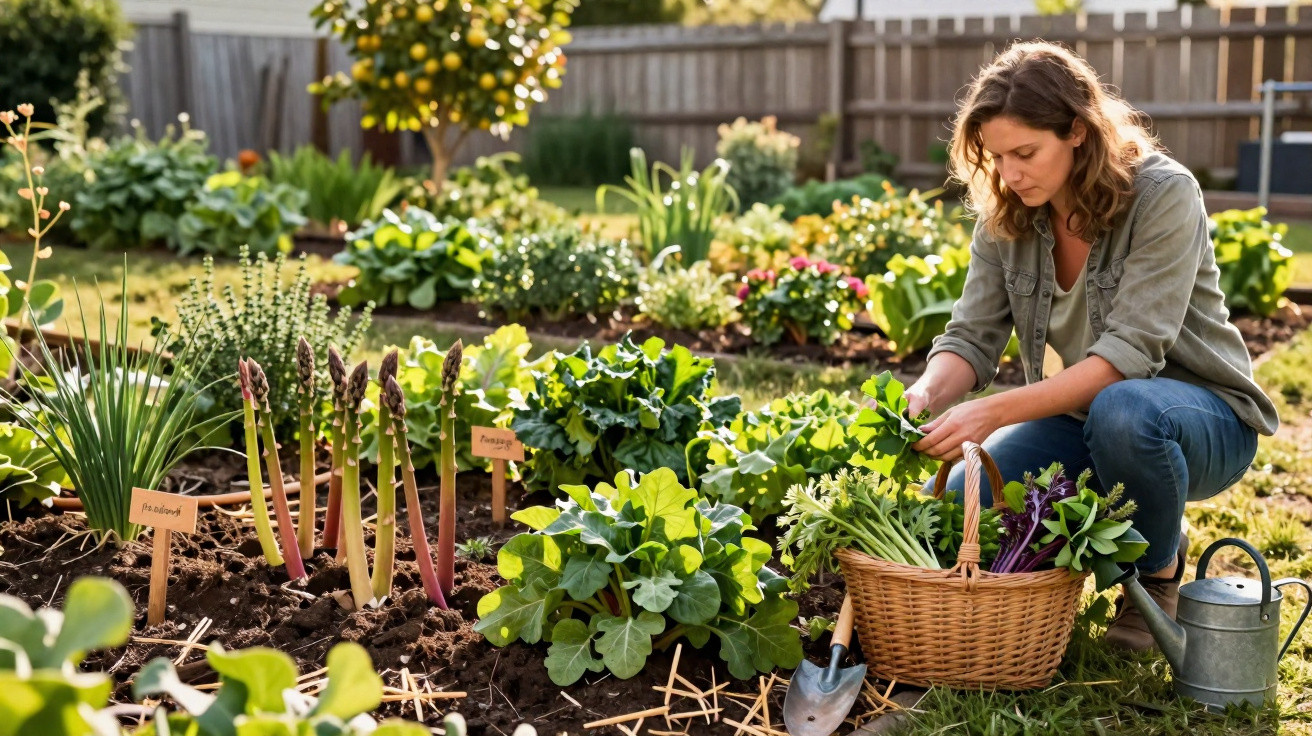
Many keen gardeners eventually feel their enthusiasm slip away: sowing again every year, raising seedlings, digging beds over and over, lugging watering cans around. Yet there is a growing method that cuts the hassle dramatically while still bringing regular, fresh harvests. The key is choosing vegetable plants that stay put, rather than disappearing after a single season.
What sits behind long-lasting vegetable varieties
Gardeners often refer to these plants as perennial vegetables or as part of “permanent beds”. In practice, this means varieties that either keep growing in the same spot for several years or multiply there on their own.
Broadly, there are two groups:
- True perennials: they reshoot each year from the same root system, such as asparagus or rhubarb.
- Self-seeders and runners: they spread via seed or underground shoots, for example Jerusalem artichoke or Chinese artichoke.
"If you rely on perennial vegetables, you prepare the bed properly once - after that, a large part of the harvest almost takes care of itself."
To begin with, you put in a little more groundwork: loosen the soil, remove weeds, work in plenty of compost, then mulch. After that, the ongoing effort drops sharply. Many of these plants only need occasional watering, the odd trim, and a wheelbarrow of compost from time to time.
Why a “permanent bed” is so appealing
The obvious benefit is simple: less work for more produce. But the knock-on effects go further:
- Less hoeing and watering – the plants root deeper and can reach water reserves that annual crops often miss.
- A longer picking window – many species crop from early spring right through to autumn, and some even into winter.
- More stable soil – permanent roots hold the ground together, reduce erosion, and continually feed soil life with organic matter.
- More insects and helpful wildlife – flowers from chives, fennel or artichoke attract bees, hoverflies and other beneficials.
What’s particularly useful: with clever planting, a small selection of species can keep something ready to harvest throughout the year - without starting from scratch every spring.
The 15 most popular perennial vegetables for low-effort gardeners
For a bed that is close to self-sufficient, experienced gardeners suggest combining leafy vegetables, culinary herbs, roots and a few specialities. The following are considered robust and manageable for beginners:
Leafy vegetables that come back year after year
- Perennial leek (e.g. Allium ampeloprasum): forms clumps that continually produce new stems. Great for cutting like spring onions.
- Perennial kale (Daubenton types): stays in place for several years and keeps producing young leaves, similar to kale.
- Good King Henry: an old-fashioned leaf vegetable, flavour somewhere between spinach and chard, and very undemanding.
- Sorrel: shoots early in the year, offering sharp leaves for salads, soups or curd cheese.
- Rhubarb: grows into a substantial plant and provides plenty of stalks each season for compote and cakes.
- Lovage (maggikraut): has a strong “stock/celery” flavour, grows very large, and a few stems can season whole pots.
Permanent herbs with real impact in the kitchen
- Chives: a classic herb, resprouting in early spring and producing attractive flowers.
- Perennial basil (special varieties): lasts longer than standard annual basil, but needs a sheltered position.
- Perennial fennel: produces fresh foliage each year for tea and cooking; some varieties also form edible bulbs.
- Wild garlic (ramsons): prefers shade and moisture, and gradually spreads into fragrant carpets.
Roots and tubers for effortless harvesting
- Jerusalem artichoke: forms edible tubers similar to potatoes, grows very tall and spreads vigorously.
- Chinese artichoke: small, twisted tubers with a nutty taste, ideal for gourmet cooking.
- Horseradish: a hot root that spreads via runners and reliably returns.
- Asparagus: takes 2–3 years to reach full cropping, but then produces for a good 10 years and more.
- Artichoke: perennial in mild regions, offering ornamental plants and prized buds for fans of Mediterranean cooking.
"What these vegetables have in common: they tolerate mistakes, cope with average soils, and prefer mulch over constant watering."
Location, soil, space - how to plan your “lazy bed”
To make a genuinely low-maintenance bed work, it’s worth checking three basics: how much space each plant needs, what sort of soil you have, and the light levels.
| Plant | Position | Note |
|---|---|---|
| Asparagus | Sunny, light soil | Likes loose, sandy ground; never plant in waterlogged conditions. |
| Rhubarb | Partial shade, moist soil | Needs plenty of nutrients and does not tolerate dryness. |
| Wild garlic (ramsons) | Shade, humus-rich and damp | Ideal under trees or along the edge of shrubs. |
| Jerusalem artichoke | Sun, ordinary soil | Pushes out strongly; best kept in its own corner or in a large container. |
| Lovage | Partial shade, deep soil | Gets very large; don’t place right beside the bed path. |
How to set up a permanent vegetable bed
To get started, a standard-sized bed is enough - around 1.2 m wide and 3–4 m long. The steps are straightforward:
- Loosen the soil deeply with a digging fork or cultivator, removing roots of persistent weeds.
- Work in mature compost and a little rock dust, then level the surface.
- Plant perennial vegetables in groups: taller plants such as Jerusalem artichoke at the back, smaller ones at the front.
- Water in thoroughly after planting and mulch with straw, grass clippings or leaves.
Plants that spread very aggressively - Jerusalem artichoke, horseradish or Chinese artichoke - belong in a clearly defined area or in large planters. That way you stay in control without constantly having to pull them out.
Which combinations are especially worthwhile
If you’re just beginning, a simple basic mix works well:
- Perennial leek for onion flavour throughout the year.
- Sorrel and rhubarb to bring fresh acidity to savoury dishes and desserts.
- Chives, wild garlic and lovage as your permanent “kitchen staples”.
- A corner with Jerusalem artichoke for filling tubers.
This line-up keeps soup pots, salad bowls and baking trays supplied for months. Annual crops such as tomatoes, cucumbers or courgettes then become a kind of bonus in the neighbouring bed.
Typical mistakes - and how to avoid them
The biggest trap is squeezing too many rampant species into too little space. Anyone who fills a bed with Jerusalem artichoke and horseradish usually regrets it after two years. Start modestly instead, and watch how strongly each plant spreads.
Another issue is nutrient demand. Perennial vegetables still need regular feeding. A layer of compost in spring and again after the main harvest keeps plants vigorous and helps reduce disease.
Many people also underestimate watering needs in dry summers. Most of these plants root deeper than lettuce or radishes, but after weeks without rain they also need support. A thick mulch layer cuts evaporation and reduces how often you have to water.
Why making the switch pays off in the long run
By creating a permanent vegetable bed, you’re effectively building a living larder. Even when you have no time to sow, sorrel, chives or rhubarb are already there for you. Families with limited free time benefit from the reliability of still finding something fresh in the garden.
This approach is also attractive for small urban gardens or community projects. In rented properties with a back-court bed, or in community gardens, there is less reliance on one person being responsible for sowing and raising young plants. The bed keeps going, whether someone is available or not.
If you already run a traditional vegetable plot, you don’t have to turn everything upside down. Often it’s enough to dedicate one corner to asparagus, rhubarb, wild garlic and perennial leek. After two or three years, the difference becomes clear: this part of the garden does noticeably more work for the gardener than the other way round.



Comments
No comments yet. Be the first to comment!
Leave a Comment