
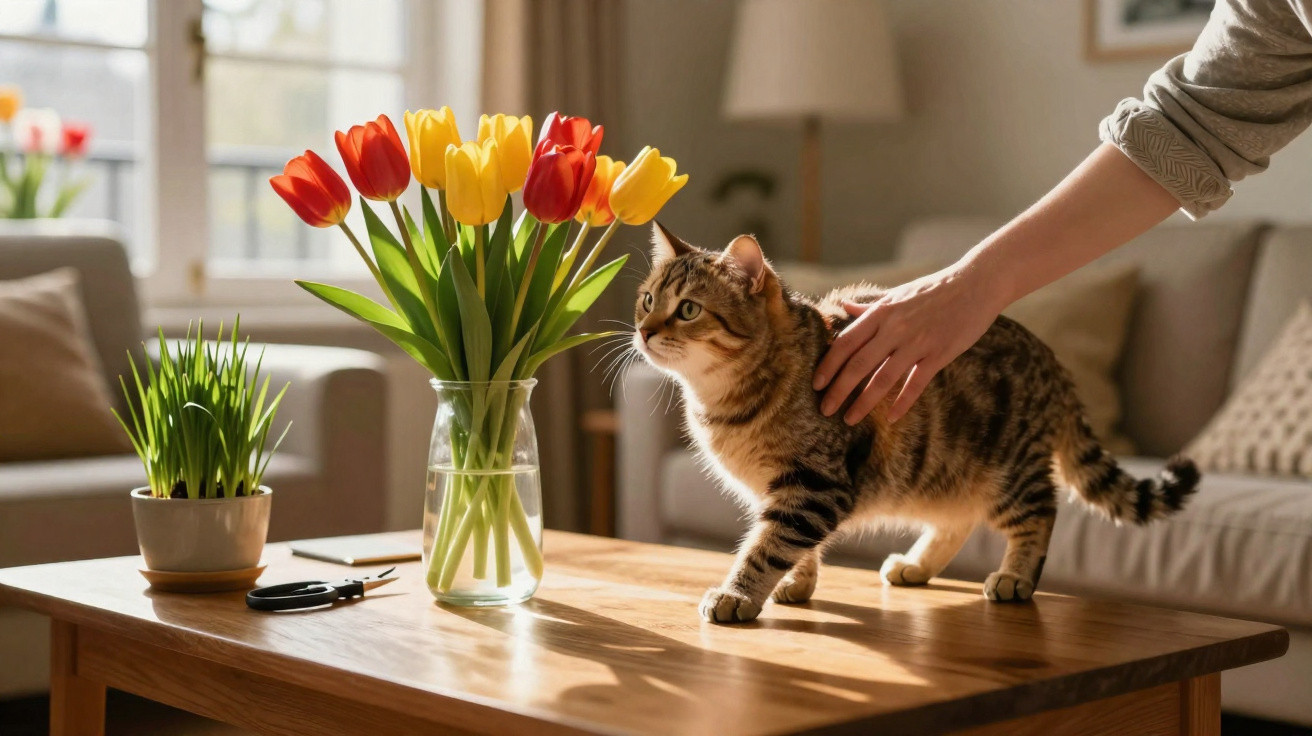
Bright, colourful blooms are a shorthand for spring, cheerful décor and a good mood. For cats, however, they can also be a source of poisoning - especially if a curious house cat likes to nibble plants. If you love tulips and share your home with a cat, it’s worth understanding the risks and taking practical steps to prevent problems.
Why tulips are toxic to cats
Tulips are not among the most poisonous plants, but cats can still react sensitively to them. Several common species are implicated, including:
- Tulipa gesneriana - the classic garden tulip found in borders and cut bouquets
- Tulipa clusiana - a more delicate variety often used in rock gardens
- Tulipa agenensis - a wild tulip that’s less commonly noticed outside gardens
All of these contain so-called tulipalins. These are natural compounds the plant uses to defend itself against fungi and bacteria. In cats they act as irritants and toxins, with the greatest risk coming from the plant’s underground parts.
"Tulips are moderately toxic to cats - the bulbs in the soil are the most dangerous, with leaves and flowers carrying a lower risk."
Tulipalins are most concentrated in the bulbs. If you have tulips in the garden or in a balcony planter, this is often the part people overlook. Many cats enjoy digging in loose soil, batting bulbs around, or chewing on them.
How much tulip is dangerous for a cat?
In real life, most cats only eat small amounts because tulips taste unpleasant and quickly irritate the mouth and throat. Even so, a brief bite can be enough to trigger symptoms. If a cat eats an entire bulb, signs can be much more severe - depending on the animal’s size and overall health.
Situations that tend to raise the risk include:
- young, very playful cats that test everything
- indoor-only cats with no access to grass or safe herbs
- inquisitive cats around newly planted borders or balcony boxes
- bouquets of tulips placed on low tables or window sills
Typical symptoms after eating tulips
If you suspect your cat has chewed tulips, keep a close eye on them for the next few hours. The most common effects involve the digestive system.
Digestive upset after contact with tulips
- nausea - the cat seems listless, licks its lips frequently, and may refuse food
- vomiting - often several times within a short period, sometimes with plant material
- diarrhoea - watery or soft stools, occasionally with small amounts of blood or mucus
Irritation around the mouth
- heavy drooling - strings of saliva, a wet chin, damp fur on the chest
- rubbing the mouth - the cat rubs its muzzle on furniture or uses its paws
"Anyone who sees their cat nibbling tulips or notices these symptoms should contact a veterinary practice or an emergency veterinary number immediately - it’s better to call once too often than too late."
In most cases, tulip poisoning in cats is limited to irritation like this. Severe courses are uncommon, but they can happen - particularly in very young or already unwell animals.
Treatment: what the vet can do
Trying to treat a cat at home with ‘remedies’ is a poor idea. Medicines intended for people can be dangerous for cats in their own right. Only professionals should decide what your pet should receive.
Depending on how serious the signs are, treatment may include:
- anti-vomiting medication - to reduce fluid loss and settle the stomach
- anti-diarrhoea treatment - to help stabilise the gut
- fluids (drip) - if the cat is significantly dehydrated
- stomach protection - to ease strain on irritated lining tissues
With prompt action, the outlook is usually good. Many cats recover within one to two days once their body has broken down the toxins.
Prevention: how to make tulips cat-safe
Protecting your cat doesn’t necessarily mean you must give up tulips entirely. A few sensible changes are often enough to bring the risk down substantially.
Tulips in the garden and on the balcony
- Plant bulbs out of reach - cover beds with fine mesh, stones or similar barriers so cats can’t dig
- Use raised beds or containers - elevated planters make it harder to reach bulbs and foliage
- Plan alternative plants - in areas your cat uses frequently, choose non-toxic species instead
Tulip bouquets indoors
- Choose the location carefully - don’t place a vase on a coffee table or low sill; put it somewhere your cat rarely goes
- Watch your cat - if they show strong interest in cut flowers, it’s safer to avoid tulips altogether
- Don’t leave vase water accessible - many cats drink from unattended containers; flower water may contain dissolved compounds
"The less access a cat has to tulip bulbs, leaves and the vase, the lower the risk of poisoning."
Safe alternatives for plant-loving cat owners
If you like a planted window sill, there are cat-friendly alternatives. Many look attractive and can even benefit your cat.
| Suitable plant | Benefit for the cat |
|---|---|
| Cat grass (various grasses) | Helps bring up hairballs and distracts from chewing houseplants |
| Bamboo palm (house palm) | Non-toxic and hardy, decorative in living spaces |
| Passionflower (as a houseplant) | Generally considered safe, adds green accents |
| Many culinary herbs (e.g. basil, thyme) | Smell pleasant, usually unproblematic for cats; occasional nibbling is rarely an issue |
If you enjoy spring-flowering plants more broadly, ask a specialist retailer specifically for cat-safe options. It helps to state clearly that a cat lives in the household.
Why cats chew tulips at all
Many owners are puzzled that a well-fed cat still goes for plants. The reasons are usually straightforward:
- curiosity - new plants are interesting, smell different and move in draughts
- play drive - leaves wobble and stems sway, which can resemble prey
- a need for fibre - some cats seek out grass-like textures
If you provide a safe outlet for this behaviour - for example fresh cat grass or suitable herb mixes - you reduce the chance that tulips or other houseplants will become the target.
Further risks and combination effects
Tulips are often not the only potentially toxic plant in a home. Many popular choices - from lilies and dieffenbachia to certain indoor palms - can be far more dangerous to cats. The overall risk increases, especially if several problematic plants are within reach.
A quick plant check around the home is sensible:
- make a list of all plants
- check online or ask your vet which ones are toxic
- remove, place out of reach, or replace higher-risk plants with safer options
If you want to keep tulips and protect your cat at the same time, a two-track approach works best: position bulbs and bouquets so your cat can’t easily reach them, while also offering attractive, safe chewing alternatives. That way spring can stay colourful - without unnecessary risk to your four-legged companion.





Comments
No comments yet. Be the first to comment!
Leave a Comment