
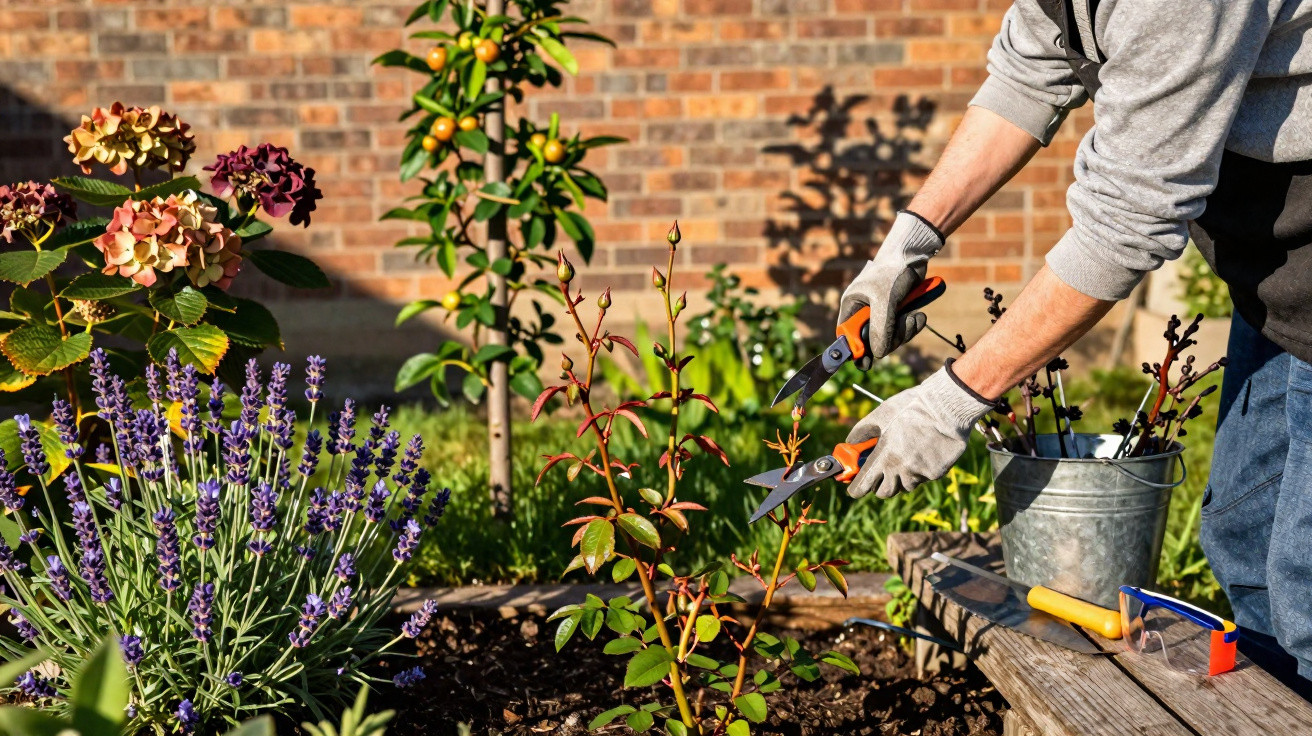
Pruning the right plants and trees now sets you up for a season packed with flowers, fragrance and healthier growth. Many gardeners hesitate at this point in the year: what can be cut back hard in March, where should you be cautious, and which plants are better left alone for now? Below is a practical guide to what genuinely needs doing in March - and how a few deliberate cuts can help you get the best from your garden.
Shaping trained plants and espalier trees
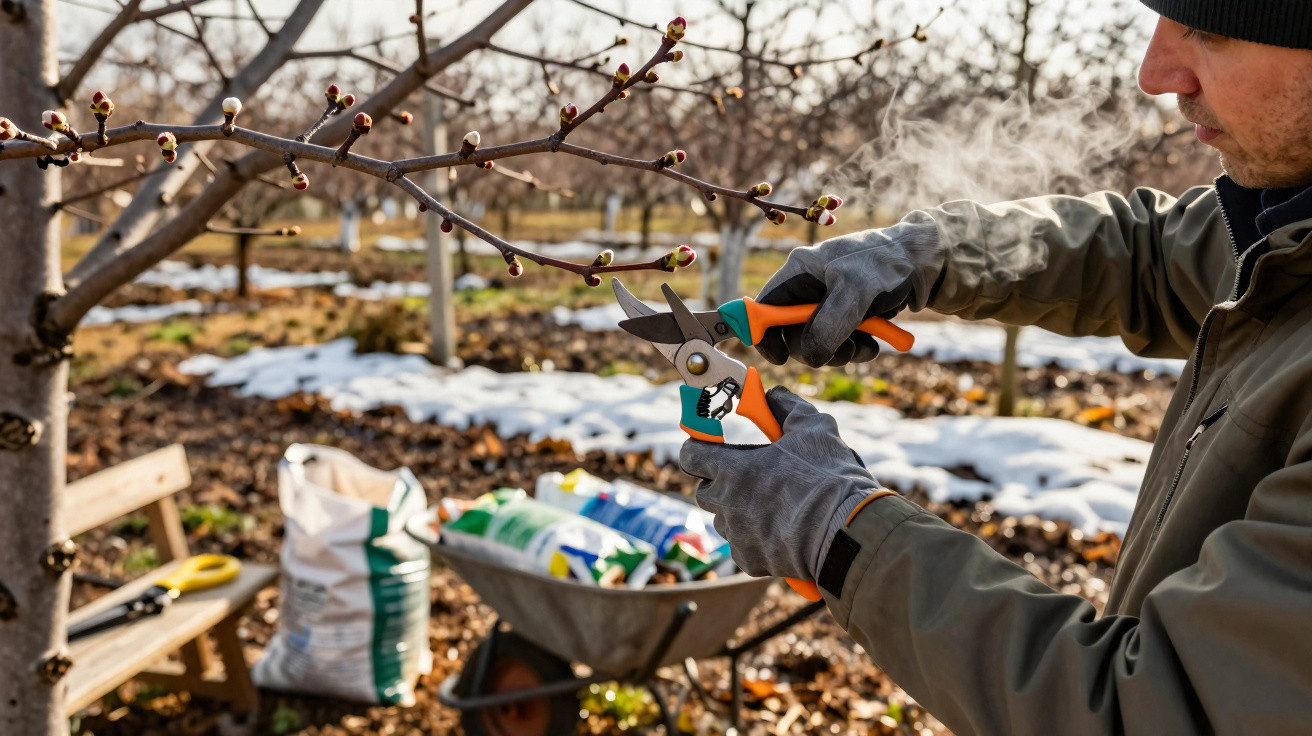
Whether it’s an espaliered lime, an espalier plane tree or evergreen bay used as screening, anyone growing trained plants like these should get the secateurs out by the end of March at the latest. The aim is to maintain a clear framework and an even, green “wall”.
With young espalier trees in particular, the key is not to remove the main structural branches, but to tie them in neatly.
- Shorten side shoots that are growing across or away from the framework
- Secure strong framework branches to the support wires/trellis
- Remove thin, weak growth completely
One important choice is between two different pruning approaches:
"You either cut espalier trees back to older branches - or you shape them like a hedge into a compact block."
The block form works especially well with espalier plane trees and evergreen species such as bay. The popular cherry laurel varieties trained as espalier are often clipped so they form a closed, green screen that provides privacy throughout the summer.
Roses in March: cut boldly, bloom better
Roses may look delicate, but in March they cope well with a firm cut back. If you leave it too late, the plant wastes energy on old, weak growth.
Cutting back bed roses and standard roses properly
Remove older, brown, heavily woody stems decisively - either taking them out entirely or shortening them hard. Make each cut just above an outward-facing bud (the bud is where a new shoot will form). This keeps the shrub open and airy, reducing the risk of fungal problems.
- Cut out old, dark wood
- Remove diseased or damaged branches completely
- Reduce the plant to 3–5 strong shoots per rose
Afterwards the plant can look surprisingly bare - that’s normal. Roses recover quickly and repay the bravery with vigorous new flowering stems.
Climbing roses: keep the framework, shorten the laterals
Climbing roses follow slightly different rules. The main canes remain in place and are simply tied in or gently adjusted. From these primary canes, cut the side shoots back to the second outward-facing bud. Any woody, dead or dried-out sections should be removed entirely.
Lavender and heather: cut in time or the base turns woody
Lavender looks tough, but without regular pruning it quickly becomes leggy. The lower part turns woody and growth becomes sparse, concentrated at the top.
Cut lavender back hard every year
In March, shorten lavender to around 15 centimetres above the ground. This applies to classic varieties as well as French lavender types. Important: don’t cut into old, completely bare wood - lavender often won’t reshoot from that.
If you prune consistently each year, you’ll get compact, bushy plants that are covered in scented flowers in summer and attract bees and butterflies.
Heather: tell summer heather from winter heather
Heather cushions only stay attractive if they’re trimmed regularly - but timing depends on the type:
| Type | Pruning time | Cutting height |
|---|---|---|
| Summer heather (Calluna) | March | 8–12 cm above the ground |
| Winter heather (Erica) | Summer | also just above the bare wood |
Trim just above the area that’s still slightly green, so plants push fresh growth from within and don’t become tired-looking in the middle of the bed.
Hydrangeas: prune carefully so you don’t remove the flowers
Hydrangeas often look miserable after winter, with dried flower heads and brown stems hanging over the border. Even so, avoid grabbing the pruners without a plan: on some types, this year’s flower buds are already sitting directly beneath the old blooms.
Mophead hydrangea and lacecap hydrangea
These need a gentle touch. Remove only a small number of the oldest, thick stems right down near the base to gradually rejuvenate the plant. Cut the dried flower heads off just above the first strong pair of buds.
"If you cut too deeply into old wood on mophead hydrangeas, you risk a complete break in flowering for this year."
Panicle hydrangea, snowball types and oakleaf hydrangea
Varieties such as the well-known panicle hydrangea can be cut back much harder. They tolerate being reduced to about 40 centimetres. The type with large, white ball-shaped blooms can be cut almost to ground level - around 10 centimetres is enough.
Oakleaf hydrangea also accepts pruning at 10 to 20 centimetres, provided it isn’t being grown as a specimen plant. Specimen plants should be left taller, shaped lightly, and mainly have old blooms and awkward shoots removed.
Climbing types - for example, the form that clings strongly to walls - should not be pruned in March. It sets its flower buds within a few weeks and should only be cut after flowering, otherwise next year’s buds will be lost.
Butterfly bush: more pruning, more flowers
Buddleja (butterfly bush) responds best to a strong cut back. If left tall and unpruned, it puts energy into wood rather than flowering shoots. In March, cut plants back to around 30 to 50 centimetres. Dwarf varieties can be taken even lower, to about 15 centimetres.
Make cuts just above young, fresh shoots. From there, the shrub surges into growth in spring and produces plenty of flower spikes that draw butterflies in.
Keeping climbers and ground cover under control
Ivy: remove runners and keep surfaces clear
Ivy spreads more quietly than you expect - until it’s suddenly in the eaves or threading through your borders. A check-and-trim in March pays off. Cut away loose, protruding runners, and remove anything that has anchored itself into cracks, timber or joints.
Also look at ground-level spread. A strong plant can put on more than a metre of growth in a single season. Restrict it now and you’ll avoid tougher work later with a saw.
St John’s wort: prune for dense ground cover
St John’s wort tends to become sparse from the centre and flop open if it isn’t cut back. Reducing it to around 20 centimetres above the ground thickens it up again and leaves fewer gaps for weeds to establish.
Mediterranean plants: pruning olive trees and oleander correctly
Olive tree: a clear canopy instead of tangled growth
Olive trees are no longer just patio pot plants - many people now grow them directly in the ground. March is a good time to refine their classic shape. Start by removing dead branches and any shoots growing towards the inside of the canopy, which improves light in the centre.
If you like, you can then shape a loose, cloud-like crown or keep it more rounded. Olives tolerate fairly heavy pruning; even stronger cuts usually reshoot, as long as the trunk is healthy.
Oleander: tough, but poisonous
Oleander is considered hardy and a generous bloomer, but it also benefits from shaping. In March, shoots can be shortened by up to half their length. Any frost-damaged, brown sections should be cut away completely.
"With oleander, the sap is the main concern - so always wear gloves when pruning and keep children and pets well away."
A sunny position and regular watering (especially in pots) keep it thriving. After pruning, oleander responds with fresh growth and denser foliage, which encourages more flower buds.
Practical tips: tools, safety and timing
Clean, sharp tools are essential for tidy cuts. Blunt blades crush stems and make it easier for fungal disease to enter. Before you start, it’s worth a quick check:
- Clean and disinfect blades, especially after cutting diseased plants
- Use loppers for thicker branches and a hand saw for old wood
- Wear gloves when working with poisonous plants such as oleander
- Prune only on frost-free, dry days so wounds dry faster
If you have several shrubs of the same type, you don’t need to measure every cut to the millimetre. Slightly varied heights often look more natural than rows clipped to identical, rigid levels.
What March pruning achieves in the long term
Done well, March pruning changes far more than appearance. Plants that are regularly rejuvenated often live longer, stay healthier and flower more reliably. Denser canopies provide pleasant shade, and compact hedges give better shelter from views and wind. At the same time, thoughtful pruning reduces summer maintenance because there’s less wild growth and less diseased wood to deal with later.
If you’re unsure, follow a simple rule: old, dead, diseased or crossing branches can always come out. Growth that points outwards, lets more light into the centre and improves airflow is, in most cases, a clear gain - for the plant and for a garden that really makes an impact in summer.

Comments
No comments yet. Be the first to comment!
Leave a Comment