
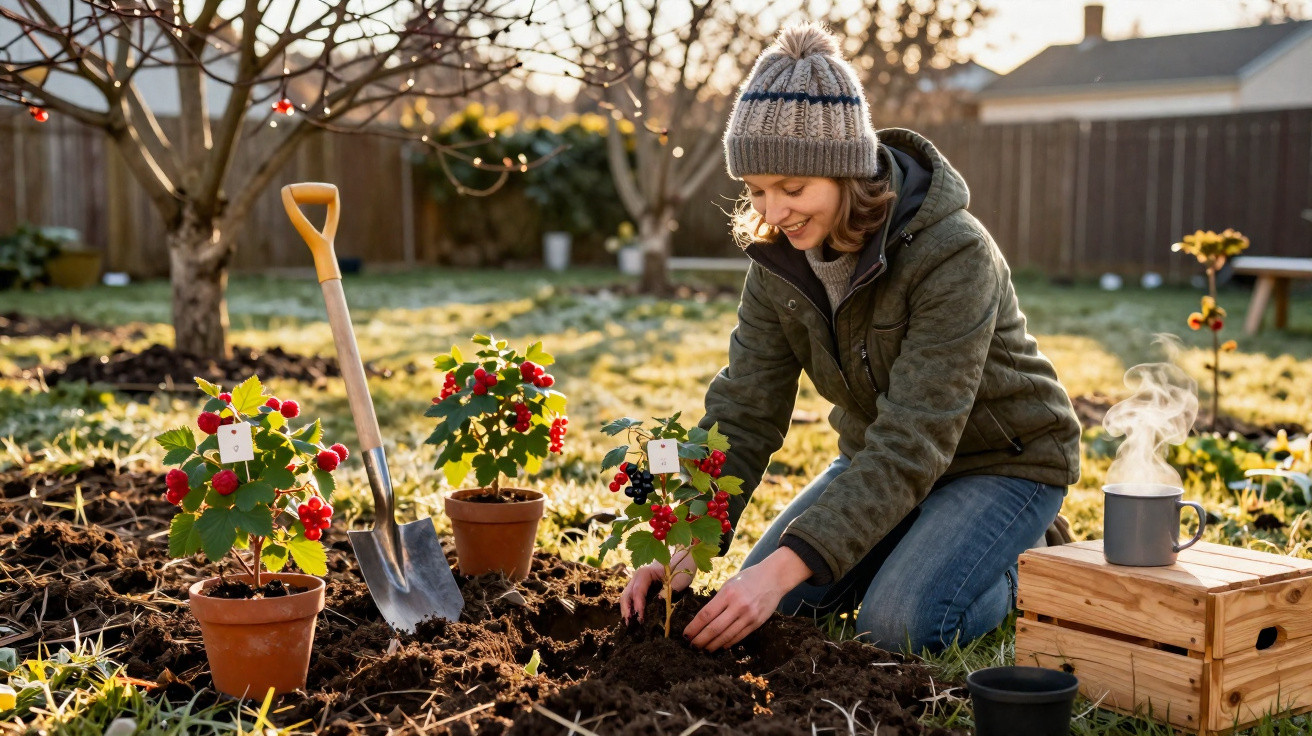
Anyone hoping to stock their berry garden with fresh fruit does not need to wait for spring. January, in particular, can be an unexpectedly good moment to get three hardy fruit shrubs into the ground-shrubs that can bring real enjoyment in their very first year, as long as you follow a few professional tips on timing, soil and aftercare.
Why winter is the professionals’ quiet favourite month
Garden forums have repeated the line for decades: “Plant in spring.” For plenty of woody plants that is true, but for some of the most popular berry shrubs it is only partly right. If you cling to the usual calendar rules, you often give up a huge head start in growth.
Berry shrubs, especially, lay the foundations for generous summer harvests unnoticed in the cool winter soil.
The reasoning is straightforward: as long as the soil is not frozen and the temperature around the roots stays above roughly 4–5 °C, root activity continues-even when everything above ground appears to be dormant. Professionals make deliberate use of this window to give their plants an advantage.
The three January stars: what should go into the ground now
1. Raspberries – the quick starter for the snacking corner
Raspberries are among the shrubs that benefit most from being planted early. They form shallow, fine roots that spread quickly through loosened, slightly moist soil.
- Position: bright; light partial shade is fine; sheltered from wind
- Soil: rich in humus, loose, and free-draining
- Spacing: 50–60 cm between plants, 1.5–2 m between rows
If you plant on a frost-free day in January, the roots have several weeks to settle in before the shoots surge into growth in spring. Many gardeners then notice a first-often quite respectable-crop from July onwards, unlike plants set later, which tend to take much longer to get going.
2. Redcurrants – dependable classics for every garden
Redcurrants are considered easy to look after and tough. When planted early, they repay you with strong new growth and a stable framework that can later support heavy bunches.
- Position: sun to partial shade
- Soil: loose, nutrient-rich, not waterlogged
- Spacing: 1–1.20 m per shrub
Shrubs planted in January usually break bud more evenly in spring, and the flowering tends to be more uniform. That makes harvesting easier later on and often leads to more consistent fruit size.
3. Blackcurrants – a vitamin powerhouse with root strength
Blackcurrants are particularly sensitive to soil quality-yet they also respond very well to winter planting. Their roots take advantage of cool, moist conditions to anchor themselves deeply.
- Position: sunny; in hot areas, ideally with light shade
- Soil: humus-rich, slightly moist, well-aerated
- Spacing: 1–1.20 m; slightly closer is possible for hedge planting
Planting in January typically results in visibly stronger shrubs by summer. The berries are often larger, and the plants cope better through heatwaves.
Three practical advantages when you get the spade out in January
Strong roots instead of springtime stress
Above ground, winter can look like a standstill; below ground, a crucial process is under way. The plants put their energy into roots rather than leaves or flowers.
- better-branched root system

Comments
No comments yet. Be the first to comment!
Leave a Comment