
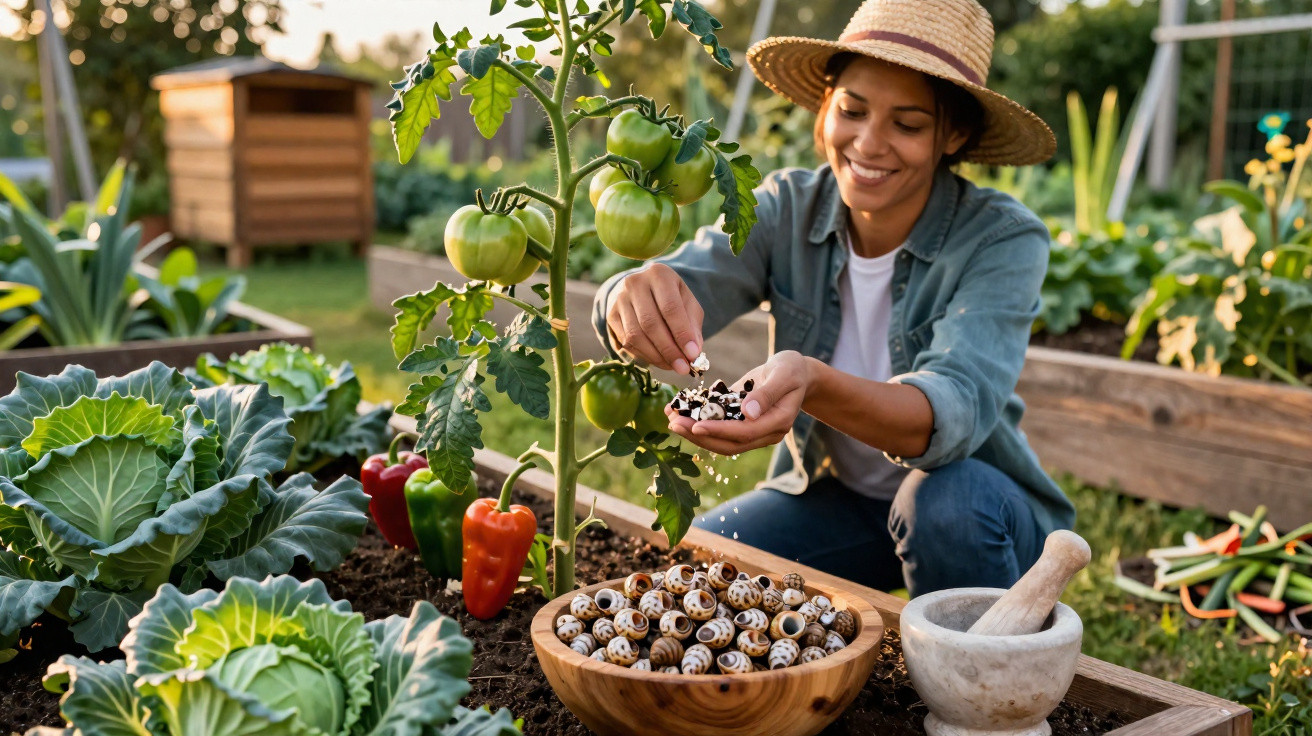
Among last year’s leaves, fresh seedlings and damp soil, you’ll often spot empty snail shells. Most people sweep them into the food-and-garden bin or simply tread on them. That’s a missed opportunity: these modest calcium shells can act as a highly effective nutrient boost for the soil, help plants stay resilient, and fit perfectly into a garden that avoids waste.
Snail shells: from supposed rubbish to a secret weapon in the garden
When people think of fertiliser, they picture compost, horn meal, or pricey bags from the garden centre. Hardly anyone thinks of the small, spiralled shells lying in the bed. Yet they contain something genuinely useful: readily available calcium, bound in a form that plants can absorb surprisingly quickly.
"Empty snail shells aren’t dirt – they’re free lime fertiliser with a long-lasting effect."
Calcium helps keep plant tissue stable, supports root development, and benefits many soil organisms. In snail shells it is found mainly as calcium carbonate, similar to eggshells, but often with a finer structure that blends into the soil more easily.
Why calcium is so important for healthy plants
Calcium is one of those nutrients that’s easy to overlook. Most gardeners know the classic trio of nitrogen, phosphorus and potassium. But if calcium is lacking, growth and fruiting can stall even when other nutrients are present.
What calcium does in the soil and in the plant
- strengthens cell walls and makes fruit firmer
- supports root formation and fine-root growth
- gently raises pH in more acidic soils
- encourages the activity of soil life and beneficial fungi
- improves crumb structure and therefore soil aeration
In spring in particular, when young plants begin to surge, demand for calcium rises. Roots expand quickly, new shoots form, and fruits begin to set - all of which depends on strong, stable cell structures.
Typical deficiency symptoms - how to spot the need
Many familiar “problem conditions” in the veg patch are linked directly or indirectly to calcium. Common signs include:
- brown or black patches at the blossom end of tomatoes (blossom end rot)
- misshapen or hollow peppers and chilli pods
- soft, glassy patches on courgettes or squash
- shortened, curled young leaves in cases of severe deficiency
Often the issue isn’t that the soil contains no calcium at all, but that uptake is disrupted: irregular watering, compacted soil, too much salt from synthetic fertilisers - and too little calcium being steadily replenished.
Which plants benefit most from snail shells
Some crops are real “calcium enthusiasts”. That’s where crushed snail shells are particularly worthwhile.
Vegetables with a high calcium demand
- Tomatoes – prone to blossom end rot and need strong cell walls
- Courgettes and squash – large fruits, fast growth, high demand
- Aubergines – sensitive to nutrient imbalances
- Brassicas – cabbage, broccoli and Brussels sprouts thrive in lime-rich soils
- Fruit trees – apple, pear and cherry can benefit from firmer fruit
If you regularly struggle with splitting tomatoes or watery, collapsing courgettes, start by looking at watering and soil structure - and then consider a targeted calcium addition, ideally slow and organic, such as from snail shells.
Where you should be cautious
Not every plant appreciates extra lime. Take care with:
- potatoes
- blueberries and other ericaceous plants
- rhododendrons, azaleas and hydrangeas grown in acidic compost
These prefer acidic conditions. Too much calcium can push the pH up too far and interfere with the availability of other nutrients.
How to prepare snail shells properly
To turn empty shells into a useful soil amendment, you only need a few simple steps - no specialist tools required.
Collecting and cleaning - the essentials
You’ll find the most shells after damp nights, in spring after winter, or following heavy rain. A simple method:
- collect only genuinely empty shells, not living animals
- knock off loose dirt or rinse briefly with water
- dry them on newspaper or kitchen roll to prevent mould
If you cook snails, you can also reuse the shells afterwards: rinse well, let them dry, and they’re ready.
Crushing - but not too finely
A coarse grade is ideal for garden use. Grinding everything into a powder can even be counterproductive, because it reacts too quickly and can clump.
A practical approach:
- put the shells in a sturdy bag or wrap them in a cloth
- roll over them or tap them repeatedly with a rolling pin, hammer, or the base of a glass jar
- aim for pieces of about 3–5 millimetres
At this size, the fragments release calcium gradually and also act like tiny spacers in the soil, improving aeration.
How much snail-shell fertiliser makes sense?
As with any soil improver, the amount determines the outcome. Too much can shift your soil too far towards being “lime-rich”.
Recommended amounts in the veg patch
| Area | Recommended amount | Frequency |
|---|---|---|
| Tomato bed | approx. 150 g/m² | once in spring |
| Courgettes, squash, aubergine | approx. 150 g/m² | once; if needed, lightly top up in summer |
| Young fruit trees | a handful per tree | every 1–2 years |
Scatter the pieces around plants and lightly work them into the surface with a rake. There’s no need for deep digging - protecting soil structure matters.
Limits and possible risks
If you regularly use lime-based materials across a large area (garden lime, lots of wood ash, shell lime, snail shells), keep an eye on your soil pH. Simple test strips from a garden centre are sufficient.
"In a vegetable garden, a slightly acidic to neutral soil is usually ideal – roughly between pH 6 and 7."
If the soil becomes clearly alkaline, crops that prefer a touch of acidity will struggle. In that situation, pause all lime-containing additions for a while and focus more on compost and other organic matter.
Snail shells in a ‘zero-waste’ garden
If you compost kitchen scraps and chip prunings, you’re already thinking in cycles. Snail shells slot neatly into the same resource-saving approach.
How snail shells fit into the nutrient cycle
A number of overlooked materials can be put to work in the garden:
- eggshells as an additional calcium source
- wood ash (in small amounts) for potassium and calcium
- used coffee grounds as a nitrogen source and soil conditioner
- dried banana skins for potassium and trace elements
- snail shells as a slow-acting lime fertiliser
Used thoughtfully, these inputs can reduce the need to buy synthetic fertilisers. The key is not tipping everything onto the soil at once, but applying what’s needed, where it’s needed, in measured amounts.
Practical example: a small test strip in your own garden
If you’re unsure, try a simple comparison: add crushed snail shells to one strip of a bed and leave a similar strip untreated. Use the same plants, the same watering, and the same other feeding.
Later you can compare:
- overall plant growth
- how firm the fruit is
- susceptibility to blossom end rot and other disorders
- the soil’s crumb structure when you loosen it
This quickly shows whether your soil benefits from extra calcium - or whether it’s already well supplied.
What research says about calcareous shells in soil
Trials using mussel shells and snail shells point to several effects: soil structure improves, fine root hairs move more easily through a looser tilth, and certain deficiency-related problems in fruits become less common.
The most noticeable outcomes are often:
- fewer split or misshapen tomatoes
- sturdier, more transport-resistant fruit in sensitive crops
- more active soil fauna in areas with tiny mineral particles
Over time, the soil becomes a blend of organic matter (compost, roots, mulch) and mineral particles such as sand, clay - and crushed shells. Together, they help create a supportive, open soil that holds water well without turning into a heavy, airless sludge.
Practical tips for everyday gardening
If you want to make use of these small calcium shells, it helps to build a simple routine:
- when weeding and raking, drop all empty shells into a bucket
- keep the bucket in the shed until you’ve built up a noticeable amount
- on a dry day, crush them coarsely and store them in airtight containers
- at the start of the season, apply them specifically around tomatoes, courgettes, peppers, aubergines and young trees
If you only find a few shells, mix them with crushed eggshells. The two materials work well together and provide a similar effect.
Ultimately, it’s about training your eye: what looks like rubbish can turn out to be a valuable resource for a lively, resilient garden. Snails won’t come back to life - but their shells can keep quietly doing useful work in the soil for years.


Comments
No comments yet. Be the first to comment!
Leave a Comment