
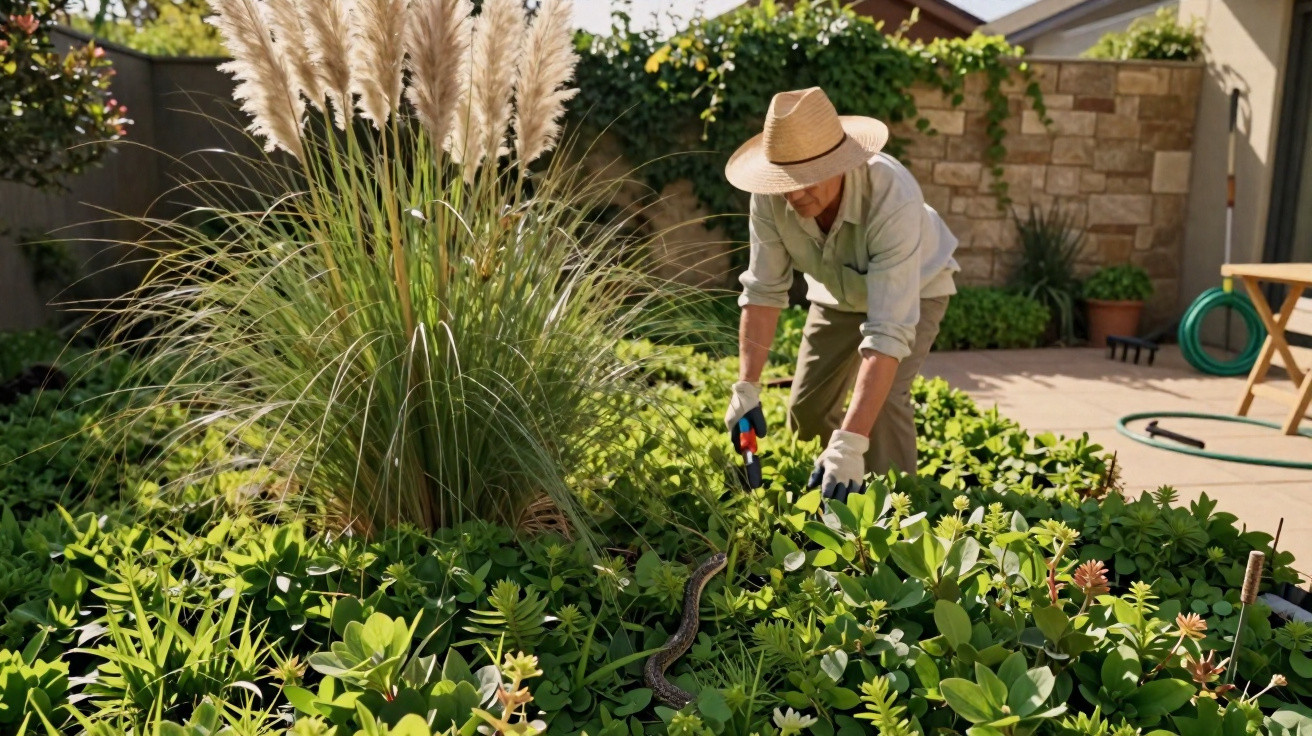
Many amateur gardeners welcome the milder temperatures and fresh greenery of March. What many overlook is that this is also when the ideal season for vipers begins around homes. Certain highly popular ornamental plants and ground-cover plants can turn flowerbeds and rock gardens into perfect refuges for these shy yet potentially dangerous snakes.
Why vipers start appearing in gardens from mid-March
As soon as the ground reaches around 12 to 15 degrees during the day, vipers emerge from their winter dormancy. This point is reached around mid-March in many areas, and even earlier in particularly mild locations. At first, the animals are not primarily looking for prey; above all, they need warmth and protection from predators such as birds of prey or hedgehogs.
As cold-blooded animals, vipers cannot regulate their own body temperature. They therefore depend on structures that retain heat while also providing cover. Typical features of modern gardens meet precisely these needs: dense perennials, stones, walls, dry-stone walls and planted gravel areas. It is not that snakes actively “seek out” people; rather, our gardens create ideal conditions for them.
“Where dense plant cushions, stones and sunshine meet, an ideal hiding place for vipers can often develop – right beside the house.”
The three plants vipers particularly like to use
1. Pampas grass: an ornamental plant and ideal snake hiding place
Pampas grass has become an enduring trend in many front gardens and flowerbeds. Its large, bushy clumps and striking flower plumes are considered low-maintenance and impressive. However, these very growth characteristics make the plant especially appealing from a viper’s perspective.
- a very dense base that is difficult to see into
- an area spanning several square metres, often immediately beside a patio or entrance
- tall, sharp leaves that deter predators
- soil within the plant that stores warmth while remaining concealed
This combination of shelter from wind, heat retention and visual cover creates something akin to a protected “living space” in the lower part of the grass. A viper can warm itself there undisturbed while remaining almost completely invisible. In summer, it may also use this structure as a concealed ambush point for hunting small animals.
There is also a legal consideration: Pampas grass is already regarded as an invasive species and subject to restrictions in some countries. Anyone planting it should generally check whether regional requirements or recommendations apply, also in the interests of native biodiversity.
2. Extremely dense ground cover: green carpets as snake tunnels
Ground-cover plants are popular because they suppress weeds, need little maintenance and fill bare areas of the garden. When they become especially dense, they effectively form an extensive tunnel network at ground level from a viper’s point of view.
Species are particularly problematic if they:
- form a closed plant carpet several centimetres thick,
- allow very little light to reach the soil,
- readily grow over stones, walls or slopes.
Beneath this green “roof”, the soil stays warm and damp for longer. Countless gaps develop among the shoots and roots, allowing a viper to move silently, rest or wait for prey. When combined with stones or walls, this can quickly create a complex hiding system around the home.
3. Climbing or creeping plants on walls and in rock gardens
Whether on dry-stone walls, retaining walls or in a rock garden, climbing and creeping species that cover stones may look decorative, but for vipers they provide an ideal network of crevices and shade.
A typical arrangement is as follows:
- a south-facing wall or stone bed with plenty of sun
- a layer of climbing or creeping plants in front of or above it
- cracks, gaps and small cavities between the stones
The stones absorb heat during the day and release it gradually. The plants provide shade and cover. The spaces between them create a microclimate that is ideal for vipers: warm, protected and difficult to inspect. This becomes particularly problematic when such areas are immediately beside paths, patios or garage driveways.
Making your garden less attractive to vipers before mid-March
Anyone wishing to prevent visits from vipers should act before temperatures rise consistently. A few targeted changes to the garden layout can significantly reduce the risk without making every corner look “sterile”.
Clear the base of shrubs and ground cover
Experienced gardening professionals advise opening up the lowest areas of plants around the house and patio. A useful guideline is to:
- keep around 15 to 20 centimetres clear between the ground and the first dense foliage,
- remove old shoots lying on the ground,
- clear away accumulations of leaves and dead plant matter.
This “air zone” removes the cover snakes need in order to remain safely in one place. They are more likely to cross such areas than settle there for any length of time.
Make rock gardens and walls less favourable
Rock gardens and walls are worth inspecting closely. It is not the stones themselves that pose a risk to people and pets, but the combination of warmth, gaps and plant cover.
Useful measures include:
- repairing cracks and joints in south-facing walls,
- removing leaves, moss and tufts of grass from between stones,
- cutting back or relocating very dense, overhanging plant cushions.
The more visible these areas are, the less attractive they become to vipers. The animals avoid open spaces where they would be exposed to birds of prey.
Around patios and paths: choose suitable materials
Many gardens use thick layers of bark mulch or other organic material beside paths and patios. This surface layer retains moisture and gives insects and small mammals places to hide – and therefore also provides opportunities for snakes.
To minimise the risk, areas close to living spaces should instead use:
- a light-coloured mineral surface such as gravel or chippings,
- a thinner layer that gives less opportunity to burrow deeply into it,
- clearly defined edges without sprawling plants directly alongside them.
“The lighter and more open the area around the house, the lower the chance that a viper will remain there permanently.”
Protected status and what to do when you encounter a viper
Vipers are among Europe’s strictly protected species. They must not be killed, captured or deliberately driven from their shelter. The legally sound approach is always to alter the garden, rather than intervene directly with the animal.
If you suddenly encounter a viper in the garden, stay calm – panic is the worst possible response. Basic rules include:
- Keep your distance; several metres is often enough.
- Take a slow step back and avoid sudden movements.
- Leave the animal a clear escape route rather than surrounding it.
- Do not attempt to drive the snake away with tools or your hands.
If a viper remains directly beside entrances, garages or heavily used paths, it may be worth contacting the fire service or a regional conservation group. They will know the local species and legal framework and can offer practical advice according to the circumstances.
How high is the real risk to people?
Viper bites are rare in Central Europe. These animals generally bite only when they feel directly threatened, for example when somebody steps on them or picks them up by hand. Most encounters involve no contact: the snake retreats as soon as it detects vibrations or footsteps.
Anyone working in the garden during spring and summer can further reduce the remaining risk with simple equipment:
- wear sturdy, closed shoes or boots,
- use gardening gloves when reaching into dense undergrowth,
- briefly lift or tap stones and boards with a stick before moving them.
For children, it is advisable to discuss clear rules: do not reach into dark holes, do not touch unfamiliar animals, and avoid designated “snake zones” while playing, such as behind wood piles or in dense hedges.
Combining safety and conservation in the garden
Snakes are part of the natural balance, as they hunt mice and other small mammals. Those who do not want them immediately beside the house can provide an alternative at the far end of the plot. A so-called winter shelter made from deadwood, stones and leaves in a quiet corner provides habitat for many reptiles and amphibians, while being far enough away from the patio and play area.
It is also worth looking carefully at the planting scheme. Instead of huge, completely impenetrable clumps or carpets, gardeners can opt for layered structures: taller perennials, looser ground cover beneath them, and mineral surfaces in between. This keeps the garden lively and close to nature without creating hidden snake passageways beside the sun lounger.
Anyone familiar with the typical “VIP areas” for vipers – dense plants around warm stones, concealed cavities and heavily shaded soil layers – can achieve a great deal with only a few adjustments. The key period is late winter through to spring: during this time, beds, walls and patios can be adapted so that the first warm days of March attract people and insects rather than venomous snakes.
Comments
No comments yet. Be the first to comment!
Leave a Comment