
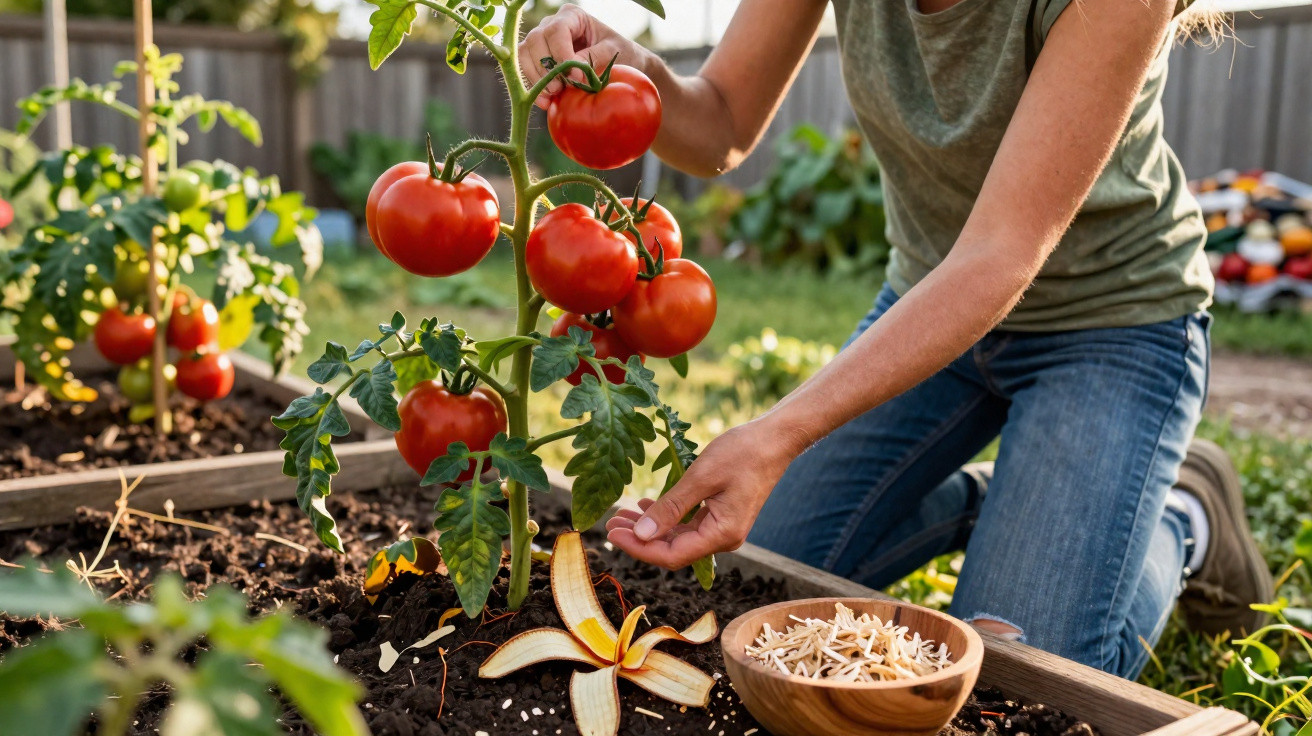
Many amateur gardeners know the frustration: lush tomato plants covered in foliage, yet only a handful of meagre fruits hanging from the trusses.
The soil has been watered, the sun is shining and the plant appears vigorous – yet the harvest still disappoints. The cause is usually not some mysterious fungus, but a far more straightforward deficiency: tomatoes are heavy feeders and simply need more nourishment. Two simple leftovers from the kitchen and stove can turn a foliage-heavy problem plant into a productive tomato star within a few weeks.
Why many tomato plants produce leaves rather than fruit
Tomatoes are among the hungriest crops in the home garden. A plant expected to carry several kilograms of fruit draws huge quantities of nutrients from the soil. The most important include:
- Potassium – promotes firm, flavoursome fruit and strengthens plant tissue.
- Magnesium – supports photosynthesis and metabolism.
- Nitrogen – drives leaf growth, which is beneficial in the right amount.
- Phosphorus – reinforces roots and flower production.
When one of these building blocks is missing, the plant quickly displays symptoms: very small fruit, bland flavour, vulnerable skins or blemishes such as the dreaded blossom-end rot symptom (“blackening” at the base of the fruit).
Many gardeners then reach for heavily nitrogen-based fertilisers from the garden centre. The result is an impressive-looking plant: deep green and bushy, but with few tomatoes on the flower trusses. Its energy is being directed the wrong way – into lots of foliage rather than a worthwhile crop.
“If you genuinely want to encourage tomatoes, you do not need a turbo leaf fertiliser, but a balanced nutrient menu focused on potassium and calcium during the fruiting stage.”
Two free nutrient powerhouses from the home and garden
Rather than buying expensive specialist fertilisers, you can use two unassuming waste materials that arise in many households anyway: banana peels and wood ash from an uncoated stove or fireplace. Applied correctly, they provide precisely what fruiting tomato plants require.
Banana peels: sweet fruit, powerful fertiliser
Banana peels usually end up in the bin or, at best, on the compost heap. For tomatoes, they are almost too useful for that, as they contain several valuable minerals:
- plenty of potassium for fruit quality and yield;
- magnesium for strong green growth;
- phosphorus for flowers and roots;
- some calcium to strengthen fruit tissue.
For the plant to benefit, two factors matter above all: placing them close to the roots and making the nutrients available as quickly as possible.
How amateur gardeners can use banana peels properly
There are two straightforward ways to use them, and they can also be combined:
As a soil addition
Cut the peel into small pieces, roughly the size of a fingernail. Bury them 5 to 8 centimetres deep in the root zone, ideally slightly to one side of the main stem. At this shallow depth, the pieces rot down quickly without smelling or becoming mouldy.As “banana water” for watering
Place the peels in a bucket of water and leave them to steep for 24 to 72 hours. Then remove the peels, strain the water and use it to water the tomatoes directly around their root area. For container-grown plants, a small amount is sufficient: roughly half a watering can, diluted across several pots.
In a container garden, it is worth using a more cautious dose so that fruit flies do not gather. In a border, this is far less of an issue provided the peels are well covered with soil.
Wood ash as a second free boost for tomatoes
Anyone with a wood-burning stove, fireplace or garden stove has a second treasure at hand: fine wood ash from untreated timber. It contains:
- generous amounts of potassium, often known as “potash”;
- calcium, which raises the soil slightly and helps to stabilise the fruit;
- phosphorus and other trace elements.
Wood ash is strongly alkaline. A small amount, used only during a limited period of the year, is therefore enough to support tomatoes.
“Used in the correct dose, wood ash helps reduce the notorious black fruit tip while also improving the flavour and number of tomatoes.”
When and how should wood ash be applied to tomato plants?
The best time is at the height of the season, when plenty of green fruit is already hanging and the main shoots are producing heavily – often from mid-July to early August.
Gardeners should proceed as follows:
- Use ash only from natural, untreated wood, never from varnished, glued or otherwise treated materials.
- Pass the ash through a fine sieve to remove nails, wood remnants and larger pieces.
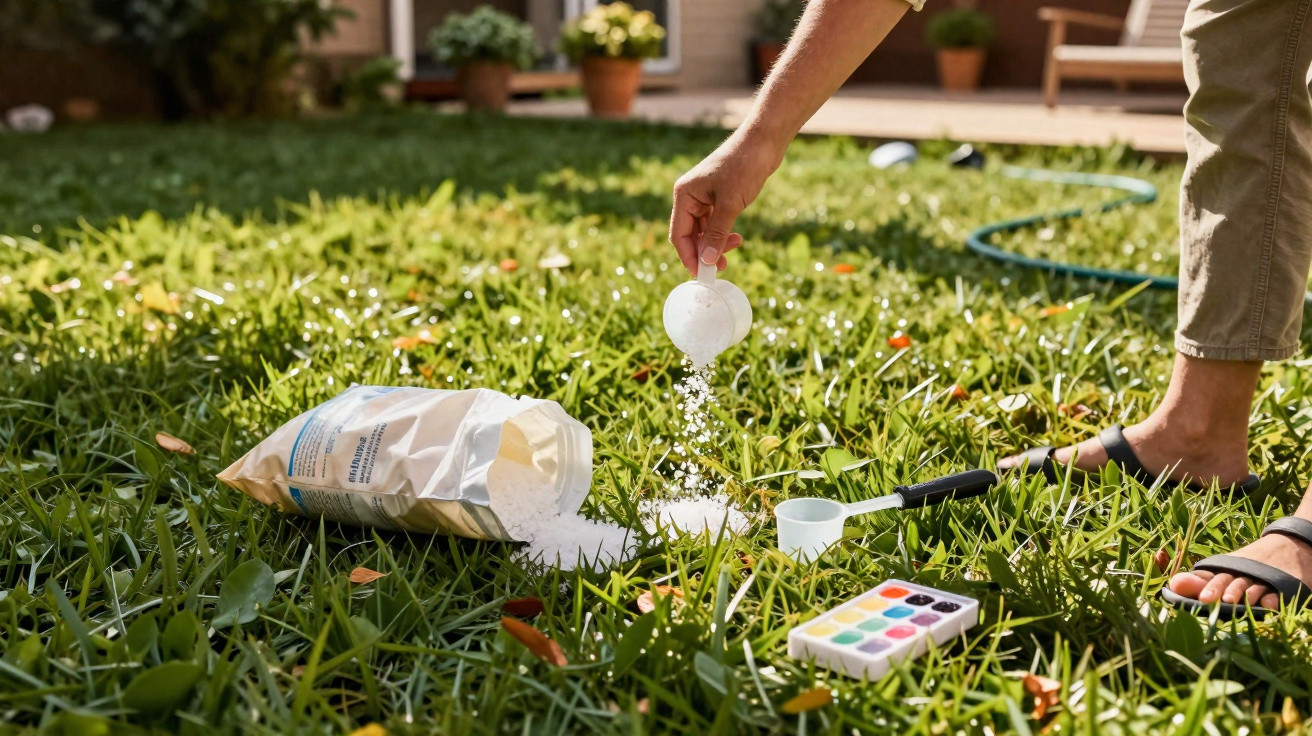
- Scatter around 20 to 30 grams per plant, approximately one level tablespoon, loosely onto the soil around the base of the stem, without touching leaves or stems.
- Apply it only in dry weather, then lightly rake it in so that the ash is not blown away.
A second application after around two weeks is entirely sufficient. Wood ash is a useful aid, not a miracle cure – too much can make the soil excessively alkaline and may do more harm than good, particularly in pots.
The foundations must be right: no XXL crop without basic care
As effective as banana peels and wood ash can be, they work properly only when the basics are in place. From the outset, tomatoes need nutrient-rich, deeply loosened soil containing organic matter.
This combination has proved useful when planting:
- work in a layer of well-matured compost;
- if needed, add some well-rotted farmyard manure or a ready-made organic tomato fertiliser;
- in sandy soils, also incorporate biochar or leaf mould to retain water and nutrients for longer.
From June onwards, a gentle routine helps: feed organically about every two weeks. At the start of the season, nitrogen-rich nettle liquid fertiliser is suitable. Once the first fruit sets are visible, the focus should shift to potassium-rich sources – this is where banana peels or comfrey liquid fertiliser come into play.
Common mistakes when using these tomato fertilisers
Anyone fertilising with household remedies for the first time often falls into the same traps. Typical mistakes include:
- Overdoing it: “More is better” rarely applies to nutrients. Excess wood ash can stress roots and lime the soil too heavily.
- Applying it at the wrong time: large doses of potassium very early in the season achieve little when the plant has not yet formed fruit sets.
- Leaving peels on the surface: banana peels left exposed on the soil attract insects and decompose much more slowly.
- Neglecting watering: nutrients only reach the plant where moisture carries them. Irregular watering causes splitting, corky patches and stress.
Gardeners who keep these points in mind often notice a difference after only a few weeks: more flowers, stronger trusses and fruit that visibly puts on size more quickly.
Risks, limitations and useful combinations
Banana peels and wood ash are not substitutes for good cultivation practice – they complement it. Where soil is severely depleted and nutrient deficiency is substantial, this pairing alone will not be enough. In that case, the soil needs more fundamental restoration with plenty of compost, green manure and gradual rebuilding.
In areas with very calcareous soil, wood ash should be used extremely sparingly or avoided altogether, because the pH is already high. The general rule for pots is: halve the dose, watch plants closely and apply small amounts more often rather than a large dose infrequently.
Combinations with other natural aids can be particularly useful:
- Banana peels combined with comfrey liquid fertiliser make a particularly potassium-focused mix during the fruiting stage.
- A thin mulch layer of grass clippings protects the soil from drying out while nutrients from peels and ash seep further down.
- Compost tea can be used between applications to strengthen soil life, which helps to break down the peels.
Anyone who adopts this free fertilising strategy soon notices how clearly the tomato plant responds. Moving from a “green bush with no crop” to a productive powerhouse often takes only a carefully timed reach into the kitchen bin and ash bucket – provided the timing, quantity and foundations are right.
Comments
No comments yet. Be the first to comment!
Leave a Comment