
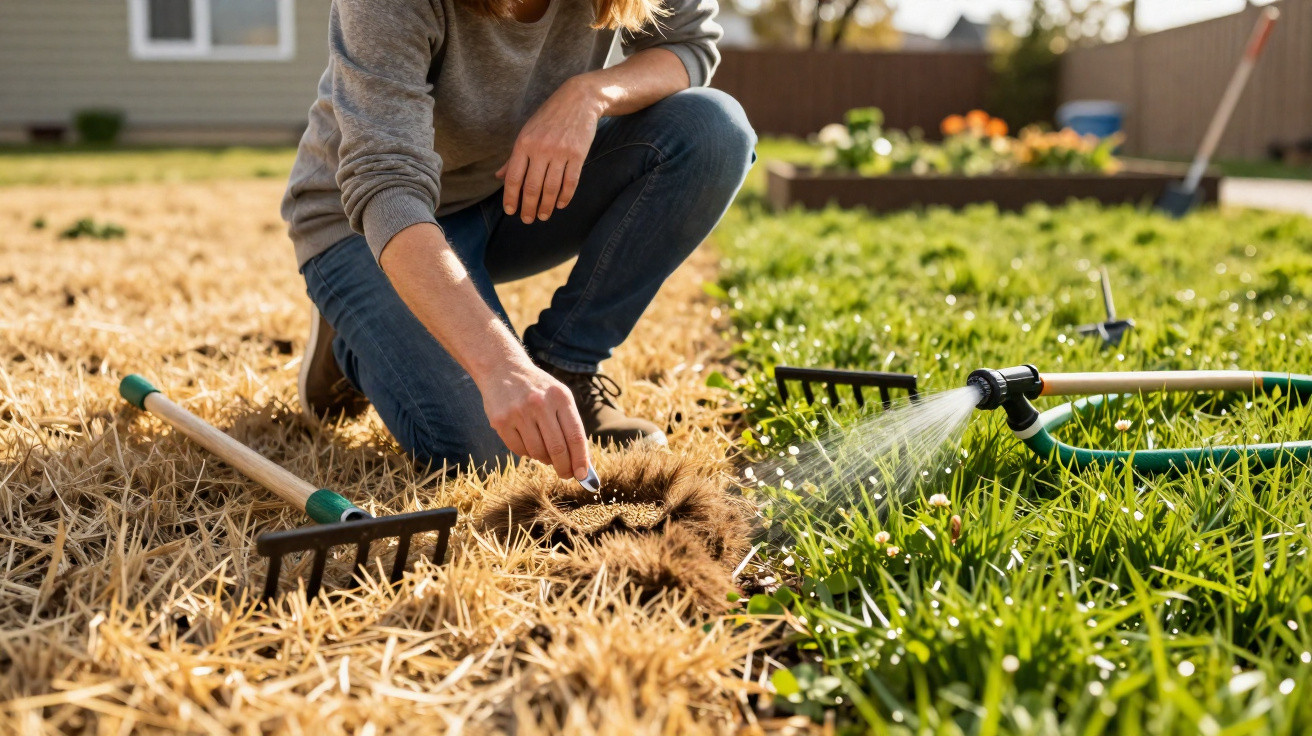
Spring has arrived, yet your lawn looks more like a bale of straw than something from a gardening magazine?
A few well-chosen adjustments can turn that around surprisingly quickly.
In this situation, many gardeners automatically reach for costly fertilisers and water constantly. That may ease the conscience, but it rarely tackles the real cause. For a lawn that stays dense and green, concentrate on four essentials: gently opening up the soil, overseeding selectively, watering less often but thoroughly, and mowing noticeably higher.
Why your lawn turns yellow despite your efforts
A lawn does not become yellow overnight. More often, the cause is a combination of compacted soil, an unsuitable watering routine and cutting the grass too short. Chemical fertilisers can sometimes hide the issue briefly, but they do not resolve the underlying causes.
“Those who start with the roots – in every sense of the phrase – will achieve a more attractive lawn that is easier to maintain over the long term.”
Over time, many lawns develop a compact layer of old clippings, moss and dead plant material. This layer behaves like a thick thatch. Water tends to run off, nutrients remain at the surface, and air struggles to reach the roots. The result is a yellowing, patchy lawn that looks tired.
Aerating the soil: light scarifying rather than aggressive tearing
Remove thatch so the soil can breathe again
Many amateur gardeners respond by scarifying heavily and cutting deeply into the ground. This damages the root system and weakens the lawn further. A gentler, surface-level treatment is far more effective.
- Score only the top layer rather than turning over the soil
- Thoroughly clear away moss, thatch and dead material
- Ideally, do this in early spring or early autumn
- After treatment, avoid walking on the ground where possible until it has settled
Whether you use a hand scarifier or a lightweight electric model, the aim is to open the surface rather than ruin the lawn. Even one pass allows the soil to absorb water and air much more effectively.
When more intensive treatment is worthwhile
If the lawn consists almost entirely of moss and thick mats of thatch appear when you rake, more intensive work may be appropriate. In that case, you should definitely overseed afterwards; otherwise, large bare patches will remain and attract weeds almost immediately.
Change your watering routine: water less frequently, but deeply
Daily watering makes a lawn dependent
Yellow grass blades trigger the same reaction in many people: add more water. The hose is used almost every day, leaving the surface permanently damp. Roots soon realise they do not need to grow downwards, as moisture is always available near the top. They therefore remain short and shallow.
A lawn like this is extremely vulnerable during heatwaves. Just a few dry days can be enough for it to turn yellow. The risk of fungal disease also rises because the grass never has a chance to dry properly.
What a sensible watering schedule looks like
“The aim of every watering session: water should penetrate at least 10 to 15 centimetres into the soil.”
Use the following as a guide for a healthy watering routine:
- Water thoroughly 1–2 times a week rather than briefly every day
- Water early in the morning so the leaves dry quickly
- Allow around 15–20 litres per square metre (place a cup out to check the amount)
- Reduce the quantity, or stop watering altogether, in cool and rainy weather
The lawn responds by developing deeper roots. It draws moisture from lower soil layers and remains green for longer, even in hot weather.
Adjust lawn mowing height: cut higher, stay green longer
Cutting too short scorches the lawn in summer
It is a familiar mistake: the robotic mower or lawnmower is permanently set to its lowest setting so mowing is needed less often. For a few days, the lawn may look like a golf course. In strong sunshine, however, the ground dries out exceptionally quickly because there is no longer enough leaf cover to provide shade.
The sun then reaches the soil directly, heating the topsoil until it cracks and dries out. Weed seeds find ideal conditions, while the lawn struggles. Short grass blades also have fewer reserves to put on new growth after stress.
The ideal cutting height during hot spells
“Setting the cutting height to around 7–8 centimetres creates natural sun protection within the lawn.”
Practical figures to use as a guide:
| Situation | Recommended cutting height |
|---|---|
| Spring, normal weather | 6–7 cm |
| Summer, heat and drought | 7–8 cm |
| Autumn, final cuts | 5–6 cm |
Longer grass shades the soil, limits evaporation and suppresses many unwanted plants simply because they do not receive enough light. At the same time, the area looks richer, even if the lawn is not perfectly even in the traditional English-lawn style.
A trick from professional gardens: clover as a natural lawn fertiliser
How small white clover supplies the soil with nitrogen
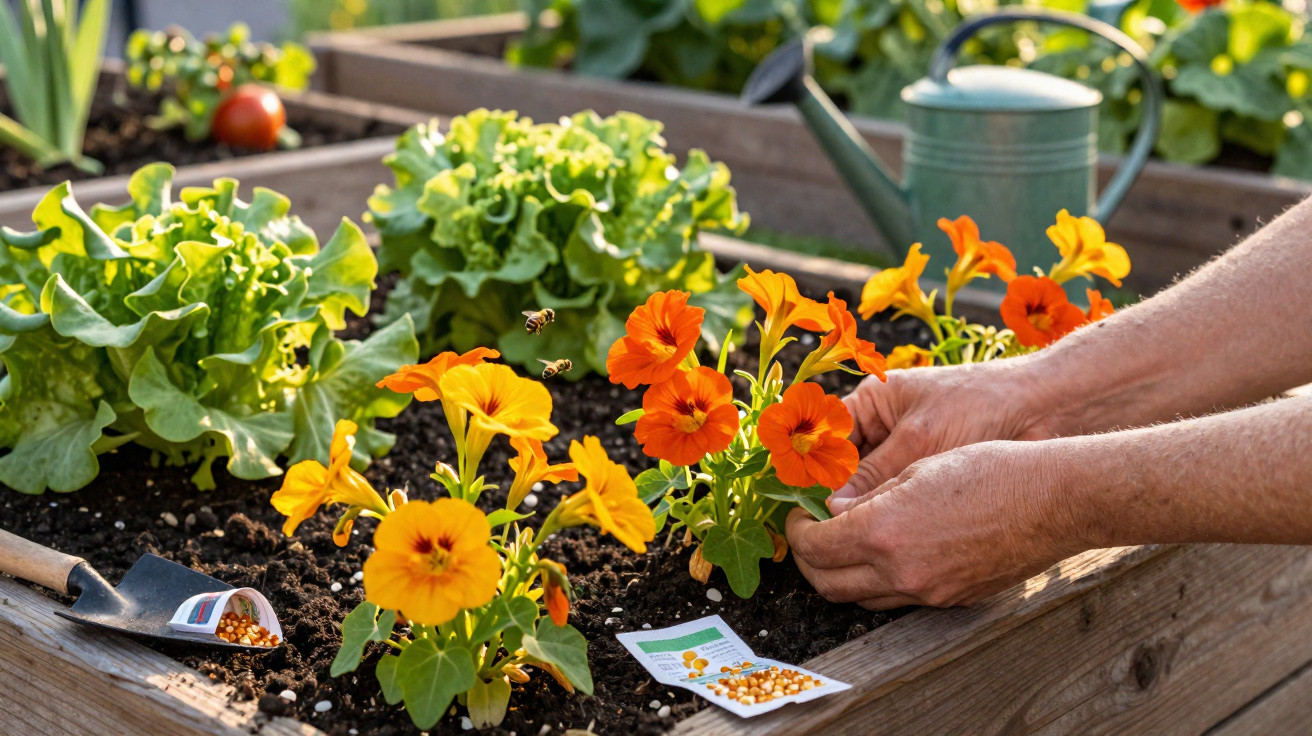
Instead of expensive artificial fertiliser, an increasing number of gardeners are using a plant once regarded as a “nuisance”: low-growing white clover. This legume forms a symbiotic relationship with bacteria that fix nitrogen from the air. Some of it reaches the soil and becomes available to the lawn.
The outcome is that the lawn receives small, continuous amounts of nutrients rather than being overfed in bursts of fertiliser. The area appears more evenly green, even during temporarily drier conditions.
How to overseed patchy areas with clover
Gaps and yellow patches can be filled very effectively with a mix of lawn seed and low-growing clover. One proven method is:
- Lightly score the area or loosen it with a rake
- Remove old material, moss and leftover roots
- Spread around 5 grams of clover seed per square metre
- Optionally mix in some lawn seed for denser coverage
- Press the seed down with a board or roller to ensure soil contact
- Keep it consistently lightly moist until germination
After around one to two weeks, the first delicate leaves will appear. The resulting carpet feels remarkably soft beneath bare feet and often stays fresh green longer than a lawn made up solely of grass.
A garden that works with you instead of demanding constant attention
Four measures with a big effect
“Light aeration, higher mowing, considered watering and clover in the lawn – that is often all it takes to create a noticeable transformation.”
Anyone putting these measures into practice will notice that the maintenance effort changes. A little manual work is needed at first, but later a calm, consistent routine is enough. The lawn recovers faster after stress and responds less dramatically to unpredictable weather.
A deeply rooted, lightly mixed lawn becomes particularly valuable when summers are unpredictable. It copes better with heavy rainfall, makes better use of short wet periods and suffers less during prolonged dry spells.
What many people overlook: soil life and diversity
A busy world of soil life exists between the blades of grass. Earthworms, micro-organisms and fungi break down old material and improve soil structure. Avoiding constant intervention with heavy equipment, artificial fertiliser and herbicides supports this process.
Once the balance shifts even slightly – through better aeration, longer grass and organic nutrient sources such as clover – the whole area becomes more stable. A lawn does not need to look perfect to appear impressively healthy. A few daisies or patches of clover do no harm; instead, they suggest that the soil is alive and capable of sustaining itself.
With a little patience, this creates a robust, richly green carpet that does not collapse with every heatwave and gives you more time to enjoy the garden rather than requiring constant maintenance.

Comments
No comments yet. Be the first to comment!
Leave a Comment