
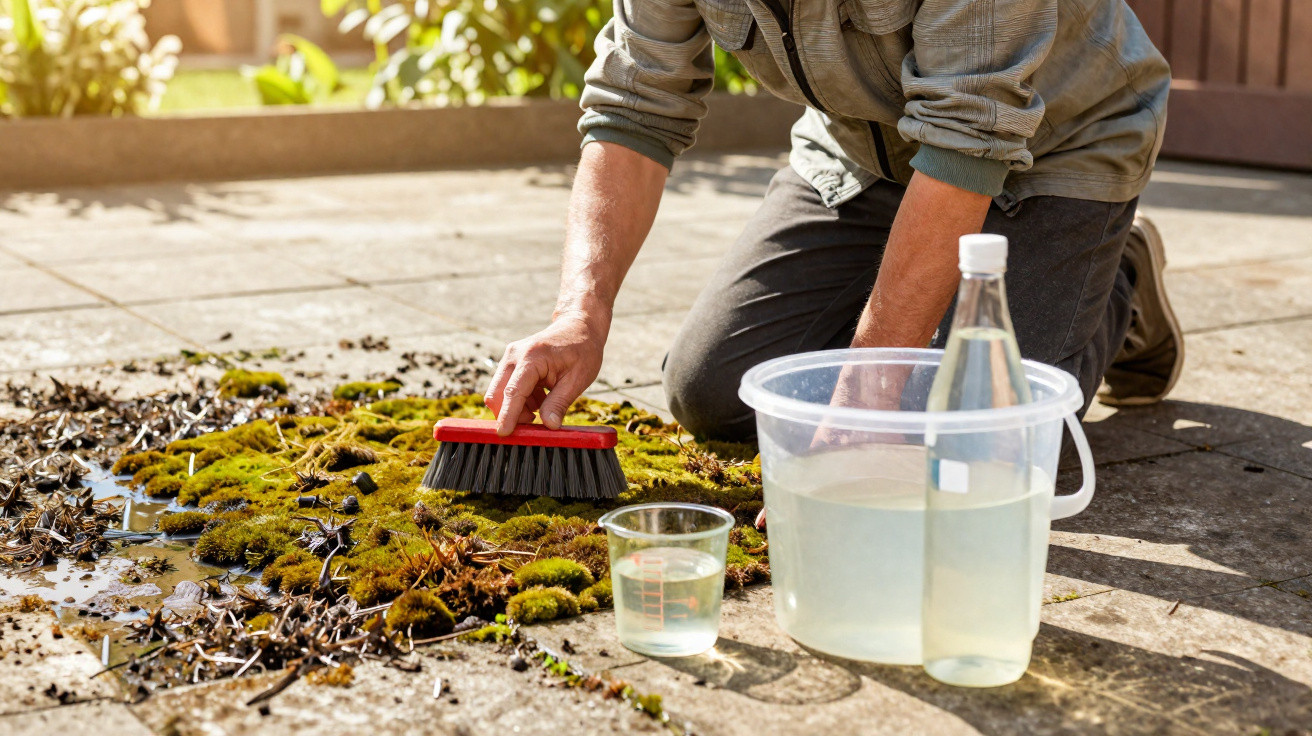
Many homeowners face the same frustrating sight each spring: a green haze across the paving, moss packed into the joints, and steps that have turned slippery. Instead of reaching for a pressure washer and pricey specialist chemicals, you can often clean outdoor areas thoroughly with an inexpensive everyday staple from the kitchen.
Why patios build up so much moss after winter
Damp, shaded spots are ideal conditions for moss and algae. After months of rain, limited sunshine and low temperatures, patio slabs often stay wet for long periods - exactly what these small plants thrive on.
Common causes include:
- shaded positions, such as behind the house or under trees
- porous concrete slabs where water collects
- plant pots left in the same place all winter
- poor drainage, meaning puddles can’t run off
It looks unpleasant, but it’s more than a cosmetic issue. That green sheen can make paths and steps extremely slippery. Children lose their footing more easily, and older people can trip quickly. Leaving it untreated means accepting a genuine risk of falls.
The unexpected helper: white distilled vinegar from the kitchen
Garden advice often points to pressure washers or specialist cleaners from DIY stores. A British gardening expert, however, relies on something many people already have in the cupboard: simple white distilled vinegar.
"White distilled vinegar costs only a few pence per bottle in the supermarket and loosens moss, algae and light grime in a short time."
The key is that distilled vinegar is mildly acidic. That acidity weakens the cell structure of moss and algae, while also breaking down the fine film of dirt that builds up over winter. Small weeds in the joints can be knocked back as well.
In UK supermarkets, a bottle is around 30p. For a medium-sized patio, roughly half a bottle is enough - meaning one cleaning run for just a few pence. In terms of cost, very few specialist products can compete.
Step by step: how to clean your patio with white distilled vinegar
This approach doesn’t require professional kit and fits neatly into a busy Saturday. An hour is often enough to remove the worst traces of winter.
1. Clear the area properly
Start by removing all garden furniture, plant pots and decorations from the patio. The more open surface you have, the more evenly the mixture can work.
Next, sweep the slabs with a stiff outdoor broom. Leaves, sand, loose soil and small twigs need to go so the vinegar can reach the surface directly rather than being absorbed by debris.
2. Mix the vinegar solution correctly
In a bucket, combine white distilled vinegar and water in a 1:1 ratio - in other words, equal parts vinegar and cold or lukewarm water. Very hot water can intensify the vinegar smell and may not suit some jointing materials.
- 1 part white distilled vinegar
- 1 part water
- bucket or watering can
- stiff broom or scrubbing brush
You can apply the mix with a watering can or pour it straight from the bucket.
3. Soak the slabs and let it work
Distribute the solution generously across the whole patio. Heavily affected, dark-green patches and moss-filled joints can be wetted more thoroughly.
"The vinegar solution should stay on the slabs for at least an hour - only then does it show its full effect against moss and algae."
During this time, the slippery film softens. Moss clumps lose their grip and can be swept away more easily afterwards. With very heavy growth, you can leave it longer, as long as conditions stay dry.
4. Scrub and rinse
Once the soaking time is up, work over the area again with the stiff broom or a scrubbing brush. Many deposits will lift with minimal pressure.
Finish by rinsing thoroughly with plenty of water - using a garden hose or several buckets. This washes away loosened moss and any remaining vinegar.
If you don’t have a water connection on a balcony, you can also go over the surface with a well-wrung mop to pick up excess liquid.
Where vinegar works - and where you should be cautious
Vinegar isn’t equally suitable for every type of patio. Because it’s acidic, it can attack sensitive stone or gradually erode joints if used too often or too strong.
| Material | Suitability for vinegar cleaning |
|---|---|
| Concrete slabs | usually well suited; occasional use is generally unproblematic |
| Concrete block paving / paving stones | suitable for occasional spring cleaning |
| Sandstone | best avoided; can bleach and be damaged |
| Limestone | risky; reacts strongly to acid |
| Old mortar joints | take care; test only in diluted form |
If you’re unsure what your surface is, test a small, hidden area first. If there’s no visible damage once it dries, you can use the method more widely. If you’ve invested in higher-end natural stone, it’s safer to choose a cleaner specifically approved for that material.
Risks for garden plants - and how to avoid them
Vinegar affects more than moss. If the solution runs into nearby borders or over the lawn, leaves and young shoots can be harmed.
Practical precautions:
- pour so the liquid flows away from planted areas
- shield edges with boards or old towels
- use only as much solution as necessary
- for heavily planted patios, consider milder specialist cleaners instead
For maximum peace of mind, you can scrape the joints with a joint scraper and apply the vinegar mix only to the exposed slabs.
How to keep moss off your patio in the long term
One deep clean won’t solve the problem if the location and conditions stay the same. Still, you can slow growth down significantly.
"The drier and more well-ventilated the patio stays, the harder it is for moss and algae."
Helpful measures include:
- move planters from time to time so nothing forms a permanent damp patch underneath
- remove fallen leaves regularly in autumn so they don’t rot on the slabs
- prevent standing water with a slight fall or drainage channels
- thin out dense hedges or shrubs a little to let more light and air reach the ground
If you give the patio a proper treatment once a year - for example in spring - there’s usually far less work for the rest of the year. Smaller spots can often be dealt with in between using a stiffer broom and clean water.
Alternatives to vinegar: when pressure washing or specialist products make sense
Some surfaces, or heavy soiling, call for a different approach. A pressure washer can remove thick moss layers, but it may also wash out jointing and damage delicate stone. Keep the pressure no higher than necessary and avoid directing the jet straight into the joints.
Commercial patio cleaners are often tailored to specific materials. Many also use organic acids, but are formulated to be kinder to natural stone. If you’re unsure, the packaging usually lists which stone types are suitable.
For owners of larger properties, there are also products you apply once and don’t rinse off afterwards. They act more slowly, but don’t require heavy scrubbing. For older people who need to avoid strenuous work, that can be a sensible alternative.
What makes vinegar work - and where its limits are
The active component in distilled vinegar is acetic acid. It attacks the cell walls of simple plants and disrupts their metabolism. Algae, thin moss films and young weeds don’t tolerate this well - they dry out or lose their grip on the surface.
At the same time, the acid can dissolve light limescale and grime on concrete slabs. That’s why, after treatment, patios often look not only cleaner but also visibly fresher in colour.
However, the method has limits against deep-rooted weeds or heavy lichen growth. Occasional vinegar use won’t be enough here. In those cases, only consistent joint scraping, thermal weeding with specialist weed burners, or the use of approved plant protection products will work - always within the rules that apply in Germany for domestic and allotment gardens.
Used deliberately and in moderation, this low-cost kitchen helper becomes a practical addition to the classic spring clean. The patio becomes safer to walk on again, costs stay down, and in many cases the heavy machinery can remain in the shed.

Comments
No comments yet. Be the first to comment!
Leave a Comment