
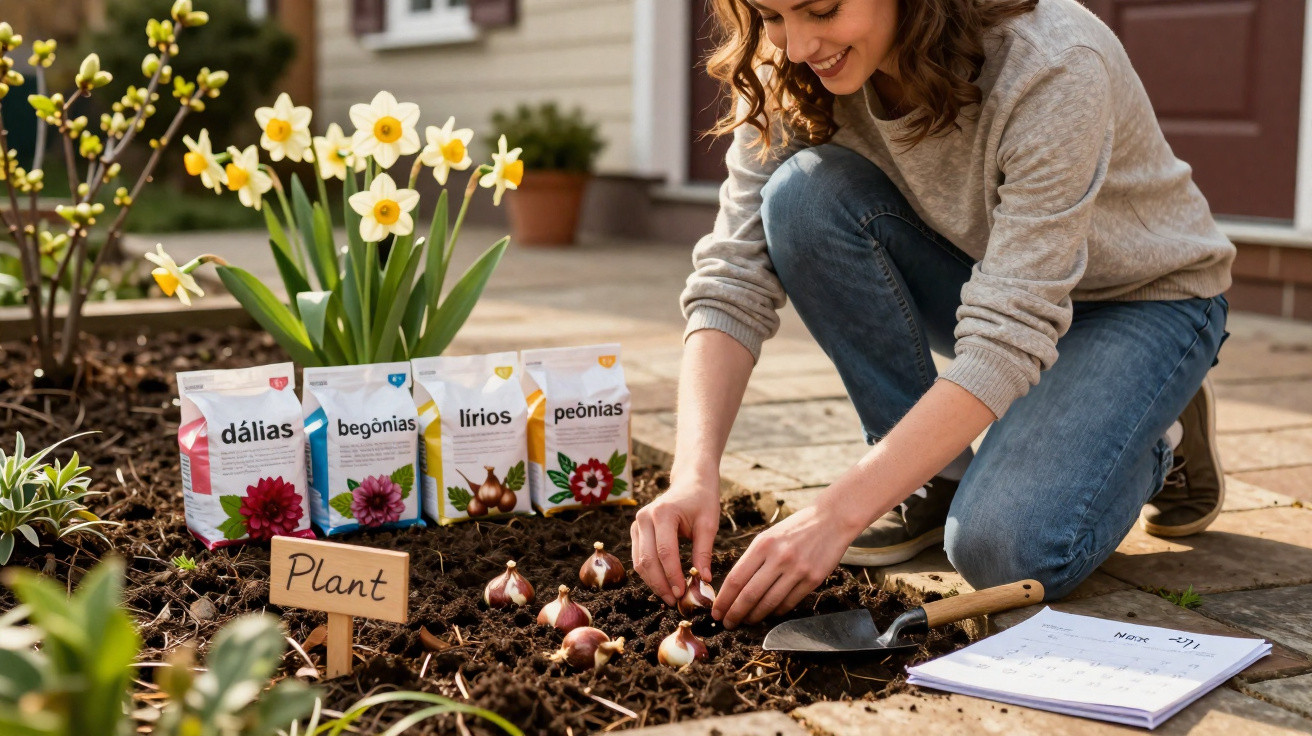
Many home gardeners enjoy daffodils and tulips in spring - and then wonder why the garden suddenly looks dull for weeks afterwards. The reason is rarely the weather; it is almost always down to the planting calendar. If you do not get four specific bulbs and tubers into the ground in March, you can end up with a colourless dry spell in early summer.
Why the garden suddenly “runs out” after daffodils and tulips
In March, many borders are busy places: the hardest frosts ease off, the soil starts to warm through, and the first bulb flowers are already putting on a show. It is right at this point that you set up what happens next - whether early summer bursts into life, or whether the spring fireworks are followed by a flat, empty patch.
Spring favourites such as daffodils, crocuses and tulips deliver a short, intense performance. After that, perennials and roses often need several more weeks before they take over. Without well-timed summer bulbs, you can be left with an unattractive “gap” in the border - depending on where you live, it can last right into July.
"If you don’t plant any summer flower bulbs in March, you risk up to six weeks with almost no blooms in the garden."
That risk can be reduced significantly with four plant groups: dahlias, begonias, lilies and peonies can - when planted correctly - create an almost seamless handover from spring to summer.
Why March is the key month for summer-flowering plants
For many people, March still feels like the end of winter. For bulbs and tubers, however, this is when the season truly begins: soils start to warm up, severe frosts become less frequent, and the days are noticeably longer.
For most summer-flowering bulbs and tubers, the rule is simple: if they go in between early March and mid-May, they have time to form strong roots and get into growth early. Leave it until late April or May and flowering is often pushed back well into high summer - costing you valuable weeks.
- Early to mid-March: the starting gun for planting in pots (or in sheltered spots)
- Late March to April: the best time for planting outdoors in milder areas
- Early to mid-May: a catch-up slot - flowering shifts back noticeably
What matters most is that the worst frosts have passed and the soil is no longer waterlogged. Standing water can rot tubers and bulbs before they even get going.
Dahlias: a burst of colour from June to October
Dahlias are among the most effective gap-fillers in ornamental gardens. With the right care, they flower from early summer right through into autumn and offer a range of colours that few other garden plants can match.
Starting in March brings the flowers into your garden much earlier. The best approach is to start the tubers off in pots:
- Lay the tuber flat in a pot filled with loose, lightly moist compost.
- Cover only thinly with compost; the “neck” and growth points can remain visible.
- Keep it bright, frost-free and evenly moist - do not drown it.
- From mid-May, after the last frosts, plant out into borders or large containers.
This way, dahlias can produce roots and the first shoots in the protection of a house or greenhouse. Once outside, they get moving immediately rather than spending weeks “deciding” whether to grow.
"Dahlias started in pots in March can often bloom as early as June - instead of only in high summer."
Whether you choose ball, cactus or single-flowered types, dahlias do best in sun to partial shade with rich, crumbly soil. Regular watering and a little organic feed then keep the flowers coming almost continuously.
Begonias: a lifeline for shady balconies and north-facing spots
Not every garden is blessed with full sun all day. If your space is mostly shaded or north-facing, you can still have plenty of colour - this is where tuberous begonias shine.
They prefer bright light without harsh midday sun, and they are just as happy in window boxes, bowls and pots as they are in a border. Here is how to start them in March:
- Place the tuber in a shallow tray or pot with the slightly hollow side facing up.
- Use a loose, humus-rich compost and cover only lightly.
- Keep frost-free, bright and consistently moist.
From May, once frost is no longer a risk, the plants can move outdoors. They will flower all summer long, as long as the root zone never dries out completely. For shady balconies in particular, they are a dependable long-flowering choice.
Lilies: fragrant structure between bare perennials
Lilies do more than provide elegant, often scented blooms - they also add height and structure to borders. In March, plant the bulbs at a depth around two to three times the bulb’s own height. Good drainage is essential; otherwise the bulbs can rot easily.
Lilies can be used to bridge the low-flower period cleverly: some varieties begin flowering from May, while others appear later in high summer. If you deliberately combine different groups, you can keep the border interesting for weeks.
"Lilies bridge the gap between early perennials and the big summer stars such as roses and coneflowers."
Sunny to partially shaded positions are ideal. A thin mulch layer helps keep moisture even, without leaving the bulbs sitting in wet conditions.
Peonies: plant now, be amazed in a few years
Peonies usually will not fix this year’s flowering gap straight away. Planting them in March is an investment in the seasons ahead. Their lush, often wonderfully scented flowers are a cottage-garden classic, and with good care they can stay in the same place for decades.
That said, a newly planted peony takes patience. Many peonies only reach their full glory after two to three years. That is exactly why an early start is worthwhile: planting now means you are not pushing the waiting time even further into the future.
For strong growth, peonies need:
- deep, not overly heavy soil
- a sunny to partially shaded position
- as little moving as possible - peonies dislike frequent replanting
| Plant | Main flowering season | Special benefit in the flowering calendar |
|---|---|---|
| Dahlia | June to October | closes the gap after spring bulbs and lasts into autumn |
| Begonia | June to September | adds colour in shade and on north-facing balconies |
| Lily | May to August (depending on variety) | fills the in-between phase from spring to high summer |
| Peony | late spring to early summer | long-term build-up of a stable flowering base |
How home gardeners can avoid common March mistakes
Most problems are not caused by choosing the “wrong” plants, but by small details at planting time. Three points matter in particular:
- Soil that is too wet: in heavy ground, it is better to plant a little later once it has dried out.
- Planting depth: tubers planted too deep struggle to emerge; those too shallow dry out easily.
- Impatience: water spring-planted bulbs regularly, even if nothing is visible above the soil yet.
If you want to play it safe, trial new varieties in pots first. That way, sensitive plants can be moved temporarily against the house wall or into a hallway if a late frost threatens.
How to plan borders across the whole year
March is an ideal time to plan a border like a layered cake: spring bulbs underneath, summer-flowering bulbs woven through, with low perennials in between again. Sketching out a rough timetable now makes it much easier to stay on top of things.
A practical method is to divide the year into three flowering blocks - spring, early summer, and high/late summer - and then choose plants for each phase on purpose. Dahlias, begonias, lilies and peonies form the backbone, and you can then build on it with perennials, grasses and annual summer flowers.
Another advantage: many of the plants mentioned are excellent cut flowers. So, if you do a bit of planning and planting in March, you not only get a lively garden in summer - you also have fresh bouquets for the house on a regular basis.

Comments
No comments yet. Be the first to comment!
Leave a Comment