
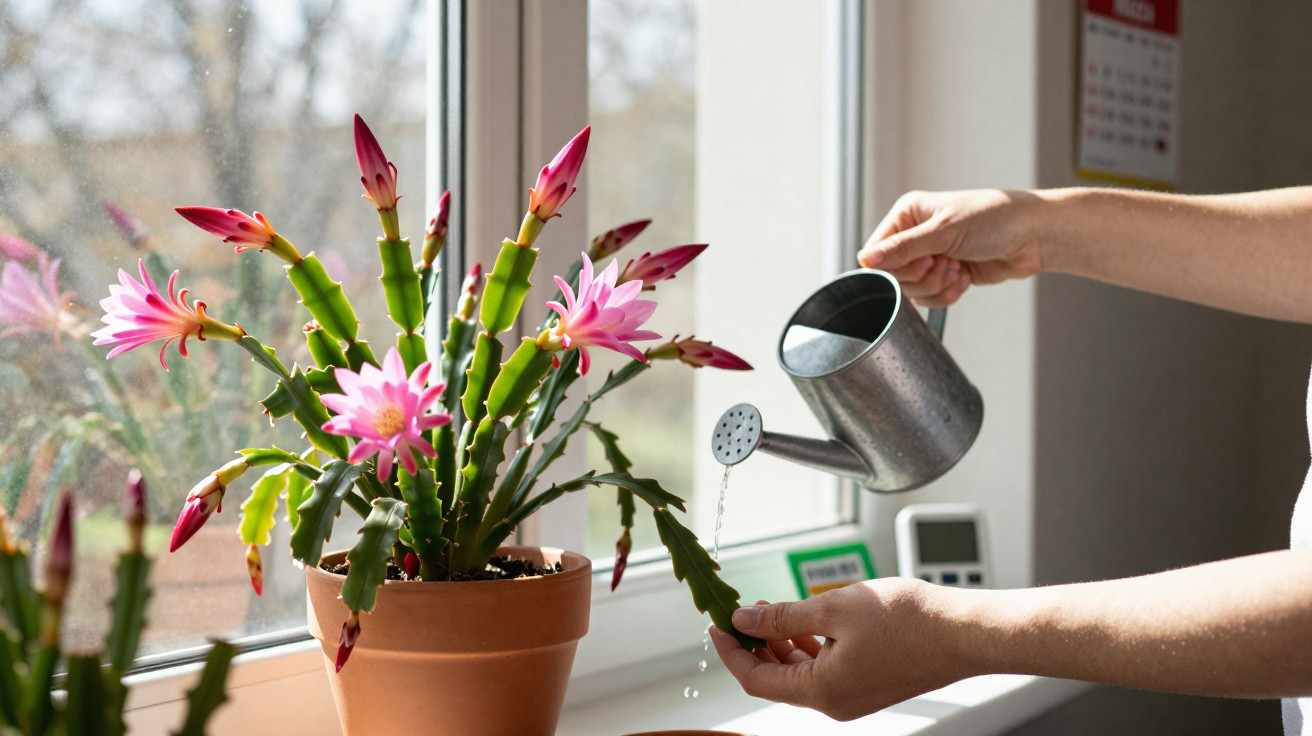
In many living rooms the scene is the same: a pot full of fresh green segments, covered in fat buds - and yet the big display never arrives. The answer is rarely fertiliser or any so‑called “secret trick”. Almost always it comes down to the wrong spot and too much fussing at precisely the most critical stage.
The spring star: what makes the Easter cactus so special
The so‑called Easter cactus, often sold under the botanical names Rhipsalidopsis or Hatiora, is not a desert plant. It comes from South America’s humid forests, where it grows as an epiphyte in branch forks and roots into humus-rich, constantly slightly damp plant debris.
That origin explains how it behaves indoors. It likes bright light but not heat, enjoys moisture but not waterlogging, and is sensitive to sudden changes. Give it the right conditions and it will cover itself in star-shaped flowers between March and May - noticeably later than the better-known Christmas cactus, which starts in winter.
"The Easter cactus isn’t a ‘decor on the side’ kind of plant - respect its seasons and you’ll be greeted with a genuine explosion of flowers."
The foundations for March flowering are laid in winter
Many hobby gardeners focus only on spring and are surprised when not a single bud appears in March. In reality, the decision is made months earlier.
- Cool resting period: From late autumn to around January, the Easter cactus needs a cooler position at roughly 12–15 °C.
- Very little water: During this phase, water only sparingly - just enough to prevent the segments from shrivelling.
- Gentle restart: From February onwards it can gradually be brighter and a little warmer, with watering increased carefully.
If you keep the cactus by a radiator all winter and water generously “out of sympathy”, two outcomes are common: either no buds appear at all in March, or buds form but drop quickly because the plant has been weakened.
March is when it matters: the tricky bud stage
As soon as the Easter cactus shows its first buds, it enters its most sensitive period. The plant is now putting a large share of its stored energy into building flowers, and it reacts accordingly to any disturbance.
Typical triggers for buds suddenly dropping include:
- a strong draught from tilted windows or open balcony doors
- moving it to a new position - for example, from a table to the windowsill or across the room
- direct sun through glass, which can heat the pot within minutes
- major temperature swings, such as cold in the evening but very warm during the day
"The most common mistake in March: the plant is constantly carried around, shifted or turned - exactly when it needs stability most."
Light, temperature, water: the perfect place in March
For dependable spring flowering, the Easter cactus needs a balance of good light, steady warmth and moderate watering.
How much light can the Easter cactus handle?
The ideal is a very bright spot without harsh midday sun. An east-facing window works perfectly in many homes; a west-facing window with a light curtain can also be suitable. If it is too dark, the flowers remain small or only open halfway. Too much direct sun, on the other hand, can make the segments turn reddish and develop patches - a clear stress signal.
Temperature: steady conditions, not a rollercoaster
In March, the sweet spot is around 18–22 °C. More important than the exact number is consistency. A place directly above a radiator, by a patio door that is opened frequently, or on a draughty windowsill creates constant fluctuations. That can significantly shorten the flowering period and may lead to complete bud drop.
Watering with feel: neither desert nor swamp
After the near-dry winter rest, the Easter cactus now needs regular but controlled watering again. A practical check: push a finger 2–3 cm into the compost. If that zone feels dry, it is time to water.
| Situation | What to do when watering |
|---|---|
| Surface dry, deeper layer slightly damp | Wait - do not water yet |
| Top 2–3 cm completely dry | Water thoroughly; remove any water from the saucer after about 10 minutes |
| Compost constantly wet, pot feels heavy | Pause; allow it to dry a little; avoid waterlogging at all costs |
The root ball should always feel lightly fresh, never saturated. Too much moisture causes root rot; the segments become soft or glassy - a classic emergency that can abruptly end buds and flowering.
In very dry homes, a professional trick can help: stand the pot on a saucer filled with damp expanded clay pellets. This raises humidity around the plant without leaving the roots sitting in water.
The one mistake that costs almost all buds in March
If you follow just one rule in March, make it this: once the Easter cactus has buds, give it a permanent place - and leave it there.
"Choose the spot, put the pot down, hands off: every turn, every move can unsettle the plant so much that it drops its buds one after another."
Many people rotate the pot with good intentions so every side gets equal light. For many houseplants that is sensible; for an Easter cactus in bud, it is disastrous. The plant orients itself towards the light source, and constant re-aiming is interpreted as stress.
A similarly poor choice is a windowsill where the window is opened wide several times a day. That sudden air change - warm indoors, cold from outside - is often enough to lose several buds at once.
Fertiliser and repotting: slow down in March rather than speed up
Many instinctively reach for liquid feed during flowering, hoping for more flowers and bigger blooms. With the Easter cactus, that is unnecessary at this stage and can even be risky. While it is flowering, the plant takes up very few nutrients from the compost; it relies mainly on reserves stored earlier.
A strong dose of fertiliser can therefore shock it: it stops building flowers and reacts with soft growth or simple bud drop. Only after flowering, when fresh tips start to grow and green mass is building again, does gentle feeding make sense.
The same applies to repotting. New compost, larger pots, fresh substrate - all of that is a major intervention. The right time is after flowering, when the plant switches back into growth mode. In March, under a heavy bud load, the root ball should be left untouched.
When the Easter cactus stays green in March
If your cactus looks healthy at the end of March but shows not a single bud, it is worth looking back. Most often, a clear winter rhythm and a distinctly cooler rest period were missing. The good news is that this is straightforward to put right for next year.
- From autumn, move it to a cooler, bright room.
- Reduce watering markedly, allowing only slight drying of the root ball.
- After 6–8 weeks at 12–15 °C, place it somewhere a little warmer and brighter again from February.
If it still remains green, consider the plant’s age and the pot. Very old specimens with completely root-bound balls benefit after flowering from a larger container and fresh, free-draining cactus compost with a good proportion of mineral material.
Why the Easter cactus works as a mood barometer
Many houseplants forgive a lot. The Easter cactus is one of the ones that shows stress quickly and clearly. That is precisely why it can act as an indicator of your home environment. If buds fall even though light and water seem right, another factor is often to blame: constant draughts, intense radiator heat, scorching sun, or overly hectic handling.
If you align yourself with its rhythm, you also learn a great deal about indoor seasons, rest periods, and the impact of changing a plant’s position. And with a little routine, March stops being the frustrating month of bare green segments and becomes the annual flower show that visibly lifts the whole living room.

Comments
No comments yet. Be the first to comment!
Leave a Comment