
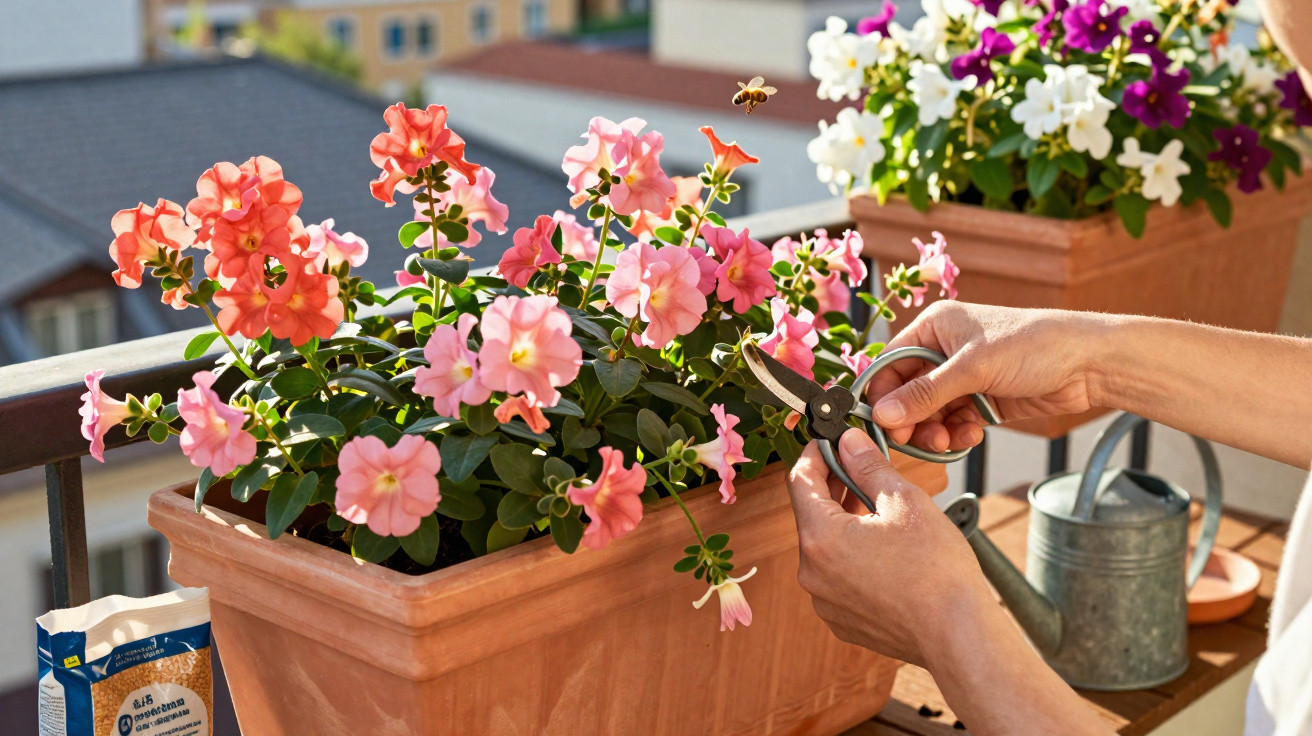
An unassuming plant, a huge impact: with the right flower, even the plainest window box can become an eye-catching display that blooms all summer long.
Every year, many amateur gardeners instinctively choose geraniums or petunias. That is understandable, but it means missing out on striking potential. A lesser-known flowering plant with delicate trailing growth brings colour, fullness and lightness to window boxes, containers and hanging baskets - from spring right through to autumn when cared for properly.
Diascia on the balcony: what makes Twinspur so special
Diascia, often sold under the English name Twinspur, originates in southern Africa and botanically belongs to the figwort family. In the garden, however, it is far from an exotic or difficult plant: it remains compact while producing soft, gently trailing stems that are ideal for window boxes and hanging containers.
Depending on the variety, Diascia reaches around 25 to 40 centimetres in height and spreads 30 to 60 centimetres wide. Its fine stems carry countless small, five-lobed flowers, packed closely together. The colour range extends from soft apricot through rose and raspberry shades to bold orange, purple and pure white.
The special feature: with good care, Diascia flowers almost continuously - from late spring well into autumn.
This makes it an excellent choice for anyone wanting uninterrupted floral abundance without having to replant constantly. It works well in borders as a loose ground-covering or edging plant, but truly shines in raised positions, where its stems can tumble softly over the edge of the container.
The best time to plant: after frosts, with a little planning
Planning your balcony in good time lays the foundations for months of flowers. Diascia is generally grown here as an annual because it does not tolerate frost. Young plants can go into window boxes in spring as soon as night frosts are no longer expected.
- Planting period: from mid-April to late May, depending on the region
- Growing on in advance: possible from March in a warm indoor space or greenhouse
- Suitability by location: in milder regions, plants may also be kept for several years with winter protection
If you would like to raise plants from seed, sow into seed compost at around 15°C and keep the growing medium only lightly moist. The young plants can be moved outside once the weather is consistently mild. For most balcony gardeners, however, buying ready-grown young plants from a garden centre is the easier and quicker option.
The right position: sunny, but not scorching
Diascia enjoys bright conditions but does not cope well with extremes. A site with plenty of light and several hours of sunshine each day is ideal, provided it is not exposed to relentless midday heat in a confined space.
Suitable locations include:
- east-facing balconies with morning sunshine
- west-facing balconies with sun from later afternoon onwards
- south-facing aspects, provided light shade can be given during the hottest part of the day
In intense midday sun combined with very high humidity, many Diascia varieties weaken, pause flowering and quickly look stressed. An airy position and, where necessary, some afternoon shade will help extend the flowering period.
The ideal compost for abundant flower cascades
In a window box or container, the growing medium matters greatly. Diascia prefers compost that is free-draining, rich in humus and reasonably nutritious, but never waterlogged. A good-quality compost for balcony or container plants is an excellent starting point.
If you prefer to mix your own, this combination provides a useful guide:
| Component | Purpose |
|---|---|
| Balcony or multipurpose flower compost | Basic nutrient supply and water retention |
| Compost (mature, sieved) | Slowly available nutrients and soil life |
| Sand or crushed expanded clay | Drainage and prevention of waterlogging |
A slightly acidic to neutral pH value of around 6 to 7 is well suited. A good drainage layer in the window box, for example using expanded clay, is important so excess water can drain away.
How many Diascia plants per window box? For a properly full display
Planting density is key if you want the box to look full quickly. As a general rule:
- 30 cm-long window box: around 3 Diascia plants
- 50–60 cm window box or bowl: around 6 plants
- large 80 cm trough: up to 8 plants
If combining Diascia with other sun-loving plants, adjust the numbers accordingly. Trailing lobelia, verbena, Bidens or small ornamental grasses make especially harmonious partners and add structure.
Watering without stress: keeping the compost at the right moisture level
This plant likes lightly moist compost, not soaking wet conditions. In window boxes and hanging baskets, the compost dries out faster than in a border because of wind and sunshine. A few straightforward rules will help:
- Always water directly onto the compost rather than over the flowers.
- Allow the top layer of compost to dry slightly between waterings.
- During hot weather, water in the evening to reduce evaporation.
Daily watering may be necessary during heatwaves, while in cooler periods watering every two or three days is often sufficient. Avoid waterlogging in saucers - pour away any surplus water after a while.
Feed sparingly: less really is more
Diascia needs nutrients to flower for a long period, yet it reacts sensitively to overfeeding. Too much fertiliser produces long, soft stems and fewer flowers.
The following approaches have proved effective:
- Mix a slow-release fertiliser for balcony plants into the compost when planting.
- From June, feed once a month with a liquid fertiliser for flowering plants.
- If the number of flowers visibly declines, adjust the dose slightly rather than doubling it.
A restrained, regular feeding routine produces compact plants with densely flowered clusters.
Pruning and care: the simple trick for continuous Diascia flowering
Two simple care measures can encourage plants to produce repeated flushes of flowers.
Remove faded blooms
Regularly pinching out or cutting off spent flowering stems prevents the plant from directing energy into seed production. Its energy instead goes into new buds, while the window box continues to look tidy.
A summer trim for tired plants
At the height of summer, Diascia can sometimes lose its shape or flower less freely. A light trim will then help:
- Shorten all stems by around one third.
- Afterwards, water moderately and give a light feed.
- Over the following weeks, the plant will produce fresh, compact growth and new flowers.
Pinching out the tips of individual long stems early on encourages branching and maintains a bushier habit.
Propagation: growing more of a favourite plant yourself
If you particularly like a certain variety, you can propagate it from cuttings. This is fairly straightforward in spring or autumn:
- Cut non-flowering stems about 10 cm long.
- Remove the lower leaves, leaving only a small tuft at the top.
- Place the cuttings in specialist cutting compost and water them lightly.
- Keep them somewhere bright but out of direct sun, maintaining an evenly light level of moisture.
Autumn cuttings should overwinter frost-free at around 10 to 15°C. The following spring, they can be planted into window boxes or borders.
Common mistakes - and easy ways to avoid them
Many problems can be avoided at the planning stage. Frequent pitfalls include:
- Too much heat and too little air circulation: leads to a limp appearance and a pause in flowering.
- Waterlogging in the saucer: causes roots to rot and encourages fungal diseases.
- Continually wet compost: slows growth and leaves the plant struggling.
- Heavy overfeeding: produces lots of foliage but few flowers.
Anyone who keeps these points in mind will generally have little trouble with Diascia. Diseases and pests usually occur only when plants are already weakened.
How Diascia works with other plants
The delicate flowers become especially interesting when paired with other species. Diascia combines particularly well with plants that have similar requirements for sun and water. Mixed window boxes can include, for example:
- compact geraniums with larger flowers for contrast
- trailing verbenas in complementary or contrasting colours
- fine ornamental grasses to bring calm to bold colour combinations
- silver-leaved plants such as santolina for added structure
Careful colour selection can create different effects: apricot and rose tones look romantic, while orange and vivid pink create a particularly lively summer look. White varieties bring calm to colourful mixed plantings and make neon shades appear less harsh.
If you plant the same varieties year after year, Diascia can quickly bring a fresh feel to the balcony - without demanding care, but with visibly more floral abundance and lightness in every window box.



Comments
No comments yet. Be the first to comment!
Leave a Comment