
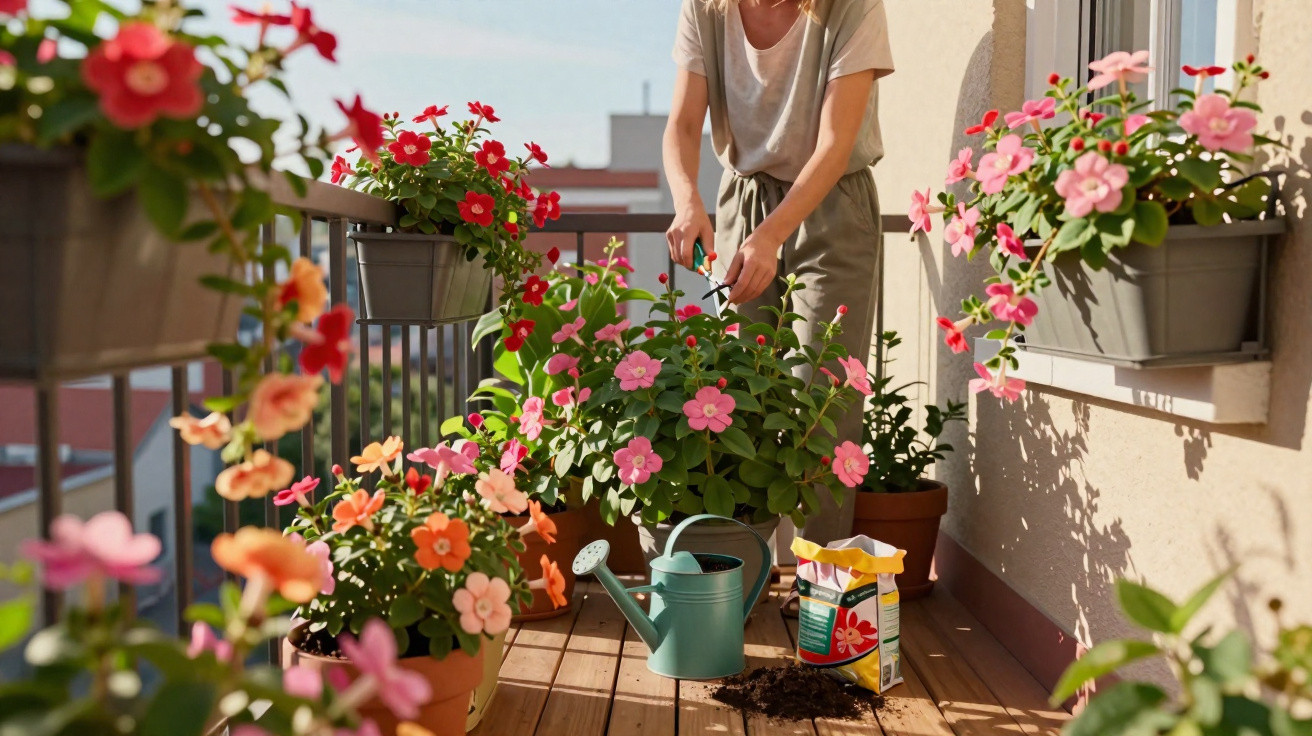
Plenty of people imagine window boxes that spill over with colour from May right through to autumn. In reality, it’s often dried-out geraniums or underwhelming petunias. A lesser-known option from southern Africa can change that completely: Diascia, sometimes sold as twinspur. When it’s planted properly, it turns even simple planters into a cascading sheet of flowers.
What makes Diascia (twinspur) so special
Diascia belongs to the figwort family and originates in southern Africa. In the UK it’s usually grown as an annual summer bloomer, though in milder areas it can survive for more than one year.
"The combination of compact growth and elegantly trailing stems makes Diascia ideal for window boxes, hanging baskets and narrow window ledges."
Typical characteristics include:
- usually 25–40 cm tall
- 30–60 cm wide / trailing spread
- lots of fine, flexible stems
- countless small flowers with five lobes
- colours: apricot, pink, raspberry pink, salmon, violet, orange, white
In appearance, Diascia is a little like a cross between a wishbone flower and a miniature snapdragon, but it looks lighter and more delicate. In a window box, it forms a dense carpet of blooms that drapes over the edge and then drops in relaxed cascades.
Perfect for window boxes, hanging baskets and narrow borders
Because it naturally trails and spreads like a flowering mat, Diascia can be used in many ways. It looks particularly good:
- in classic window boxes fixed to balcony rails
- in hanging baskets, where the stems can fall freely
- along the front edge of beds and borders
- in rock gardens and dry-stone walls, where it can spill over ledges
It stands out even more when paired with other summer flowering plants. Popular companions include:
| Plant | Effect with Diascia |
|---|---|
| Verbenas | long flowering season, similar needs, colourful mix |
| Creeping zinnia (Sanvitalia) | yellow flower carpets that contrast with pink and apricot shades |
| Sweet alyssum (Lobularia) | light fragrance, white “clouds” between Diascia blooms |
| Calibrachoa (million bells) | lush, colourful trailing combination for very sunny spots |
The right time to plant
Diascia is sensitive to frost, so it’s best not to rush in spring:
- Planting time: from mid/late April to May, once night frosts are no longer expected
- Young plants: widely available at garden centres and DIY stores
- Sowing: from March under cover or on a bright windowsill at around 15 °C
If you sow it yourself, patience helps. The fine seed germinates in a loose seed compost kept evenly, lightly moist. Once the seedlings are sturdy, pot them on or move them into window boxes, then place them outside after the last spring frosts (typically around mid-May).
Position: yes to sun, but not relentless heat
Diascia loves bright light, but can become stressed in strong midsummer sun-especially when it’s also very humid.
"An ideal spot has morning sun and light shade during the hottest part of the day."
Suitable positions include:
- full sun to partial shade
- an east- or west-facing balcony
- a south-facing balcony with some shade from an awning or neighbouring plants
Diascia isn’t fussy about compost as long as three basics are met: it should be light, humus-rich, and free-draining. A slightly acidic to neutral pH (about 6.0 to 7.0) suits it well. For window boxes, a good quality multipurpose compost is usually enough, optionally mixed with a little sand or expanded clay to help excess water drain away.
How to water and feed correctly
The most common mistake with Diascia is waterlogging. It likes the compost to stay evenly, lightly moist-never constantly wet.
- water straight onto the compost, not over the flowers
- let the top layer dry slightly before watering again
- in hot spells, check window boxes in the evening and water again if needed
In very sunny positions, boxes and hanging baskets can dry out quickly in summer. A planter with a water reservoir, or a thin mulch layer (for example, coconut fibre), helps the compost stay moist for longer.
When it comes to feeding, less is more. Too many nutrients encourage soft, leggy growth while reducing the number of flowers.
Two approaches work well:
- mix in a controlled-release feed at planting time that lasts three to five months
- or add a liquid flowering plant feed to the watering can once a month
How many plants per planter?
For a window box that looks full without being overcrowded, these spacings work well:
- 30 cm box length: about 3 plants
- 50–60 cm box length: about 6 plants
- 80 cm long box: around 8 plants
Between individual Diascia plants you can add a few other summer bloomers-such as a taller “structure” plant in the centre, with Diascia used as the trailing edge plant around the sides.
Summer care: a small trim that makes a big difference
Diascia can flower from spring well into autumn with very few breaks-provided it gets a little attention.
"If you regularly remove faded blooms, the plant rewards you with a constant firework of new buds."
Practical care steps:
- pinch off spent flowers regularly
- shorten or pinch back long, thin stems lightly
- if flowering slows in midsummer, cut the whole plant back by about one third
That cut acts like a reset: the plant shoots again, becomes denser, and sets fresh flowers. As a rule, one strong cut per season is enough.
Overwintering and propagation: how to make it work
In mild areas (hardiness zone 8 to 11), Diascia can stay in the ground as a short-lived perennial for several years. In colder locations, overwintering it in a pot-or taking cuttings-is usually more worthwhile.
To take cuttings:
- in spring or early autumn, choose non-flowering shoots
- cut pieces about 10 cm long
- remove the lower leaves, leaving only a small tuft at the top
- insert into cutting compost and water in well
- place somewhere bright, but out of direct midday sun
Autumn cuttings should be kept frost-free at around 10–15 °C over winter. In spring, the rooted young plants can be moved into fresh compost and put outside.
Risks, common problems and how to avoid them
Diascia isn’t considered particularly prone to issues, but it can suffer from typical balcony-growing problems if conditions aren’t right:
- leaves turn yellow, plant looks limp: usually too much water or waterlogging
- hardly any flowers, lots of green growth: feeding too heavily or too little light
- stems become long and bare: no trimming and/or plants set too close together
Aphids or thrips can occasionally appear, especially on weakened plants. A strong jet of water, beneficial insects, or gentle soap-based treatments can help.
Why Diascia suits beginners for balcony planting
If you’re new to balcony planting, this flower’s toughness is a real advantage. It copes with small watering mistakes, performs well in standard multipurpose compost, and doesn’t demand a complicated care routine. The essentials come down to three basic rules: avoid waterlogging, don’t overfeed, and remove spent flowers now and then.
It’s also interesting in more creative settings beyond the classic window box: planted in a simple wooden crate, an old zinc bucket with drainage holes, or even a narrow gap in a wall, Diascia adds a surprisingly elegant, slightly romantic touch. Mix varieties in pink, apricot and white for a very harmonious, almost pastel look-ideal for small city balconies you want to turn into a personal summer retreat without much effort.




Comments
No comments yet. Be the first to comment!
Leave a Comment