
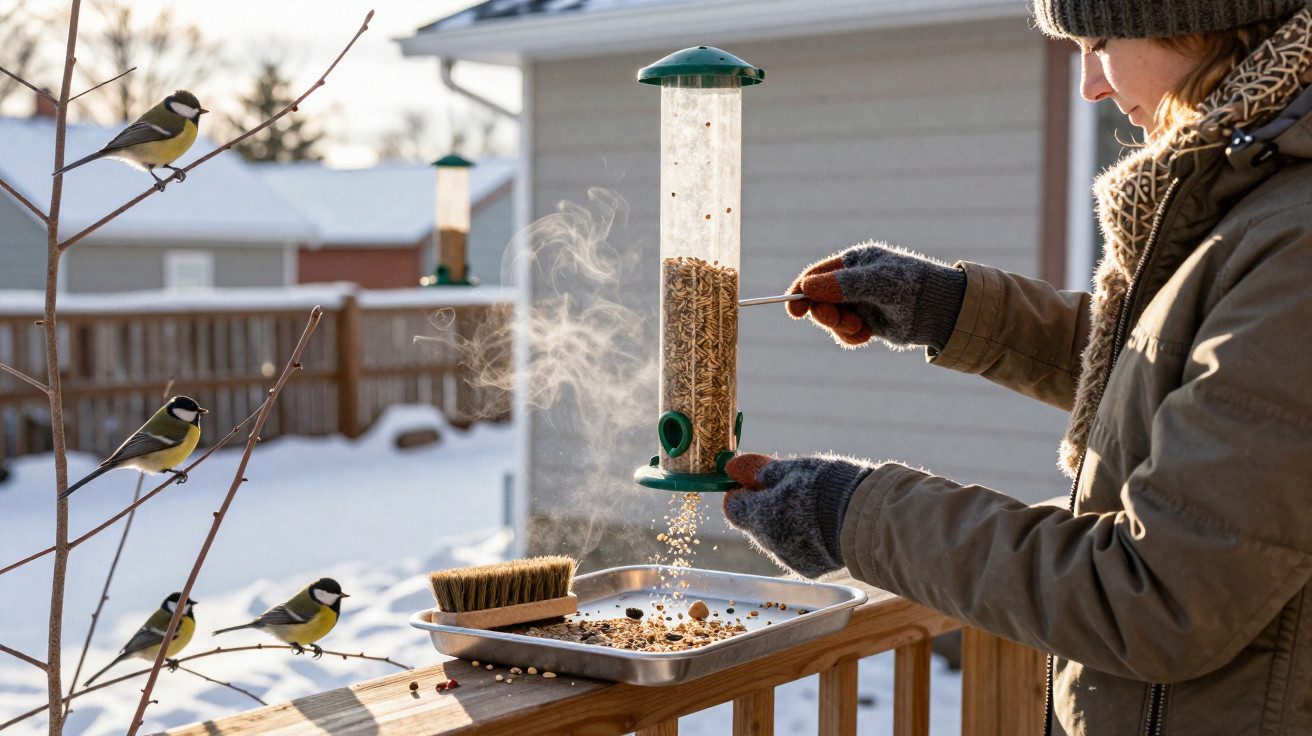
Across the UK and US, millions of people put up feeders when the first frosts arrive, believing they are offering garden birds a life-saving winter meal. It is a kind and frequently useful instinct, yet one easily missed factor can turn a feeder from a refuge into a health risk within days.
When well-meant feeding becomes a garden-bird health problem
Conservation organisations widely recommend putting out food during winter, and with good reason. Seeds and insects become scarce in nature, nights are lengthy, and small birds use huge amounts of energy simply to remain warm. A dependable feeder can help robins, finches and tits survive a cold snap.
However, filling a feeder and leaving it unattended can have the opposite effect. Winter also brings rain, sleet and humid air. As soon as moisture gets into a seed mix, its condition can change rapidly - and not as you might assume.
Dry seed supports birds. Wet seed can support fungus and bacteria instead.
Many people assess feed with a brief look: “still looks fine, still mostly there.” In harsh weather, birds are less selective and may keep feeding from seed that is a little clumped or discoloured. That is where the unseen danger begins.
How damp seed becomes a microbial trap
Once seed becomes wet and remains so, a gradual chain reaction starts. The starches and fats in seeds provide ideal nourishment for mould and bacteria, particularly when the food is tightly packed into a feeder tube or tray.
Fungi including Aspergillus can establish themselves in a layer of seed within days. Some strains are associated with aspergillosis, a respiratory illness affecting birds that are already under pressure from cold conditions and limited food. Bacteria, including salmonella strains, may also spread through dirty or damp feeding areas.
Clumped, darkened, or sticky seed isn’t just “old” – it can be the start of an outbreak affecting dozens of birds visiting the same spot.
Common feeder warning signs include:
- Seeds becoming greyish, dark or dusty
- A sour or musty odour when the lid is opened
- Sticky, compacted clumps instead of loose seed
- Condensation forming inside plastic tubes
Birds infected at feeders may develop laboured breathing, fluffed-up plumage, lethargy or diarrhoea. In most cases, people do not witness the final outcome: an unwell bird disappearing beneath a hedge or into a nearby park, beyond the view from the kitchen window.
Frozen feeders and inaccessible winter food
Damp seed creates a second winter hazard: frost. Following wet weather and then a hard freeze, moisture in both the seed and feeder can convert the contents into a solid, rock-like mass.
For a goldfinch or tit weighing only a few grams, each peck uses calories. Trying to break up a frozen block of seed consumes energy that should be used to maintain a stable body temperature.
A feeder full of frozen seed is like a locked fridge to a starving bird: food is present, but effectively unreachable.
Birds may continue to gather on the perches, yet gain very little for their effort. Across long nights below zero, that lost energy can push them into fatal exhaustion.
Keeping seed dry with the right feeder design
The quickest way to reduce winter hazards is to alter how seed is offered. Certain feeder designs withstand difficult weather much better than open trays or ground feeding.
Why silo feeders are useful
Tube, or “silo”, feeders - commonly metal or plastic cylinders with small feeding ports - have several benefits compared with open tables and trays:
- The majority of seed remains enclosed and protected from direct snow and rain.
- Just a small amount is exposed around each feeding port.
- They can be suspended beneath branches or eaves for extra natural shelter.
In comparison, flat feeding tables and makeshift trays retain water. Even where drainage holes are provided, seed can quickly become a wet layer that is ideal for mould. Open arrangements also collect droppings, allowing disease to spread much more quickly.
Sensible positioning in a limited garden space
The place where a feeder is hung is nearly as important as its construction. A few modest changes can greatly limit moisture issues:
- Hang feeders beneath an overhang, dense shrubbery or tree canopy to protect them from direct rain.
- Do not use completely exposed, windward locations, where rain can be driven into trays and feeding ports.
- Fit a straightforward metal or plastic dome above the feeder to divert water.
- Keep feeders clear of roof edges and gutters that drip continuously.
A semi-sheltered position can keep seed usable for days longer, which means less waste and fewer cleaning marathons.
Daily and weekly habits that safeguard birds
The safest winter feeding points are managed a little like small cafés: limited quantities, regular fresh refills and routine cleaning of the “kitchen”. Although that may sound demanding, it soon becomes an easy habit.
Straightforward rules for safer winter feeding
- Feed little and often: Offer approximately the amount local birds will finish in one day. If seed remains untouched after 24 hours, put out less.
- Clean weekly: Every week, empty the feeders, brush away debris, then wash them using hot water and a mild disinfectant. Rinse thoroughly, allow them to dry, and only then refill.
- Look for clumps: Discard the contents and wash the feeder if there are damp areas, dark seed or forming ice.
- Monitor the forecast: Before heavy snow or rain, lower seed quantities slightly and choose foods that tolerate moisture more effectively.
| Weather | Best foods | Extra precautions |
|---|---|---|
| Cold and dry | Mixed seed, sunflower hearts, peanuts (in mesh feeders) | Normal daily checks, standard portions |
| Wet and mild | Fat balls, suet blocks, sunflower hearts in silo feeders | Smaller portions, more frequent cleaning |
| Freeze after rain | Suet, high-energy fat cakes, mealworms | Break up or replace frozen seed, keep feeders under cover |
Rethinking food beyond bags of seed
Shop-bought seed mixes are practical, but they are not the sole way to support birds. During wetter periods, suet cakes and high-fat blocks generally cope better with drizzle and splashing water. They still require shelter, but do not become sticky mush as rapidly as seed.
Over the medium term, planting berry- and fruit-bearing shrubs and small trees transfers some of the reliance away from feeders. Hawthorn, rowan, crab apple, cotoneaster and native dog rose each offer natural winter food that does not sit inside plastic tubes.
A mixed strategy - some feeders, some natural planting - gives birds options and reduces the disease pressure on any single feeding point.
What “biosecurity” means in a back garden
Bird experts regularly refer to “biosecurity”, which may sound like an imposing term but is straightforward at garden level. In practice, it means interrupting the route of infection at busy places where birds gather.
For a household feeder, this comes down to three practices:
- Keeping food dry and clean.
- Washing surfaces where food and droppings accumulate.
- Spreading several feeders apart so birds are not crowded onto one perch.
Some people fear they could be causing more damage than benefit and think about ceasing feeding completely. For most neighbourhoods, that is not needed. Properly maintained feeding stations remain helpful to birds, particularly in late winter when natural food supplies are at their lowest.
Practical responses when things go wrong
Suppose you wake after three days of rain and notice condensation lining your tube feeder, with seed becoming dark at the base. Act immediately: remove it, empty the contents into the compost or bin, scrub it with hot water, dry it fully, then refill it with a smaller quantity.
Or imagine drizzle followed by a cold spell. You tap the feeder and nothing inside shifts. The seed has formed a solid block. Take the feeder indoors, thaw it, throw away the seed, wash the feeder, and replace the food with suet or fresh seed kept in a more sheltered location.
For families with young children, a brief “feeder patrol” each Saturday morning can be unexpectedly appealing. Children can learn about weather patterns, basic hygiene and bird identification while helping to look after a safer feeding area.
Extra risks and benefits that are easily overlooked
One less apparent concern is the combined impact of several homes along a street operating damp or unclean feeders. Birds travel freely between gardens, meaning one salmonella hotspot can spread infection far beyond a single lawn. The habits of feeder keepers, rather than product choice alone, can prevent this shared issue.
On the other hand, strong feeder hygiene works well alongside wider garden advantages. Dry, clean feeding stations draw a broader variety of species and encourage them to return for longer. Those birds can also help manage insect pests in spring and summer, making winter care a source of year-round ecological support.
Watching the state of your seeds isn’t just fussiness – it’s a quiet, practical way to keep that winter birdsong going.
Comments
No comments yet. Be the first to comment!
Leave a Comment