
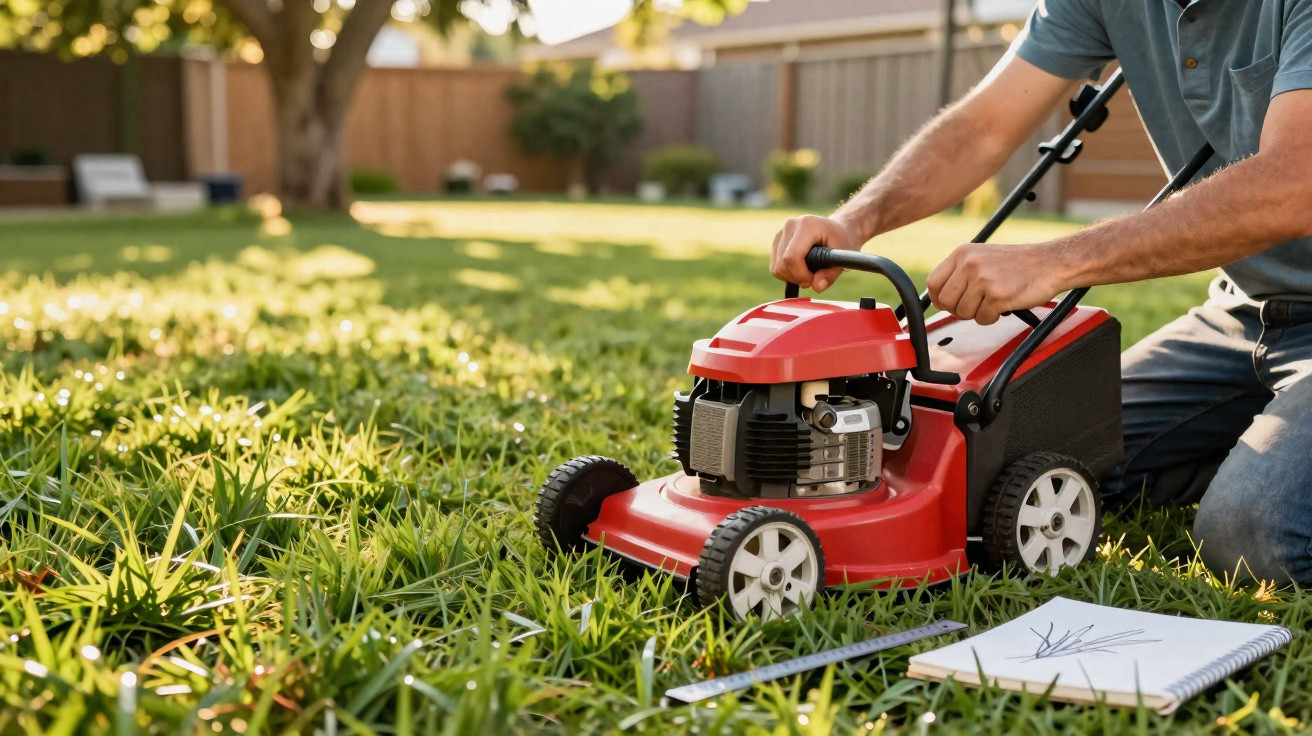
It’s common to throw more fertiliser, more water and pricey specialist mixes at a lawn - and still end up disappointed. What many home gardeners miss is this: it’s often not the feed that’s letting the grass down, but the wrong mowing height. The height adjustment on your lawn mower can be the difference between a lawn that scorches in midsummer and one that holds on like a thick, green carpet.
Why cutting height determines whether your lawn stays healthy
Every single blade of grass needs enough leaf area to generate energy through photosynthesis and keep the roots supplied. Cut too low, and you remove that surface “solar panel”.
"Grass that’s mown too short weakens the roots, heats the soil up and practically invites weeds and moss in."
When that happens repeatedly, the effects are easy to spot:
- roots stay shallow and become more vulnerable
- the soil dries out faster and heats up more
- weeds exploit the gaps and spread
- the lawn turns yellow and develops bare patches
That’s why lawn professionals use the “one-third rule”: in a single mow, remove no more than one third of the current blade length. If the grass is at 6 centimetres, for example, set the mower to bring it down to roughly 4 centimetres. This keeps the growing point of the blade protected, and the lawn bounces back more quickly.
How often should you really mow the lawn?
Plenty of people run the mower over the lawn only every fortnight - then cut extremely short so it “lasts longer”. Over time, that approach is exactly what makes grass weak.
During the spring growth surge, mowing every 4 to 7 days is ideal - sometimes even twice a week if the grass is putting on more than about 2.5 centimetres per week. Light, regular cuts are far kinder than occasional drastic scalps.
Another important detail: mowing when the grass is wet puts extra strain on the lawn. If rain or sprinklers can’t be avoided, stick to a few basics:
- avoid walking on the lawn before mowing where possible
- raise the cutting height slightly
- use the grass box rather than the mulching setting
- make sure the blades are sharp, otherwise the grass tears rather than cuts
The ideal cutting height depending on how the lawn is used
Not every patch of grass needs the same “haircut”. The right setting depends on how you use the garden.
Family lawns, play areas and sports space
For the typical home garden where children play or a kickabout happens now and then, a range of about 3 to 5 centimetres works well. It keeps the lawn tough and hard-wearing while still looking tidy.
Ornamental and show lawns
If you’re after a finer, almost carpet-like finish, people often mow shorter: 2 to 3 centimetres is common here. That only works if the lawn isn’t constantly walked on and it’s reliably supplied with water and nutrients. When temperatures rise sharply or drought is likely, it’s better to move up to around 5 centimetres so the surface doesn’t scorch.
Shady lawns and rarely used areas
In shade, grass is at a disadvantage because it gets far less light. So it should be left longer to provide more leaf area for capturing what light is available. Around 5 to 6 centimetres is a good guideline. For larger, more natural areas, 5 to 8 centimetres is a practical choice - low effort, yet still presentable.
Different lawn types, different numbers
If you know what’s in your seed mix, you can fine-tune the mowing height more precisely. Different grasses respond very differently to mowing. As a rough guide:
| Lawn type / grass group | Recommended cutting height |
|---|---|
| Cool-season grasses (e.g. smooth-stalked meadow-grass) | about 6–9 cm, leaning towards the higher end in summer |
| Fine, dense fescue types | about 7.5–10 cm |
| Lolium perenne (perennial ryegrass / ryegrass) | about 5–7.5 cm |
| Warm-season grasses, “Bermuda” type | about 2.5–5 cm, hybrids more like 2.5–3.8 cm |
| Zoysia lawns | about 1.3–2.5 cm |
| Buffalo and centipede grass lawns | about 2.5–5 cm |
| St Augustine grass | prefers 6–7.5 cm |
| Golf greens (creeping bentgrass) | about 1–1.5 cm, only sensible with specialist equipment |
If you don’t know the exact mix in your own garden, the safest default is the “family lawn” setting - staying in the region of 3 to 5 centimetres.
How lawn owners adapt to the seasons
Spring: a denser carpet by mowing a little lower
In spring the lawn kicks off its main growing season. Keeping the cutting height near the lower end of the recommended range - without breaking the one-third rule - encourages so-called “tillering”: the grass produces more side shoots and thickens up. That leaves fewer gaps where weeds can get established.
Summer: raise the mower to cope with heat and drought
In midsummer, it pays to do the opposite: raise the mower one or two notches, to at least 5 to 6 centimetres. Longer blades shade the soil, reduce water loss and keep the turf cooler. You can stretch the time between mows slightly, as long as growth doesn’t suddenly surge.
Autumn and winter: reduce gradually, then only trim when needed
In autumn you can step the cutting height down again little by little. In winter itself, only a few high mows are needed - and only when the ground is neither frozen nor waterlogged. Frozen blades snap easily, and wet soil compacts quickly; both will damage the lawn.
Young lawns need especially gentle treatment
Newly sown lawns are extremely sensitive to mistakes with mowing height. The first cut should happen once the blades reach around 8 to 10 centimetres. Then reduce to 5 to 6 centimetres. That teaches the young grass to grow thicker without pulling out delicate plants.
If you’ve overseeded an existing lawn, many professionals like to work in two stages:
- cut from roughly 8 down to 5 centimetres
- later, once the lawn looks stable, go from 5 down to around 3 centimetres
After a longer holiday, you’ll often come back to a mini jungle. The key is to stay calm, take the one-third rule seriously and mow in several passes. Once the grass is about 15 to 20 centimetres long, it’s often best to start with a strimmer or brushcutter before returning to a standard mower.
How to set your lawn mower correctly
The scale on many machines looks more accurate than it really is. If you rely on numbered “steps”, it’s easy to be out by 1 to 2 centimetres. A quick practical check helps:
- place a piece of cardboard or a board on the lawn
- set the mower to the height you think you want
- mow a narrow test strip
- measure the real grass length after mowing with a tape measure or folding rule
- adjust the setting until you hit the number you’re aiming for
Sharp blades are essential for a clean cut. Blunt blades tear the grass or leave it badly frayed. The cut ends then dry out more, and disease can enter the tissue more easily. As a rule, blades should be sharpened about every 20 to 25 operating hours - and often more frequently on many robot mowers.
"If you only think about fertiliser and never about cutting height, you’re throwing away the biggest potential for a dense, green lawn."
Before any adjustment or maintenance on the mower: switch the engine off, unplug it or remove the battery. If the blade is still moving, there’s a real risk of injury. It’s best to mow when the lawn is dry, because the blades cut more cleanly and the risk of fungal infections is lower.
Why the right height reduces moss, disease and stress
Many lawn issues that seem to call for specialist treatments are, at heart, down to poor care. Cutting too low weakens the grass so much that moss and fungi have an easy time. Longer grass doesn’t just shade the soil; it also builds more root mass and therefore holds water and nutrients more effectively.
A healthy, dense lawn naturally crowds out unwanted plants because hardly any light reaches the soil surface. That reduces the need for herbicides and expensive moss killers. At the same time, it lowers the risk of scorching during heatwaves or on harsh late-summer days.
When you deliberately match the cutting height to use, season and lawn type, you’ll often need less fertiliser and less water - and in return you get a tougher, denser “carpet” that stays attractive for much longer. A small number on the height dial can make a big difference across the whole garden.





Comments
No comments yet. Be the first to comment!
Leave a Comment